Saudi Press

Saudi Arabia and the world
Monday, Jan 05, 2026

Inflation sticking around in 2022

Inflation sticking around in 2022

American consumers are grappling with the fastest price increase in decades, with the cost of everything from cars to gasoline to food soaring nationwide.

And the problem may get worse before it starts to improve.

In a recent analyst note to clients, Goldman Sachs economists warned that pandemic-induced disruptions in the global supply chain – which have caused congestion in ports and warehouses nationwide – could last longer than expected as surging demand struggles to keep up, meaning that inflation metrics will remain "quite high for much of next year."

"It is now clear that this process will take longer than initially expected, and the inflation overshoot will likely get worse before it gets better," they wrote.

Inflation, as measured by the Federal Reserve's preferred gauge, has climbed to the highest level since February 1982. In November, the personal consumption expenditures price index jumped to 5.7%, well above the Fed's preferred target of 2%. The data is further evidence of a spike in prices illustrated by a separate measure – the Consumer Price Index – which showed inflation rose by 6.8% in November from the previous year.

Customers wait in line to check out during a Black Friday sale at Macy's, Nov. 26, 2021, in Indianapolis.


The hotter-than-expected inflation report will likely reinforce the Federal Reserve's decision in December to accelerate the withdrawal of its monetary support for the U.S. economy and could create additional pressure on the central bank to further tighten policy in 2022 by hiking interest rates.

Although policymakers voted to hold rates near zero, where they have sat since March 2020, new economic projections show that every Fed official has penciled in at least one rate hike next year – a considerable shift from September, when half of the central bankers believed interest rate increases were not warranted until at least 2023.

Officials now project rates to stand at 0.9% at the end of 2022, 1.6% at the end of 2023 and 2.1% at the end of 2024.

At the conclusion of its most recent policy-setting meeting, the Federal Open Market Committee said that it would double the reduction of its asset-purchase program to $30 billion a month, a timeline that could phase out the purchases entirely by March rather than the original June trajectory laid out last month.
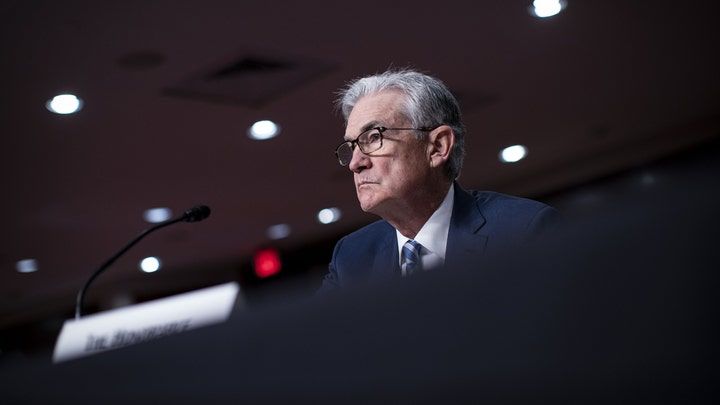
Jerome Powell, chairman of the U.S. Federal Reserve, during a Senate Banking, Housing and Urban Affairs Committee hearing in Washington, D.C.


Fed Chairman Jerome Powell said that he still believes consumer prices will fall next year as bottlenecks at supply chains clear up, but he also warned of a growing risk of persistently high prices. The decision to speed up its withdrawal of support, Powell said, stems from a spate of October indicators, including rising wages, half a million new jobs and a 0.9% monthly increase in consumer prices.

"There’s a real risk now," Powell said at a press conference to explain the Fed's decision. "I believe that inflation may be more persistent…the risk of higher inflation becoming entrenched has increased."

The Goldman Sachs economists – who projected that core PCE inflation will rise from 3.6% to 4.4% by the end of 2021 – seconded that opinion. They have forecast that inflation will cool slightly to 2.3% at the end of 2022 and fall to 2.1% by the end of 2023.

"We do not think that aggregate demand is on an unsustainable trajectory or that inflation expectations have become unanchored, and the overshoot should therefore ultimately prove transitory," the economists wrote.

Newsletter

Related Articles

Saudi Press
0:00
0:00
Close
CNN’s Ranking of Israel’s Women’s Rights Sparks Debate After Misleading Global Index Comparison
Saudi Arabia’s Shifting Regional Alignment Raises Strategic Concerns in Jerusalem
OPEC+ Holds Oil Output Steady Amid Member Tensions and Market Oversupply
Iranian Protests Intensify as Another Revolutionary Guard Member Is Killed and Khamenei Blames the West
President Trump Says United States Will Administer Venezuela Until a Secure Leadership Transition
Delta Force Identified as Unit Behind U.S. Operation That Captured Venezuela’s President
Trump Announces U.S. Large-Scale Strike on Venezuela, Declares President Maduro and Wife Captured
Saudi-UAE Rift Adds Complexity to Middle East Diplomacy as Trump Signals Firm Leadership
OPEC+ to Keep Oil Output Policy Unchanged Despite Saudi-UAE Tensions Over Yemen
Saudi Arabia and UAE at Odds in Yemen Conflict as Southern Offensive Deepens Gulf Rift
Abu Dhabi ‘Capital of Capital’: How Abu Dhabi Rose as a Sovereign Wealth Power
Diamonds Are Powering a New Quantum Revolution
Trump Threatens Strikes Against Iran if Nuclear Programme Is Restarted
Why Saudi Arabia May Recalibrate Its US Spending Commitments Amid Rising China–America Rivalry
Riyadh Air’s First Boeing 787-9 Dreamliner Completes Initial Test Flight, Advancing Saudi Carrier’s Launch
Saudi Arabia’s 2025: A Pivotal Year of Global Engagement and Domestic Transformation
Saudi Arabia to Introduce Sugar-Content Based Tax on Sweetened Drinks from January 2026
Saudi Hotels Prepare for New Hospitality Roles as Alcohol Curbs Ease
Global Airports Forum Highlights Saudi Arabia’s Emergence as a Leading Aviation Powerhouse
Saudi Arabia Weighs Strategic Choice on Iran Amid Regional Turbulence
Not Only F-35s: Saudi Arabia to Gain Access to the World’s Most Sensitive Technology
Saudi Arabia Condemns Sydney Bondi Beach Shooting and Expresses Solidarity with Australia
Washington Watches Beijing–Riyadh Rapprochement as Strategic Balance Shifts
Saudi Arabia Urges Stronger Partnerships and Efficient Aid Delivery at OCHA Donor Support Meeting in Geneva
Saudi Arabia’s Vision 2030 Drives Measurable Lift in Global Reputation and Influence
Alcohol Policies Vary Widely Across Muslim-Majority Countries, With Many Permitting Consumption Under Specific Rules
Saudi Arabia Clarifies No Formal Ban on Photography at Holy Mosques for Hajj 2026
Libya and Saudi Arabia Sign Strategic MoU to Boost Telecommunications Cooperation
Elon Musk’s xAI Announces Landmark 500-Megawatt AI Data Center in Saudi Arabia
Israel Moves to Safeguard Regional Stability as F-35 Sales Debate Intensifies
Cardi B to Make Historic Saudi Arabia Debut at Soundstorm 2025 Festival
U.S. Democratic Lawmakers Raise National Security and Influence Concerns Over Paramount’s Hostile Bid for Warner Bros. Discovery
Hackers Are Hiding Malware in Open-Source Tools and IDE Extensions
Traveling to USA? Homeland Security moving toward requiring foreign travelers to share social media history
Wall Street Analysts Clash With Riyadh Over Saudi Arabia’s Deficit Outlook
Trump and Saudi Crown Prince Cement $1 Trillion-Plus Deals in High-Profile White House Summit
Saudi Arabia Opens Alcohol Sales to Wealthy Non-Muslim Residents Under New Access Rules
U.S.–Saudi Rethink Deepens — Washington Moves Ahead Without Linking Riyadh to Israel Normalisation
Saudi Arabia and Israel Deprioritise Diplomacy: Normalisation No Longer a Middle-East Priority
Saudi Arabia Positions Itself as the Backbone of the Global AI Era
As Trump Deepens Ties with Saudi Arabia, Push for Israel Normalization Takes a Back Seat
Thai Food Village Debuts at Saudi Feast Food Festival 2025 Under Thai Commerce Minister Suphajee’s Lead
Saudi Arabia Sharpens Its Strategic Vision as Economic Transformation Enters New Phase
Saudi Arabia Projects $44 Billion Budget Shortfall in 2026 as Economy Rebalances
OPEC+ Unveils New Capacity-Based System to Anchor Future Oil Output Levels
Will Saudi Arabia End Up Bankrolling Israel’s Post-Ceasefire Order in Lebanon?
Saudi Arabia’s SAMAI Initiative Surpasses One-Million-Citizen Milestone in National AI Upskilling Drive
Saudi Arabia’s Specialty Coffee Market Set to Surge as Demand Soars and New Exhibition Drops in December
Saudi Arabia Moves to Open Two New Alcohol Stores for Foreigners Under Vision 2030 Reform
Saudi Arabia’s AI Ambitions Gain Momentum — but Water, Talent and Infrastructure Pose Major Hurdles
×