
Health Officials Trace Contacts of Hantavirus Patients on Cruise Ship
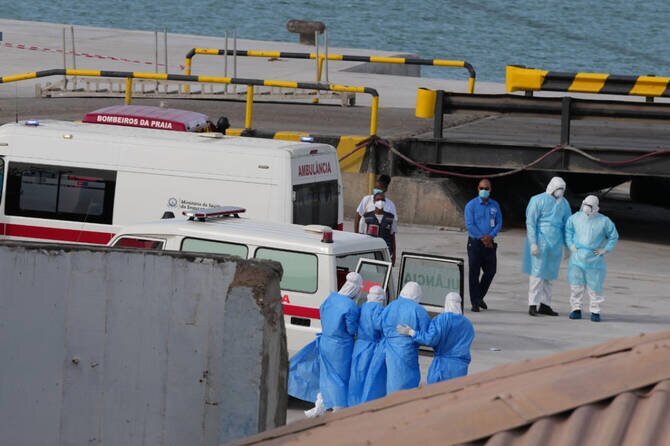
Contact tracing underway for potential exposure to hantaviruses on a cruise ship.
Hantaviruses do not spread easily between people, yet health officials remain cautious about a recent outbreak on a cruise ship that has killed three passengers.
Contact tracing is in progress to identify and monitor individuals who may have come into contact with those infected.
Typically, hantaviruses spread through inhalation of rodent droppings; however, the Andes virus involved in this case could potentially transmit between humans in rare instances.
Health authorities worldwide are attempting to learn more about this particular virus, including whether it has mutated and how it is transmitted.
The goal of contact tracing is to alert individuals who may have been exposed and prevent further transmission.
This process poses challenges due to human social behavior, mobility, and frequent exposure to large crowds.
The cruise ship, currently en route to the Canary Islands with about 140 passengers remaining on board, has already disembarked numerous potential contacts in at least 12 countries.
Different regions are adopting distinct approaches; for instance, St. Helena authorities are monitoring high-risk contacts who have been ordered to self-isolate for 45 days.
Various national health agencies are taking steps to monitor those who left the ship before the outbreak was identified.
In the United States, public health officials in states like Texas and Arizona have reached out to individuals who disembarked on April 24, urging them to monitor their health.
Two Canadians were advised to self-isolate upon returning home.
Simultaneously, scientists are investigating the Andes virus further, particularly its potential for person-to-person transmission and whether it has undergone genetic changes that could enhance its transmissibility.
The current understanding suggests that people are mainly infectious while showing symptoms, and transmission may occur through small liquid particles expelled when an infected individual coughs or sneezes.
Contact tracing is in progress to identify and monitor individuals who may have come into contact with those infected.
Typically, hantaviruses spread through inhalation of rodent droppings; however, the Andes virus involved in this case could potentially transmit between humans in rare instances.
Health authorities worldwide are attempting to learn more about this particular virus, including whether it has mutated and how it is transmitted.
The goal of contact tracing is to alert individuals who may have been exposed and prevent further transmission.
This process poses challenges due to human social behavior, mobility, and frequent exposure to large crowds.
The cruise ship, currently en route to the Canary Islands with about 140 passengers remaining on board, has already disembarked numerous potential contacts in at least 12 countries.
Different regions are adopting distinct approaches; for instance, St. Helena authorities are monitoring high-risk contacts who have been ordered to self-isolate for 45 days.
Various national health agencies are taking steps to monitor those who left the ship before the outbreak was identified.
In the United States, public health officials in states like Texas and Arizona have reached out to individuals who disembarked on April 24, urging them to monitor their health.
Two Canadians were advised to self-isolate upon returning home.
Simultaneously, scientists are investigating the Andes virus further, particularly its potential for person-to-person transmission and whether it has undergone genetic changes that could enhance its transmissibility.
The current understanding suggests that people are mainly infectious while showing symptoms, and transmission may occur through small liquid particles expelled when an infected individual coughs or sneezes.