
Saudi Arabia Urges Unrestricted Shipping Through Strait of Hormuz as Regional Tensions Mount
Riyadh’s UN envoy reinforces maritime security principle amid concerns over potential disruption to global energy routes
SYSTEM-DRIVEN dynamics in global energy security are again centered on the Strait of Hormuz, where Saudi Arabia has publicly called for the uninterrupted flow of commercial shipping, underscoring the strategic vulnerability of one of the world’s most important oil transit corridors.
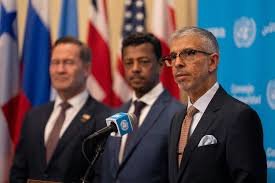
What is confirmed is that Saudi Arabia’s representative to the United Nations has reiterated the need to guarantee freedom of navigation through the Strait of Hormuz, a narrow waterway between Iran and Oman through which a significant share of global seaborne oil exports passes.
The statement reflects long-standing international concern that any disruption in the strait could have immediate and severe consequences for global energy markets.
The Strait of Hormuz is a critical chokepoint linking Gulf oil producers to global markets.
It handles a substantial portion of the world’s crude oil shipments, making it one of the most sensitive maritime passages in international trade.
Even limited instability in the area has historically led to sharp fluctuations in oil prices and heightened military and diplomatic activity among major powers dependent on Gulf energy supplies.
Saudi Arabia’s call for free and secure navigation is consistent with broader international maritime principles but carries added weight given the Kingdom’s position as a leading global oil exporter.
Riyadh relies on stable export conditions to maintain predictable revenue flows and to support its long-term economic diversification agenda under Vision 2030.
The emphasis on maritime freedom also reflects broader regional tensions involving Iran and Western-aligned Gulf states, where past incidents of vessel seizures, tanker attacks, and naval standoffs have periodically raised concerns about supply security.
While no specific new disruption is confirmed in connection with the statement, the diplomatic messaging is clearly shaped by the persistent risk environment surrounding the waterway.
For global markets, the significance lies less in the statement itself and more in what it signals: continued anxiety among major producers about the fragility of energy shipping routes.
Any perception of elevated risk in the Strait of Hormuz tends to translate quickly into higher insurance costs, increased freight premiums, and upward pressure on crude prices.
The broader implication is that maritime energy security remains a central pillar of international economic stability.
Saudi Arabia’s public position reinforces a shared interest among both exporters and import-dependent economies in maintaining uninterrupted shipping flows through one of the most strategically sensitive corridors in the world.
What is confirmed is that Saudi Arabia’s representative to the United Nations has reiterated the need to guarantee freedom of navigation through the Strait of Hormuz, a narrow waterway between Iran and Oman through which a significant share of global seaborne oil exports passes.
The statement reflects long-standing international concern that any disruption in the strait could have immediate and severe consequences for global energy markets.
The Strait of Hormuz is a critical chokepoint linking Gulf oil producers to global markets.
It handles a substantial portion of the world’s crude oil shipments, making it one of the most sensitive maritime passages in international trade.
Even limited instability in the area has historically led to sharp fluctuations in oil prices and heightened military and diplomatic activity among major powers dependent on Gulf energy supplies.
Saudi Arabia’s call for free and secure navigation is consistent with broader international maritime principles but carries added weight given the Kingdom’s position as a leading global oil exporter.
Riyadh relies on stable export conditions to maintain predictable revenue flows and to support its long-term economic diversification agenda under Vision 2030.
The emphasis on maritime freedom also reflects broader regional tensions involving Iran and Western-aligned Gulf states, where past incidents of vessel seizures, tanker attacks, and naval standoffs have periodically raised concerns about supply security.
While no specific new disruption is confirmed in connection with the statement, the diplomatic messaging is clearly shaped by the persistent risk environment surrounding the waterway.
For global markets, the significance lies less in the statement itself and more in what it signals: continued anxiety among major producers about the fragility of energy shipping routes.
Any perception of elevated risk in the Strait of Hormuz tends to translate quickly into higher insurance costs, increased freight premiums, and upward pressure on crude prices.
The broader implication is that maritime energy security remains a central pillar of international economic stability.
Saudi Arabia’s public position reinforces a shared interest among both exporters and import-dependent economies in maintaining uninterrupted shipping flows through one of the most strategically sensitive corridors in the world.