

Are we heading towards a summer of sex?
On a flight in April, one Twitter user overheard a fellow flyer utter a sentence he’s likely never heard before: “Vaxxed and waxed, baby, I'm ready for some action on this trip.”
After more than a year of social isolation during the pandemic, the sentiment may perfectly encapsulate the purported vibe of the coming months – a period in which people are swapping masks for a different kind of protection. Welcome to summer 2021: the summer of sex.
Along with news headlines trumpeting a so-called 'hot vax summer’, some dating-app users have also adopted a not-so-subtle note in their bios that they're “vaXXXed”. This racy prediction for the summer is so widely held that some experts are even worried in a possible STI spike.
But, amid all of this hype, is a summer of sex actually going to happen? After all, in much of the world, Covid-19 is still running rampant, and during the pandemic, sexual desire dropped in both singles and couples. The answer may not be a question of people exclusively running towards sexual fulfilment; rather, sex experts say that as more people get vaccinated and lockdowns lift, it's more likely people will re-enter society and seek any kind of deep bond – not just sexual ones.
The sexy-summer narrative
Many are touting the coming months as a kind of second incarnation of the 'Roaring Twenties': a reference to the hedonistic period of party-filled excess that followed the last global pandemic, the 1918 Spanish flu. And indeed, signs are pointing toward a summer of passion.
For instance, a "deluge of horny adverts" has begun to crop up, in which companies are using images of unbridled lust to pitch products, and frame the coming months as a season of sex. Dutch fashion brand Suitsupply promised “the new normal is coming”, with pictures of shimmering nude bodies tangled up with each other; similarly, Italy's Diesel ran a campaign of couples kissing passionately.
But adverts aren’t the only indication: consumer behaviour is signalling a Roaring Twenties-esque summer, too. In the US, condom sales surged 23% in April, compared to the same period in 2020. Condom maker Durex says it saw double-digit boosts in sales in April, too, and attributes the spikes to restrictions lifting (the company says the same happened last summer when there was a period of eased social distancing).
Some sex psychologists do say that it is indeed possible that rates of sex – especially casual sex – might go up this summer. One of the main reasons may be surprising: our collective trauma.
“When we're faced with our own mortality, we have a tendency to be riskier… we want to make the most of our lives," says Ashley Thompson, associate professor of psychology at the University of Minnesota, US, who specialises in human sexuality and behaviour. This is part of a concept she’s researched called “terror management theory”, which holds that death anxiety controls human behaviour. “That may lead to more casual sexual behaviour, to sort of combat those negative feelings of one’s own mortality.”
An unlikely scenario?
Still, Thompson and other experts who study sex think that, despite some signals, the prediction of a large-scale, free-wheeling summer might be overblown.
“There is no doubt that there are people who are probably hesitant to jump back into bed,” she says. Even where sex isn't concerned, Covid-19 “re-entry anxiety” has people fearful about what is and isn't totally safe, and stressed about being thrust back into social situations after we've been isolated for so long. A survey from the American Psychological Association from March showed that half of all Americans felt anxious about engaging in any kind of in-person interaction.
Justin Garcia, executive director of Indiana University's Kinsey Institute, the world's largest sex-research organisation, is also sceptical. Instead, he believes the most likely outcome is that "we’re going to see a return to baseline of pre-pandemic life, and it’s not going to be this summer of debauchery”. In April, a new Kinsey survey showed that of 2,000 Americans, more than half said they were uninterested in one-night stands, and 64% were less interested in having more than one sex partner at a time, compared to before the pandemic.
So, despite the prevailing narrative of hedonism, Garcia thinks it’s unlikely that people will rush headfirst back into partying. “There is a lot of grief and a lot of trauma,” he says. “There is still a lot of collective stress and anxiety to sort out in our social lives.”
There is a lot of grief and a lot of trauma. There is still a lot of collective stress and anxiety to sort out in our social lives – Justin Garcia
Academics also agree that pandemic-induced social anxiety could be a factor. Viren Swami, a professor of social psychology at Anglia Ruskin University, UK, who studies sexuality, recently wrote about how a “summer of love” is unlikely, not least because many of us will still feel anxious about even being around other people in the same room, let alone the same bed.
He says that although this summer might involve a lot of people seeking out safe sexual connections – like “putting up this syringe [emoji] on your Tinder profile” to show you've been vaccinated – it might be a summer more about people "re-evaluating how and why we form relationships with other people”. That’s because after a year of hardship and mental-health strain, we’ll crave emotional connections with others, whether it's platonic or romantic – “almost like a ‘just in case’ – in case we have to go through this again”, he says.
And, anyway, the comparisons between summer 2021 and the Roaring Twenties may be off altogether. Popular wisdom is that in the aftermath of the similar emotional stresses people experienced during the 1918 Spanish flu, people flung themselves into work, spending – and each other. But there's no data to back up the idea that sexual activity spiked after the health crisis, so there’s no reason to think it would be the case this time.
“We weren't studying sex until the mid-1900s,” and even then, it was still a taboo topic to be researching, says Thompson. “When you think of these momentous events that could have impacted our sexual behaviour, we just didn't have the funding, the tools or the resources to be studying it at the time.”
Plus, a century ago, most people were not living a Great Gatsby-style life of decadent debauchery. They had other things on their minds than partying. “For the majority of the population, it was a time of poverty, it was a time of hardship,” says Swami. “It was a time of post-war building. It wasn't just people having fun and drinking and having sex.”
The real takeaway
As countries with highly vaccinated populations start to re-enter something looking like pre-pandemic life and intimacy, the experts say that we shouldn’t be focusing on a sex-soaked summer that may not even happen. Instead of talking about sexual activity in the short term, we should be talking more about how the pandemic has affected how we build relationships in the long term.
“I think people are going to invest more into people,” says Garcia. He thinks summer 2021 shouldn’t be thought of as the summer of sex, but as the “summer of sociality” – humans’ needs to be social and bond with one another.
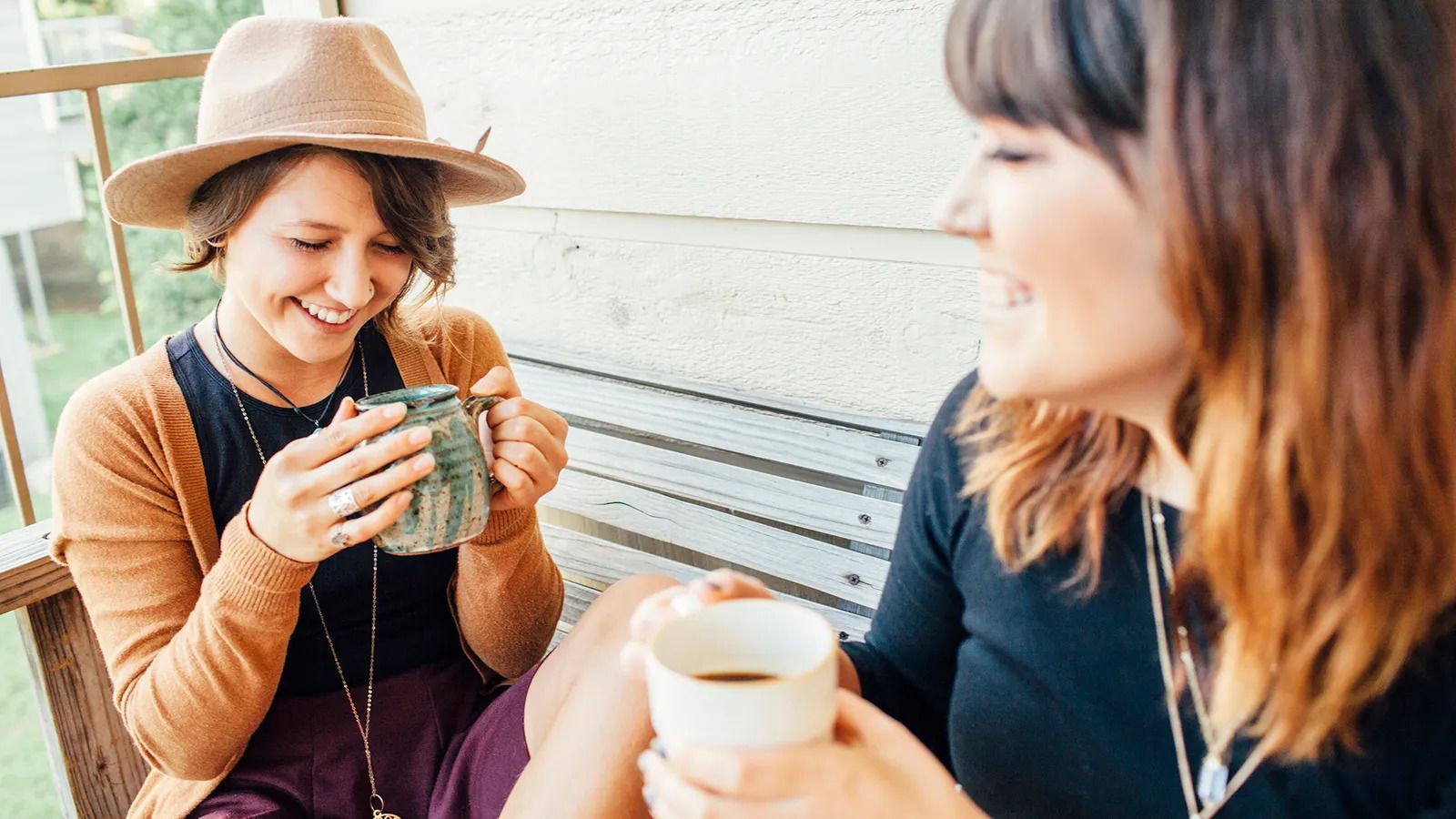 Sex and psychology experts think it's more likely we'll seek out
emotional bonds that are deep and meaningful, with platonic friends and
potential partners alike
Sex and psychology experts think it's more likely we'll seek out
emotional bonds that are deep and meaningful, with platonic friends and
potential partners alike
There are already indicators that a shift toward sociality may be the case – even in unlikely places. For instance, traditionally sex-forward dating apps, such as Tinder and Hinge, added video-dating during the pandemic. While the addition was part of a survival strategy to keep people on the apps amid social distancing, video dating ended up becoming a medium to “get to know someone more before getting together”, says Thompson. “I don't think that's going to go away.”
So, instead of jumping to gratify sexual frustration, experts say this desire to connect before meeting up and possibly having a sexual encounter is an indicator that this summer will instead be marked by a reaction to prolonged loneliness. And addressing that loneliness by building meaningful relationships will be key to helping ourselves nurture our mental health, which took a massive hit during the pandemic.
It’s impossible to know what people will do individually. Some actually may find themselves in their own summer of sex. But for most vaccinated individuals, it’s more likely they’ll simply come out of more than a year of restrictions with a new-found appreciation for deep, meaningful relationships. Ultimately, the coming months will likely mark a period of connection more than anything.
“I think people are looking for someone to hang out with on a porch for a few hours,” says Garcia. “The human animal is craving human emotional connection. And I think that doesn't necessarily mean just sex.”