Saudi Arabia’s Shifting Regional Alignment Raises Strategic Concerns in Jerusalem
Evolving Gulf dynamics and Riyadh’s recalibrated foreign policy could complicate Israel’s security and diplomatic landscape
Recent geopolitical realignments involving Saudi Arabia are being watched closely in Israel as shifts in Riyadh’s regional posture intersect with longstanding Arab-Israeli tensions and broader Middle Eastern security calculations.
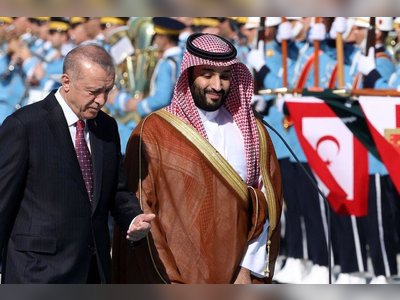
While Saudi leaders have expressed interest in reframing relations in the region, including support for a negotiated two-state solution to the Israeli-Palestinian conflict and diplomatic engagement with Western partners, the kingdom’s evolving strategies have generated unease in Jerusalem about future cooperation and security guarantees.
Analysts highlight that formal normalisation between Saudi Arabia and Israel, long anticipated under the Abraham Accords framework, remains elusive and conditioned on progress toward Palestinian statehood — a demand that Israeli policymakers have so far resisted, complicating the diplomatic landscape.
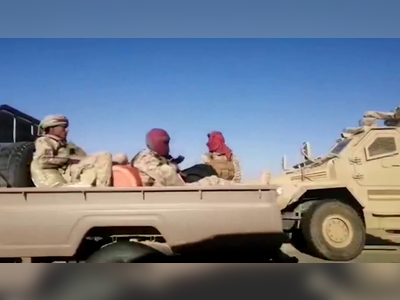
At the same time, Saudi Arabia’s broader regional focus has incorporated recalibrated ties with Gulf states and a nuanced approach to conflicts in Yemen, Sudan and elsewhere that have seen Riyadh at odds with erstwhile partners such as the United Arab Emirates.
These shifts underline Saudi concerns about regional stability and the economic and political impacts of ongoing conflicts, prompting deep engagement with global powers, including the United States, to anchor its security and strategic interests.
That realignment has been interpreted in Israel as a potential indicator that Riyadh may prioritise its own diplomatic and economic objectives over accelerated normalisation, especially if foundational political issues such as Palestinian sovereignty are unresolved.
The interplay between these developments and Israel’s own security doctrine — shaped by persistent threats along its northern border and the Gaza frontier — adds another layer of complexity.
Israeli analysts have noted that Riyadh’s emphasis on regional stability sometimes contrasts with Jerusalem’s military strategies and responses to Iranian proxies, contributing to a recalibration of expectations on both sides.
While strategic dialogue continues between U.S., Saudi and Israeli officials on defence and regional security, the absence of a concrete roadmap to formal diplomatic ties has reinforced Israeli apprehension that Saudi Arabia’s new alignment could shift focus away from a near-term normalisation and impact regional balance.
As Riyadh presses for diplomatic outcomes that include a credible pathway to Palestinian statehood, Israeli policymakers remain cautious, aware that any emerging alignment without clear political settlement could introduce uncertainty into long-term bilateral relations and regional security frameworks.
While Saudi leaders have expressed interest in reframing relations in the region, including support for a negotiated two-state solution to the Israeli-Palestinian conflict and diplomatic engagement with Western partners, the kingdom’s evolving strategies have generated unease in Jerusalem about future cooperation and security guarantees.
Analysts highlight that formal normalisation between Saudi Arabia and Israel, long anticipated under the Abraham Accords framework, remains elusive and conditioned on progress toward Palestinian statehood — a demand that Israeli policymakers have so far resisted, complicating the diplomatic landscape.
At the same time, Saudi Arabia’s broader regional focus has incorporated recalibrated ties with Gulf states and a nuanced approach to conflicts in Yemen, Sudan and elsewhere that have seen Riyadh at odds with erstwhile partners such as the United Arab Emirates.
These shifts underline Saudi concerns about regional stability and the economic and political impacts of ongoing conflicts, prompting deep engagement with global powers, including the United States, to anchor its security and strategic interests.
That realignment has been interpreted in Israel as a potential indicator that Riyadh may prioritise its own diplomatic and economic objectives over accelerated normalisation, especially if foundational political issues such as Palestinian sovereignty are unresolved.
The interplay between these developments and Israel’s own security doctrine — shaped by persistent threats along its northern border and the Gaza frontier — adds another layer of complexity.
Israeli analysts have noted that Riyadh’s emphasis on regional stability sometimes contrasts with Jerusalem’s military strategies and responses to Iranian proxies, contributing to a recalibration of expectations on both sides.
While strategic dialogue continues between U.S., Saudi and Israeli officials on defence and regional security, the absence of a concrete roadmap to formal diplomatic ties has reinforced Israeli apprehension that Saudi Arabia’s new alignment could shift focus away from a near-term normalisation and impact regional balance.
As Riyadh presses for diplomatic outcomes that include a credible pathway to Palestinian statehood, Israeli policymakers remain cautious, aware that any emerging alignment without clear political settlement could introduce uncertainty into long-term bilateral relations and regional security frameworks.