Saudi Press

Saudi Arabia and the world
Friday, Jan 23, 2026

Swedish company promotes biochip implant to carry your COVID passport

A Swedish tech company is leading the way on implanted microchips to carry COVID passports.

As COVID-19 continues to rage with the spread of new variants, having your health pass accessible is becoming increasingly essential. But would you be willing to have it actually implanted in your hand?

That’s one use DSruptive Subdermals has been promoting for its implanted microchips.

The Swedish company, specialised in implantable microelectronics, wants to use its implants as a medical aid to track COVID-19 and other infectious diseases.

Biochips use near field communications (NFC), the same technology used for contactless payment, which allows them to be scanned by other devices, such as smartphones, door readers, and payment terminals.

"We know that the world of connected devices, the Internet of Things as a lot of people call it, speaks the language of NFC [...] So when I have a chip in my hand it allows me to speak the language of all these devices and interact with them effortlessly," said Hannes Sjoblad, Managing Director of DSruptive Subdermals.
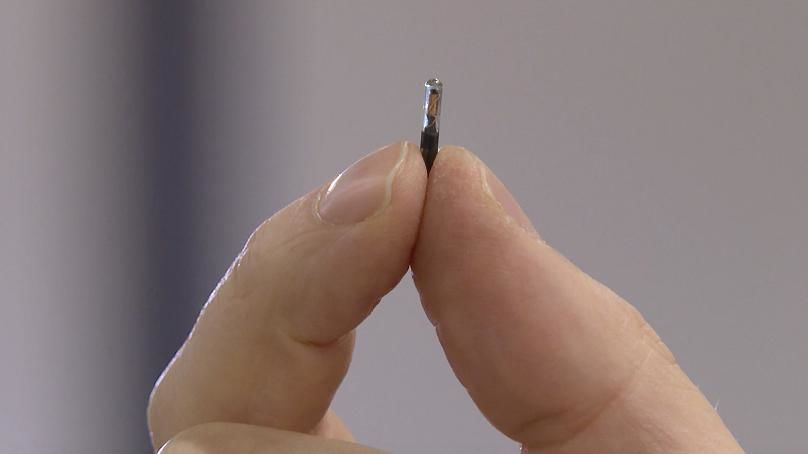
The biochip, which is the size of a grain of rice, can be used to carry COVID passports.


But it also means that the microchip could give your data away as it can be scanned by anyone with a reading device.

"The real issue is data handling, which will be an issue later on with how data is stored... if the data is not secure, someone can get your information and once it's out there, it's hard to get back," warned Ben Libberton, a microbiologist working for MAX IV Laboratory, in an interview to Euronews Next in June.

However, to steal information from the chip, a person would first need to know that you have an implant, then touch it with a smartphone to activate it. Sjoblad also assures that the chips cannot track your location.

"They don't have a battery, they cannot transmit a signal by themselves, so they are basically passive. They sit there asleep,” he said.

“They can never tell your location, they're only activated when you touch them with your smartphone, so this means they cannot be used for tracking anyone's location.”

Implanted microchips aim at making daily life more convenient and are already used by a number of people and companies around the world to replace keys, access cards and IDs.

In 2018, Sweden’s state-owned train company even trialled biochips as a replacement for train tickets.

Amanda Black, manager of Epicenter, a digital hub in Stockholm that has made the chip available to its workers in recent years, said she feels the chip is even safer than traditional ways to store datas.

"Well I think it's very much part of my own integrity to have myself chiped and keep my personal data there with me, I actually feel that it's even more control in my hand having it in my own hand," she said.

Another company, Biohax International, who is behind the microchips used by the Swedish railways company, is working with health partners so that its microchips contain health information.

If someone is brought unconscious to the hospital, for instance, a simple scan of the chip could give doctors information about the patient’s pre-existing conditions.

Newsletter

Related Articles

Saudi Press
0:00
0:00
Close
Saudi Arabia’s Careful Balancing Act in Relations with Israel Amid Regional and Domestic Pressures
America’s Venezuela Oil Grip Meets China’s Demand: Market Power, Legal Shockwaves, and the New Rules of Energy Leverage
Trump’s Board of Peace: Breakthrough Diplomacy or a Hostile Takeover of Global Order?
Prince William to Make Official Visit to Saudi Arabia in February
Saudi Arabia Advances Ambitious Artificial River Mega-Project to Transform Water Security
Saudi Crown Prince and Syrian President Discuss Stabilisation, Reconstruction and Regional Ties in Riyadh Talks
Mohammed bin Salman Confronts the ‘Iranian Moment’ as Saudi Leadership Faces Regional Test
Cybercrime, Inc.: When Crime Becomes an Economy. How the World Accidentally Built a Twenty-Trillion-Dollar Criminal Economy
Strategic Restraint, Credible Force, and the Discipline of Power
Donald Trump Organization Unveils Championship Golf Course and Luxury Resort Project in Saudi Arabia
Inside Diriyah: Saudi Arabia’s $63.2 Billion Vision to Transform Its Historic Heart into a Global Tourism Powerhouse
Trump Designates Saudi Arabia a Major Non-NATO Ally, Elevating US–Riyadh Defense Partnership
Trump Organization Deepens Saudi Property Focus with $10 Billion Luxury Developments
There is no sovereign immunity for poisoning millions with drugs.
Mohammed bin Salman’s Global Standing: Strategic Partner in Transition Amid Debate Over His Role
Saudi Arabia Opens Property Market to Foreign Buyers in Landmark Reform
The U.S. State Department’s account in Persian: “President Trump is a man of action. If you didn’t know it until now, now you do—do not play games with President Trump.”
CNN’s Ranking of Israel’s Women’s Rights Sparks Debate After Misleading Global Index Comparison
Saudi Arabia’s Shifting Regional Alignment Raises Strategic Concerns in Jerusalem
OPEC+ Holds Oil Output Steady Amid Member Tensions and Market Oversupply
Iranian Protests Intensify as Another Revolutionary Guard Member Is Killed and Khamenei Blames the West
President Trump Says United States Will Administer Venezuela Until a Secure Leadership Transition
Delta Force Identified as Unit Behind U.S. Operation That Captured Venezuela’s President
Trump Announces U.S. Large-Scale Strike on Venezuela, Declares President Maduro and Wife Captured
Saudi-UAE Rift Adds Complexity to Middle East Diplomacy as Trump Signals Firm Leadership
OPEC+ to Keep Oil Output Policy Unchanged Despite Saudi-UAE Tensions Over Yemen
Saudi Arabia and UAE at Odds in Yemen Conflict as Southern Offensive Deepens Gulf Rift
Abu Dhabi ‘Capital of Capital’: How Abu Dhabi Rose as a Sovereign Wealth Power
Diamonds Are Powering a New Quantum Revolution
Trump Threatens Strikes Against Iran if Nuclear Programme Is Restarted
Why Saudi Arabia May Recalibrate Its US Spending Commitments Amid Rising China–America Rivalry
Riyadh Air’s First Boeing 787-9 Dreamliner Completes Initial Test Flight, Advancing Saudi Carrier’s Launch
Saudi Arabia’s 2025: A Pivotal Year of Global Engagement and Domestic Transformation
Saudi Arabia to Introduce Sugar-Content Based Tax on Sweetened Drinks from January 2026
Saudi Hotels Prepare for New Hospitality Roles as Alcohol Curbs Ease
Global Airports Forum Highlights Saudi Arabia’s Emergence as a Leading Aviation Powerhouse
Saudi Arabia Weighs Strategic Choice on Iran Amid Regional Turbulence
Not Only F-35s: Saudi Arabia to Gain Access to the World’s Most Sensitive Technology
Saudi Arabia Condemns Sydney Bondi Beach Shooting and Expresses Solidarity with Australia
Washington Watches Beijing–Riyadh Rapprochement as Strategic Balance Shifts
Saudi Arabia Urges Stronger Partnerships and Efficient Aid Delivery at OCHA Donor Support Meeting in Geneva
Saudi Arabia’s Vision 2030 Drives Measurable Lift in Global Reputation and Influence
Alcohol Policies Vary Widely Across Muslim-Majority Countries, With Many Permitting Consumption Under Specific Rules
Saudi Arabia Clarifies No Formal Ban on Photography at Holy Mosques for Hajj 2026
Libya and Saudi Arabia Sign Strategic MoU to Boost Telecommunications Cooperation
Elon Musk’s xAI Announces Landmark 500-Megawatt AI Data Center in Saudi Arabia
Israel Moves to Safeguard Regional Stability as F-35 Sales Debate Intensifies
Cardi B to Make Historic Saudi Arabia Debut at Soundstorm 2025 Festival
U.S. Democratic Lawmakers Raise National Security and Influence Concerns Over Paramount’s Hostile Bid for Warner Bros. Discovery
Hackers Are Hiding Malware in Open-Source Tools and IDE Extensions
×