
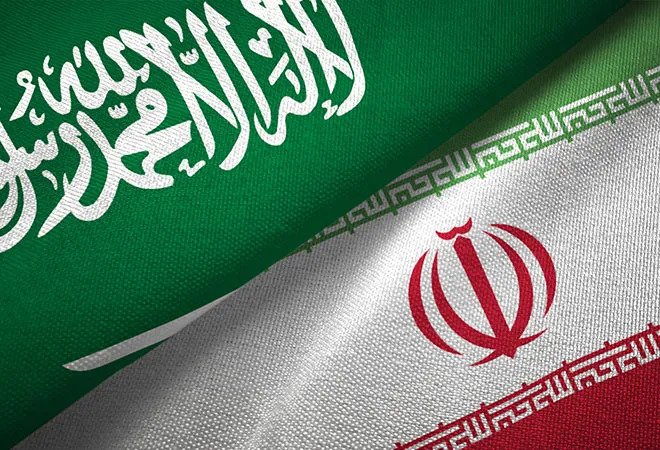
Saudi Arabia Signals Harder Line on Iran as Regional Conflict Deepens
Riyadh moves from cautious neutrality to open criticism of Tehran amid widening Middle East hostilities
Saudi Arabia has shifted from a position of declared neutrality to a more openly critical stance toward Iran as the regional conflict intensifies, marking a notable recalibration in Riyadh’s diplomatic posture.
In the early stages of the crisis, Saudi officials emphasised restraint and called for de-escalation, positioning the kingdom as a stabilising actor seeking to avoid direct entanglement.
That approach aligned with recent years of cautious diplomatic engagement between Riyadh and Tehran, including efforts to restore formal relations after a prolonged period of rivalry.
However, following a series of missile and drone incidents affecting Gulf airspace and energy-linked infrastructure, Saudi authorities have adopted sharper language, condemning what they describe as destabilising actions linked to Iran and its regional network.
Officials have underscored the need to defend national sovereignty and safeguard critical facilities, particularly in light of previous attacks on Saudi oil installations.
The shift does not appear to signal an immediate move toward direct military confrontation, but it reflects growing concern in Riyadh about the trajectory of the conflict.
Security coordination with Gulf partners has intensified, and Saudi defence systems have been placed on heightened readiness.
Energy markets have responded nervously to the change in tone, given Saudi Arabia’s central role in global oil supply.
Analysts note that while Riyadh remains cautious about full-scale escalation, a more assertive diplomatic stance could reshape regional alignments and complicate ongoing efforts to contain hostilities.
Saudi officials continue to stress that stability in the Gulf remains a strategic priority.
Yet the evolution from measured neutrality to pointed criticism illustrates the mounting pressure on regional powers as the conflict expands beyond its initial flashpoints and increasingly touches the core interests of major energy producers.
In the early stages of the crisis, Saudi officials emphasised restraint and called for de-escalation, positioning the kingdom as a stabilising actor seeking to avoid direct entanglement.
That approach aligned with recent years of cautious diplomatic engagement between Riyadh and Tehran, including efforts to restore formal relations after a prolonged period of rivalry.
However, following a series of missile and drone incidents affecting Gulf airspace and energy-linked infrastructure, Saudi authorities have adopted sharper language, condemning what they describe as destabilising actions linked to Iran and its regional network.
Officials have underscored the need to defend national sovereignty and safeguard critical facilities, particularly in light of previous attacks on Saudi oil installations.
The shift does not appear to signal an immediate move toward direct military confrontation, but it reflects growing concern in Riyadh about the trajectory of the conflict.
Security coordination with Gulf partners has intensified, and Saudi defence systems have been placed on heightened readiness.
Energy markets have responded nervously to the change in tone, given Saudi Arabia’s central role in global oil supply.
Analysts note that while Riyadh remains cautious about full-scale escalation, a more assertive diplomatic stance could reshape regional alignments and complicate ongoing efforts to contain hostilities.
Saudi officials continue to stress that stability in the Gulf remains a strategic priority.
Yet the evolution from measured neutrality to pointed criticism illustrates the mounting pressure on regional powers as the conflict expands beyond its initial flashpoints and increasingly touches the core interests of major energy producers.