Pakistan Nears $1.5 Billion Arms Deal with Sudan, Potentially Backed by Saudi Arabia, Highlighting Its Growing Role in Global Defence Exports
Islamabad’s military agreement to supply aircraft, drones and air-defence systems to Khartoum signals expanded influence in African security dynamics amid longstanding regional tensions
Pakistan is in the advanced stages of finalising a roughly $1.5 billion arms agreement to supply military equipment to Sudan’s armed forces, a move that would underscore Islamabad’s emergence as a significant defence exporter and could be facilitated by political and financial backing from Saudi Arabia.
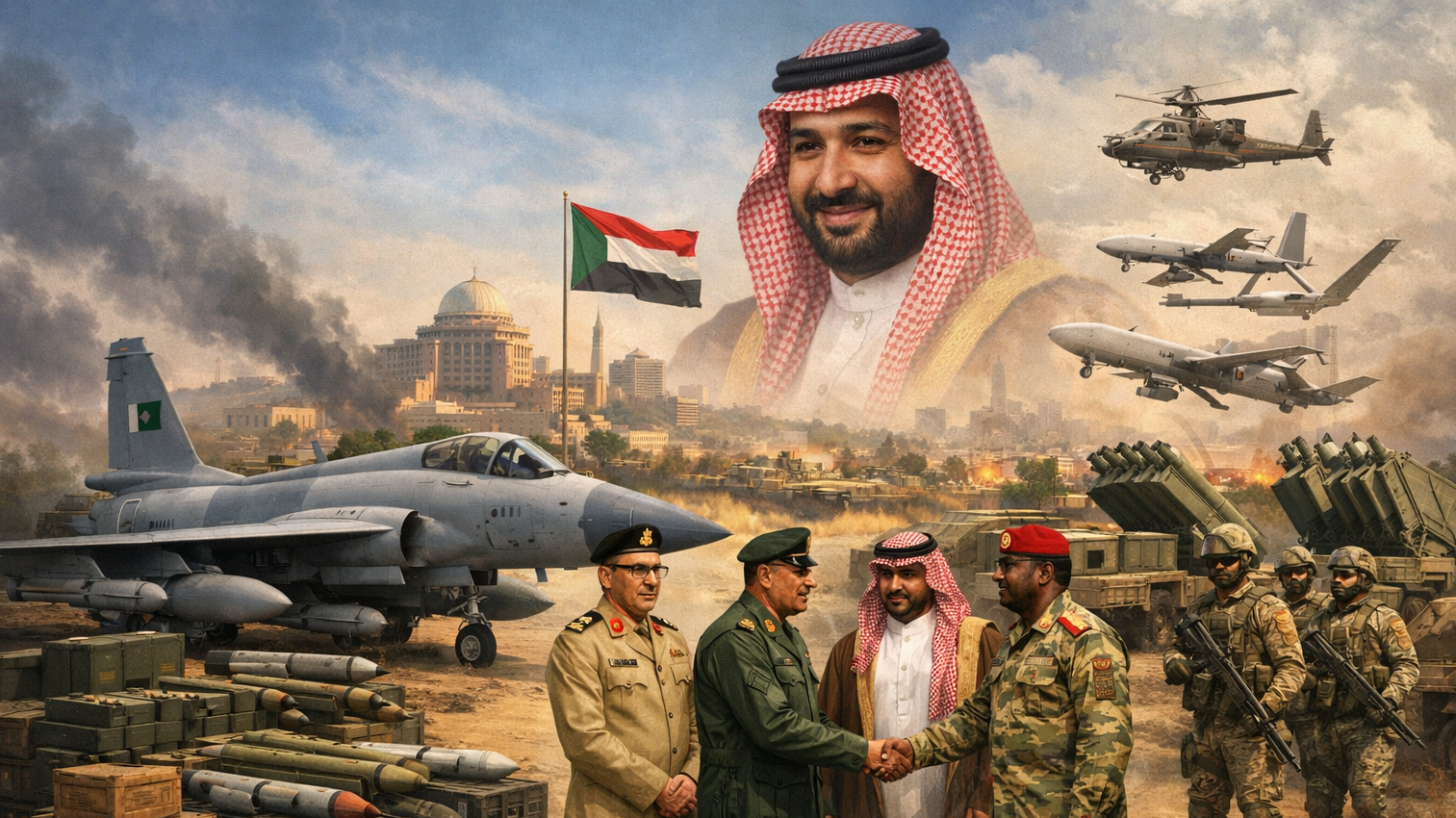
Sources close to the negotiations said the deal would provide a suite of assets, including light attack aircraft, hundreds of drones and advanced air-defence systems to bolster the Sudanese military’s operational capabilities in its protracted conflict with the paramilitary Rapid Support Forces.
The package reportedly includes an initial batch of around ten Karakoram-8 light attack and trainer aircraft, more than 200 reconnaissance and strike drones, and modernised air-defence platforms.
In addition, the agreement may encompass Super Mushshak training aircraft and potentially a number of JF-17 Thunder multirole fighters co-developed with China, though exact numbers and delivery schedules remain unclear.
Retired senior Pakistani air force officials familiar with the matter described the arrangement as effectively agreed, though formal ratification by both parties is still anticipated.
Saudi Arabia’s role in the deal is the subject of differing accounts.
Some sources suggest Riyadh has helped broker the agreement or might facilitate financing through existing defence and economic links with Pakistan, while others indicate there is no confirmed direct funding from Saudi coffers.
Islamabad and Riyadh signed a strategic mutual defence pact in 2025, underlining deepening military cooperation between the two states, and discussions are ongoing about broader defence and procurement arrangements that could magnify Pakistan’s export opportunities.
The prospective deal comes against the backdrop of Sudan’s civil war, now in its third year, which has unleashed what the United Nations describes as one of the worst humanitarian crises globally.
Analysts say the addition of Pakistani aircraft and drone capabilities could materially enhance the Sudanese army’s capacity to challenge RSF advances, particularly where air power and surveillance have been decisive in recent phases of the conflict.
However, the influx of foreign hardware also risks entrenching the fighting, with weapons supplied by multiple external actors contributing to sustained violence.
For Pakistan’s defence industry, the deal would represent one of the largest export contracts in its history, following recent high-value agreements with Libya and ongoing negotiations with other countries.
Islamabad has positioned defence exports as a potential engine for economic growth and foreign exchange earnings, especially as it navigates fiscal pressures, including a substantial International Monetary Fund support programme backed in part by Gulf ally assistance.
The Sudan agreement, if concluded, would further cement Pakistan’s standing as a rising supplier in global arms markets with growing appeal among nations seeking cost-effective alternatives to Western and Russian systems.
Sources close to the negotiations said the deal would provide a suite of assets, including light attack aircraft, hundreds of drones and advanced air-defence systems to bolster the Sudanese military’s operational capabilities in its protracted conflict with the paramilitary Rapid Support Forces.
The package reportedly includes an initial batch of around ten Karakoram-8 light attack and trainer aircraft, more than 200 reconnaissance and strike drones, and modernised air-defence platforms.
In addition, the agreement may encompass Super Mushshak training aircraft and potentially a number of JF-17 Thunder multirole fighters co-developed with China, though exact numbers and delivery schedules remain unclear.
Retired senior Pakistani air force officials familiar with the matter described the arrangement as effectively agreed, though formal ratification by both parties is still anticipated.
Saudi Arabia’s role in the deal is the subject of differing accounts.
Some sources suggest Riyadh has helped broker the agreement or might facilitate financing through existing defence and economic links with Pakistan, while others indicate there is no confirmed direct funding from Saudi coffers.
Islamabad and Riyadh signed a strategic mutual defence pact in 2025, underlining deepening military cooperation between the two states, and discussions are ongoing about broader defence and procurement arrangements that could magnify Pakistan’s export opportunities.
The prospective deal comes against the backdrop of Sudan’s civil war, now in its third year, which has unleashed what the United Nations describes as one of the worst humanitarian crises globally.
Analysts say the addition of Pakistani aircraft and drone capabilities could materially enhance the Sudanese army’s capacity to challenge RSF advances, particularly where air power and surveillance have been decisive in recent phases of the conflict.
However, the influx of foreign hardware also risks entrenching the fighting, with weapons supplied by multiple external actors contributing to sustained violence.
For Pakistan’s defence industry, the deal would represent one of the largest export contracts in its history, following recent high-value agreements with Libya and ongoing negotiations with other countries.
Islamabad has positioned defence exports as a potential engine for economic growth and foreign exchange earnings, especially as it navigates fiscal pressures, including a substantial International Monetary Fund support programme backed in part by Gulf ally assistance.
The Sudan agreement, if concluded, would further cement Pakistan’s standing as a rising supplier in global arms markets with growing appeal among nations seeking cost-effective alternatives to Western and Russian systems.