Saudi Press

Saudi Arabia and the world
Sunday, Jan 25, 2026

COVID during the World Cup in Qatar: Should you be worried?

COVID during the World Cup in Qatar: Should you be worried?

The World Cup 2022 will be one of the first major sporting events since the start of the COVID-19 pandemic that will not have limitations on crowd numbers, and all eight stadiums will be allowed to fill to their maximum capacities.

The tournament kicks off on November 20 in Qatar and is expected to attract more than 1.2 million people to witness the biggest sporting event in the world.

In recent months, music festivals, political gatherings and business events have taken place with little to no health-related limitations.

Qatari authorities dropped COVID-related travel restrictions starting on Tuesday, including mandatory pre-arrival testing, so fans travelling from abroad will no longer need to show a negative COVID-19 test before boarding their flights to Qatar.
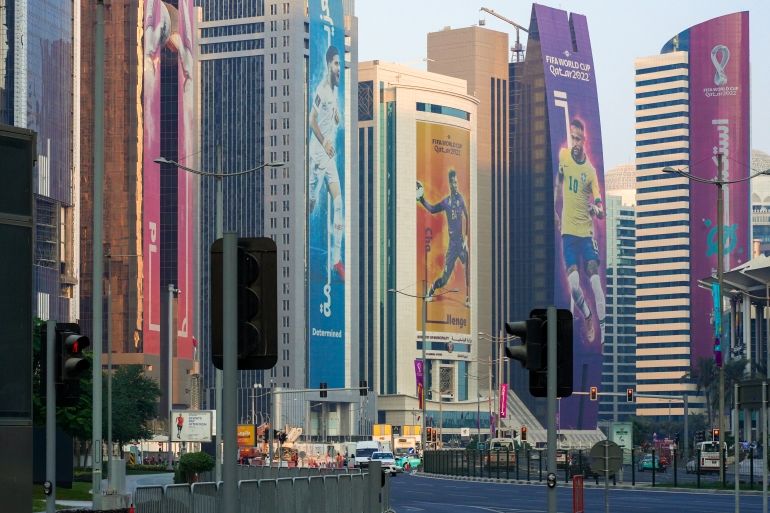
FIFA World Cup Qatar 2022 posters on buildings in the capital, Doha


COVID-related hospitalisations and deaths are dropping, but as winter looms in the Northern Hemisphere and people spend more time indoors, health experts are warning of another global coronavirus wave.

In October, the World Health Organization and the European Centre for Disease Prevention and Control said Europe was entering its third pandemic winter and COVID-19 and seasonal influenza were “co-circulating”, increasing risks for vulnerable communities, such as the elderly and people with disabilities.

In the United States, cases of the new Omicron subvariants BQ.1 and BQ1.1 have doubled in recent weeks and could lead to a large surge of COVID-19 cases, according to some scientists.

To date, there have been more than 629 million confirmed infections globally and almost 6.6 million deaths.


World Cup guidelines


While announcing its new health regulations, Qatar’s government said the contact-tracing app Ehteraz will no longer be necessary for entering any buildings except for health facilities.

On October 19, the government also announced that masks will no longer be required on public transport.

In a statement about the rollback of health controls, the health ministry pointed to the national vaccination programme and the continuing drop of COVID-19 cases in Qatar and around the world.

Cases in the Gulf country of 2.9 million people have decreased 34 percent from September 19 to October 17. To date, the country has recorded more than 465,000 infections and over 680 deaths since the pandemic began.


‘Pandemic not over’


A resident of Qatar told Al Jazeera that she understood why restrictions were being removed, but she said it was still important to “keep your guard up”.

“For more than two years now, we have had a safety net of sorts,” said the resident, who wished to remain anonymous. “We had mask mandates, the need to be vaccinated, boosted and what not.

“Now it will mostly be gone. It makes me very uneasy because it’s not like the pandemic is over.”

Laith Abu-Raddad, a professor of Infectious Disease Epidemiology at Cornell University in Doha, said a large number of people coming together at the World Cup can result in more infections.

“There will be lots of mass gatherings, where people will be close to each other – inside the stadium, queues outside, fan zones, parties indoors where friends will watch the games together,” he told Al Jazeera. “This is why it is important for everyone to keep at least some measures of caution and avoid crowding in close proximity to other people.”
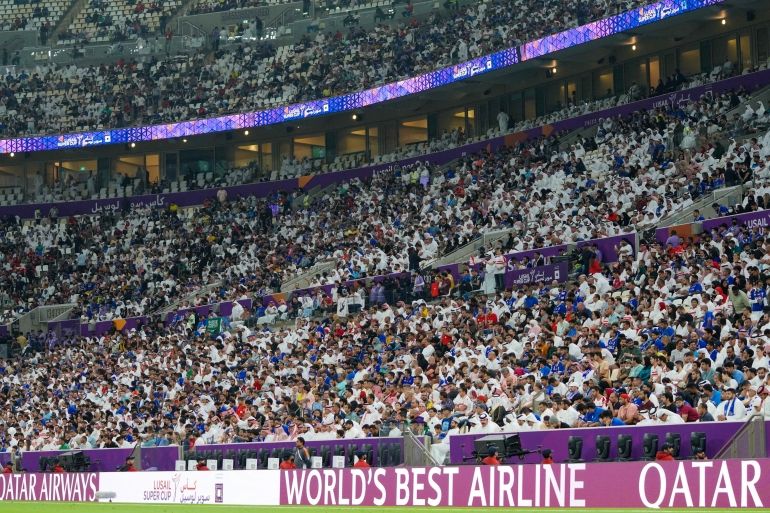
All stadiums in Qatar are expected to fill to their maximum capacities during the World Cup


Abu-Raddad said it was “extremely important” for those over 50 to get their booster shots.

“This is really the simplest thing anyone can do to protect themselves because older people and people with co-morbidities are the people who have the highest risk,” he said.


Numbers unlikely to reach ‘serious levels’


Yet Zein Abid, who works as a security guard in Doha, said he and his friends have “almost forgotten” about COVID-19 and how it had previously “taken over” their lives for two and a half years.

“It’s something we have come to live with,” Abid told Al Jazeera. “I feel Qatar has handled the pandemic better than most countries … Death rates have been low. I think we will be fine.”

Abu-Raddad said that while he expects a rise in infections during the World Cup, the number of severe cases and hospitalisations were unlikely to reach “serious levels”.

For one thing, he said, there are high levels of immunity worldwide. More than 69 percent of people on the planet have received at least one dose of a COVID vaccine while 64 percent are fully vaccinated.

“Fans will be coming for a few days,” Abu-Raddad added. “It’s not like they’re coming here for a long time where they were going to get infected, infect others and be hospitalised here.”


Newsletter

Related Articles

Saudi Press
0:00
0:00
Close
Saudi Industrial Group Completes One Point Three Billion Dollar Acquisition of South Africa’s Barloworld
Saudi-Backed LIV Golf Confirms Return to Trump National Bedminster for 2026 Season
Gold Jumps More Than 8% in a Week as the Dollar Slides Amid Greenland Tariff Dispute
Boston Dynamics Atlas humanoid robot and LG CLOiD home robot: the platform lock-in fight to control Physical AI
United States under President Donald Trump completes withdrawal from the World Health Organization: health sovereignty versus global outbreak early-warning access
Trump Administration’s Iran Military Buildup and Sanctions Campaign Puts Deterrence Credibility on the Line
Tech Brief: AI Compute, Chips, and Platform Power Moves Driving Today’s Market Narrative
NATO’s Stress Test Under Trump: Alliance Credibility, Burden-Sharing, and the Fight Over Strategic Territory
Saudi Arabia’s Careful Balancing Act in Relations with Israel Amid Regional and Domestic Pressures
Greenland, Gaza, and Global Leverage: Today’s 10 Power Stories Shaping Markets and Security
America’s Venezuela Oil Grip Meets China’s Demand: Market Power, Legal Shockwaves, and the New Rules of Energy Leverage
Trump’s Board of Peace: Breakthrough Diplomacy or a Hostile Takeover of Global Order?
Prince William to Make Official Visit to Saudi Arabia in February
Saudi Arabia Advances Ambitious Artificial River Mega-Project to Transform Water Security
Saudi Crown Prince and Syrian President Discuss Stabilisation, Reconstruction and Regional Ties in Riyadh Talks
Mohammed bin Salman Confronts the ‘Iranian Moment’ as Saudi Leadership Faces Regional Test
Cybercrime, Inc.: When Crime Becomes an Economy. How the World Accidentally Built a Twenty-Trillion-Dollar Criminal Economy
Strategic Restraint, Credible Force, and the Discipline of Power
Donald Trump Organization Unveils Championship Golf Course and Luxury Resort Project in Saudi Arabia
Inside Diriyah: Saudi Arabia’s $63.2 Billion Vision to Transform Its Historic Heart into a Global Tourism Powerhouse
Trump Designates Saudi Arabia a Major Non-NATO Ally, Elevating US–Riyadh Defense Partnership
Trump Organization Deepens Saudi Property Focus with $10 Billion Luxury Developments
There is no sovereign immunity for poisoning millions with drugs.
Mohammed bin Salman’s Global Standing: Strategic Partner in Transition Amid Debate Over His Role
Saudi Arabia Opens Property Market to Foreign Buyers in Landmark Reform
The U.S. State Department’s account in Persian: “President Trump is a man of action. If you didn’t know it until now, now you do—do not play games with President Trump.”
CNN’s Ranking of Israel’s Women’s Rights Sparks Debate After Misleading Global Index Comparison
Saudi Arabia’s Shifting Regional Alignment Raises Strategic Concerns in Jerusalem
OPEC+ Holds Oil Output Steady Amid Member Tensions and Market Oversupply
Iranian Protests Intensify as Another Revolutionary Guard Member Is Killed and Khamenei Blames the West
President Trump Says United States Will Administer Venezuela Until a Secure Leadership Transition
Delta Force Identified as Unit Behind U.S. Operation That Captured Venezuela’s President
Trump Announces U.S. Large-Scale Strike on Venezuela, Declares President Maduro and Wife Captured
Saudi-UAE Rift Adds Complexity to Middle East Diplomacy as Trump Signals Firm Leadership
OPEC+ to Keep Oil Output Policy Unchanged Despite Saudi-UAE Tensions Over Yemen
Saudi Arabia and UAE at Odds in Yemen Conflict as Southern Offensive Deepens Gulf Rift
Abu Dhabi ‘Capital of Capital’: How Abu Dhabi Rose as a Sovereign Wealth Power
Diamonds Are Powering a New Quantum Revolution
Trump Threatens Strikes Against Iran if Nuclear Programme Is Restarted
Why Saudi Arabia May Recalibrate Its US Spending Commitments Amid Rising China–America Rivalry
Riyadh Air’s First Boeing 787-9 Dreamliner Completes Initial Test Flight, Advancing Saudi Carrier’s Launch
Saudi Arabia’s 2025: A Pivotal Year of Global Engagement and Domestic Transformation
Saudi Arabia to Introduce Sugar-Content Based Tax on Sweetened Drinks from January 2026
Saudi Hotels Prepare for New Hospitality Roles as Alcohol Curbs Ease
Global Airports Forum Highlights Saudi Arabia’s Emergence as a Leading Aviation Powerhouse
Saudi Arabia Weighs Strategic Choice on Iran Amid Regional Turbulence
Not Only F-35s: Saudi Arabia to Gain Access to the World’s Most Sensitive Technology
Saudi Arabia Condemns Sydney Bondi Beach Shooting and Expresses Solidarity with Australia
Washington Watches Beijing–Riyadh Rapprochement as Strategic Balance Shifts
Saudi Arabia Urges Stronger Partnerships and Efficient Aid Delivery at OCHA Donor Support Meeting in Geneva
×