
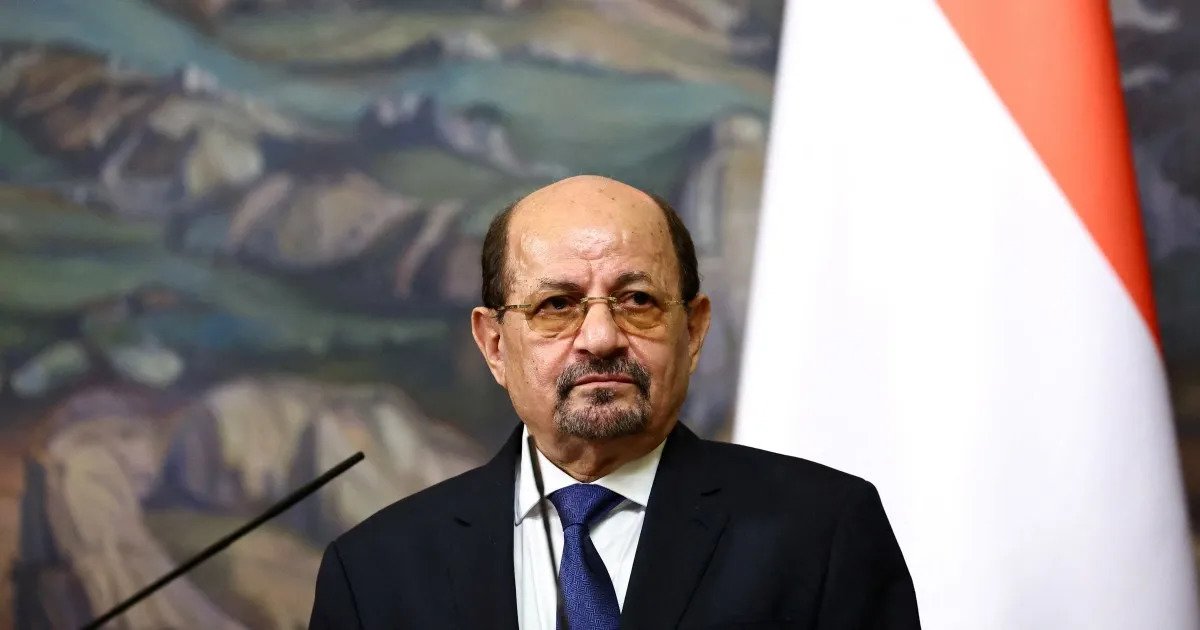
Yemen’s Saudi-Backed Government Appoints Shaya Mohsin Zindani as Prime Minister
Presidential Leadership Council accepts resignation of Salem bin Breik and installs foreign minister to steer new cabinet amid political tensions
Yemen’s Saudi-backed Presidential Leadership Council (PLC) has accepted the resignation of Prime Minister Salem bin Breik and appointed the country’s foreign minister, Shaya Mohsin Zindani, as the new prime minister, state media reported on Friday.
Bin Breik formally tendered his resignation to the council, which swiftly approved the move and tasked Zindani with forming a fresh cabinet to lead the internationally recognised government.
Zindani, a veteran diplomat who has held senior posts including ambassadorial positions and foreign minister since early 2024, steps into the premiership at a time of heightened internal and regional challenges for Yemen’s government, which is engaged in a protracted conflict with Houthi forces and navigating deep geopolitical pressures.
The leadership transition follows weeks of political and military tensions in Yemen, including renewed clashes with the Southern Transitional Council (STC) — a separatist group backed by the United Arab Emirates — that seized significant southern territory late last year before Saudi-aligned forces reclaimed control.
The reshuffle also extended to other key figures: the PLC dismissed STC vice-president Faraj Salmeen al-Bahsani from his council role in a separate resolution issued on Thursday, underscoring ongoing efforts to consolidate unity and authority within the recognised government.
Analysts view the appointment of Zindani, entrusted with crafting a new government, as part of a broader Saudi-orchestrated effort to stabilise leadership in Aden and maintain continuity of state functions despite fractious dynamics.
The move is expected to influence diplomatic and security cooperation with regional partners, particularly Riyadh, as the government seeks to reinforce its legitimacy and respond to both domestic pressures and external strategic concerns.
Bin Breik formally tendered his resignation to the council, which swiftly approved the move and tasked Zindani with forming a fresh cabinet to lead the internationally recognised government.
Zindani, a veteran diplomat who has held senior posts including ambassadorial positions and foreign minister since early 2024, steps into the premiership at a time of heightened internal and regional challenges for Yemen’s government, which is engaged in a protracted conflict with Houthi forces and navigating deep geopolitical pressures.
The leadership transition follows weeks of political and military tensions in Yemen, including renewed clashes with the Southern Transitional Council (STC) — a separatist group backed by the United Arab Emirates — that seized significant southern territory late last year before Saudi-aligned forces reclaimed control.
The reshuffle also extended to other key figures: the PLC dismissed STC vice-president Faraj Salmeen al-Bahsani from his council role in a separate resolution issued on Thursday, underscoring ongoing efforts to consolidate unity and authority within the recognised government.
Analysts view the appointment of Zindani, entrusted with crafting a new government, as part of a broader Saudi-orchestrated effort to stabilise leadership in Aden and maintain continuity of state functions despite fractious dynamics.
The move is expected to influence diplomatic and security cooperation with regional partners, particularly Riyadh, as the government seeks to reinforce its legitimacy and respond to both domestic pressures and external strategic concerns.