Iran Expands Strikes on Saudi and Qatari Infrastructure, Opening a New Front in Gulf Conflict
Tehran’s missile and drone campaign targets energy and strategic assets in Saudi Arabia and Qatar, deepening regional turmoil amid the broader Iran–US–Israel war
Iran has broadened its military offensive across the Gulf, striking key infrastructure in Saudi Arabia and Qatar in what amounts to a direct confrontation with the region’s leading energy producers.
The attacks, which followed coordinated United States and Israeli strikes on Iranian territory, have hit oil and gas installations, disrupted production facilities and underscored how the conflict has spilled well beyond the immediate Israel-Iran theatre.
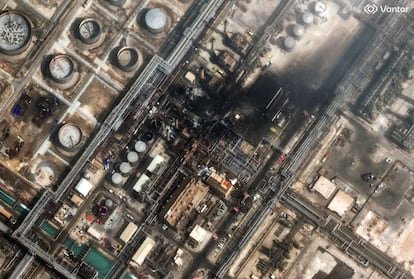
Iranian drone strikes on Saudi Arabia’s Ras Tanura oil refinery — one of the world’s largest facilities — triggered a large fire and forced the site’s shutdown as a precaution, although Saudi authorities said domestic fuel supplies were not immediately affected.
Qatar’s liquefied natural gas production was also suspended after Iranian strikes on facilities operated by QatarEnergy, pressuring global gas markets and causing a sharp rise in energy prices.
In Qatar, shrapnel from intercepted missiles and debris have injured civilians and led to the closure of airspace, affecting flights in and out of Doha.
Both Saudi and Qatari authorities report robust air-defence responses, with multiple incoming projectiles intercepted.
Beyond energy infrastructure, Iran has launched ballistic missiles at targets across the Gulf states, including sites hosting United States and allied forces in Saudi Arabia, Qatar, the United Arab Emirates, Bahrain and Kuwait.
Explosions have been reported near Riyadh and in other capitals as regional air-defence systems activate in response to successive salvos.
Iran’s expanded strikes reflect Tehran’s strategic intent to counter U.S. and Israeli operations and to signal that attacks on its territory will prompt broad retaliation against nations perceived as aligned with Washington and Jerusalem.
The assaults have triggered diplomatic protests, with Saudi Arabia summoning Iran’s ambassador to condemn the attacks as violations of sovereignty and Gulf states affirming their right to defend their territories under international law.
Energy markets have reacted sharply, with both oil and liquefied natural gas benchmarks surging as the Strait of Hormuz — a critical artery for global hydrocarbon exports — is effectively closed and tanker traffic reroutes amid heightened risk.
Analysts warn that sustained disruption to Gulf energy infrastructure could have lasting implications for global supply and inflationary pressures.
As conflict dynamics evolve, Gulf monarchies and their partners face mounting pressure to balance defence measures with diplomatic efforts to contain further escalation.
The attacks, which followed coordinated United States and Israeli strikes on Iranian territory, have hit oil and gas installations, disrupted production facilities and underscored how the conflict has spilled well beyond the immediate Israel-Iran theatre.
Iranian drone strikes on Saudi Arabia’s Ras Tanura oil refinery — one of the world’s largest facilities — triggered a large fire and forced the site’s shutdown as a precaution, although Saudi authorities said domestic fuel supplies were not immediately affected.
Qatar’s liquefied natural gas production was also suspended after Iranian strikes on facilities operated by QatarEnergy, pressuring global gas markets and causing a sharp rise in energy prices.
In Qatar, shrapnel from intercepted missiles and debris have injured civilians and led to the closure of airspace, affecting flights in and out of Doha.
Both Saudi and Qatari authorities report robust air-defence responses, with multiple incoming projectiles intercepted.
Beyond energy infrastructure, Iran has launched ballistic missiles at targets across the Gulf states, including sites hosting United States and allied forces in Saudi Arabia, Qatar, the United Arab Emirates, Bahrain and Kuwait.
Explosions have been reported near Riyadh and in other capitals as regional air-defence systems activate in response to successive salvos.
Iran’s expanded strikes reflect Tehran’s strategic intent to counter U.S. and Israeli operations and to signal that attacks on its territory will prompt broad retaliation against nations perceived as aligned with Washington and Jerusalem.
The assaults have triggered diplomatic protests, with Saudi Arabia summoning Iran’s ambassador to condemn the attacks as violations of sovereignty and Gulf states affirming their right to defend their territories under international law.
Energy markets have reacted sharply, with both oil and liquefied natural gas benchmarks surging as the Strait of Hormuz — a critical artery for global hydrocarbon exports — is effectively closed and tanker traffic reroutes amid heightened risk.
Analysts warn that sustained disruption to Gulf energy infrastructure could have lasting implications for global supply and inflationary pressures.
As conflict dynamics evolve, Gulf monarchies and their partners face mounting pressure to balance defence measures with diplomatic efforts to contain further escalation.