0:00
0:00
World Economic Forum Delays Saudi Conference as Regional Conflict Disrupts Global Agenda
Escalating tensions in the Gulf force postponement of high-profile Jeddah meeting, underscoring impact of war on international coordination
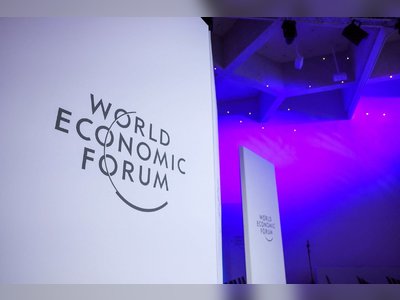
The World Economic Forum has postponed a major conference planned in Saudi Arabia as ongoing conflict in the region continues to disrupt international engagement and economic coordination.
The gathering, scheduled to take place in Jeddah, was expected to bring together senior political leaders, global executives, and policymakers to discuss economic growth, energy markets, and geopolitical stability.
However, intensifying hostilities and security concerns have led organisers to delay the event, reflecting the broader uncertainty gripping the Gulf.
Saudi officials confirmed that the decision followed consultations with the forum and was driven by current regional developments.
While no new date has yet been announced, authorities have reiterated their commitment to hosting the event when conditions allow for a secure and productive environment.
The postponement highlights the growing impact of the conflict on global economic dialogue.
As tensions involving Iran and regional actors escalate, the Gulf has become a focal point of geopolitical risk, affecting not only security calculations but also international business planning and investment flows.
Saudi Arabia has positioned itself as a leading venue for global forums and economic initiatives in recent years, leveraging its strategic location and ambitious development agenda to attract high-level gatherings.
The delay therefore represents a temporary setback in its efforts to maintain momentum as a hub for international cooperation.
Despite the disruption, Saudi leadership continues to emphasize stability and long-term economic transformation, maintaining engagement with global partners while navigating the challenges posed by the evolving security landscape.
The decision to postpone the conference reflects a pragmatic approach aimed at preserving both safety and the effectiveness of future discussions.
The move also underscores how rapidly shifting geopolitical conditions can reshape global schedules, even for established institutions.
As the conflict continues, further adjustments to international events in the region remain possible, with organisers closely monitoring developments on the ground.
The eventual rescheduling of the Jeddah meeting is expected to remain a priority, given its role in advancing dialogue on economic resilience and cooperation at a time of heightened global uncertainty.
The gathering, scheduled to take place in Jeddah, was expected to bring together senior political leaders, global executives, and policymakers to discuss economic growth, energy markets, and geopolitical stability.
However, intensifying hostilities and security concerns have led organisers to delay the event, reflecting the broader uncertainty gripping the Gulf.
Saudi officials confirmed that the decision followed consultations with the forum and was driven by current regional developments.
While no new date has yet been announced, authorities have reiterated their commitment to hosting the event when conditions allow for a secure and productive environment.
The postponement highlights the growing impact of the conflict on global economic dialogue.
As tensions involving Iran and regional actors escalate, the Gulf has become a focal point of geopolitical risk, affecting not only security calculations but also international business planning and investment flows.
Saudi Arabia has positioned itself as a leading venue for global forums and economic initiatives in recent years, leveraging its strategic location and ambitious development agenda to attract high-level gatherings.
The delay therefore represents a temporary setback in its efforts to maintain momentum as a hub for international cooperation.
Despite the disruption, Saudi leadership continues to emphasize stability and long-term economic transformation, maintaining engagement with global partners while navigating the challenges posed by the evolving security landscape.
The decision to postpone the conference reflects a pragmatic approach aimed at preserving both safety and the effectiveness of future discussions.
The move also underscores how rapidly shifting geopolitical conditions can reshape global schedules, even for established institutions.
As the conflict continues, further adjustments to international events in the region remain possible, with organisers closely monitoring developments on the ground.
The eventual rescheduling of the Jeddah meeting is expected to remain a priority, given its role in advancing dialogue on economic resilience and cooperation at a time of heightened global uncertainty.