0:00
0:00
Can Saudi Arabia’s Yanbu Port Replace Hormuz? Capacity Limits Test Critical Oil Lifeline
Red Sea export route offers vital alternative but falls short of fully replacing disrupted Gulf shipments
Saudi Arabia’s Red Sea port of Yanbu has emerged as a crucial outlet for oil exports as disruptions to the Strait of Hormuz force a rapid shift in global energy logistics, but mounting evidence suggests it cannot fully replace the capacity of the Gulf route.
The kingdom has activated its long-established East-West pipeline network to reroute crude from its eastern oil fields to Yanbu, allowing shipments to bypass the volatile Gulf corridor.
This infrastructure, developed decades ago as a contingency against precisely such disruptions, has enabled Saudi Arabia to sustain a significant portion of its exports despite escalating regional tensions.
Exports from Yanbu have surged sharply, with volumes rising to around two to three million barrels per day in recent weeks.
However, this remains well below the levels typically transported through the Strait of Hormuz, which has historically handled a far greater share of global oil flows.
The constraints are not limited to the pipeline itself.
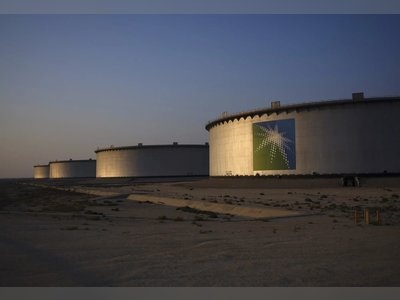
While the system is theoretically capable of transporting up to seven million barrels per day, the practical bottleneck lies at the port, where loading capacity and shipping logistics restrict how much crude can be exported.
Analysts note that even under maximum utilisation, Yanbu can only offset a portion of the lost Gulf shipments.
Operational pressures are also becoming visible on the ground.
A growing number of tankers have gathered off the Red Sea coast, waiting to load cargo as Saudi Arabia accelerates the rerouting effort.
This congestion highlights the strain on infrastructure as demand for alternative export routes intensifies.
Security risks present an additional challenge.
The Red Sea route, while avoiding the Gulf, is not immune to regional instability, and recent incidents have underscored the vulnerability of key facilities.
Any disruption at Yanbu would further tighten global supply at a time when markets are already under pressure.
Despite these limitations, Saudi Arabia’s ability to pivot to Yanbu has played an important stabilising role in global energy markets.
By maintaining a steady flow of crude, even at reduced volumes, the kingdom has helped mitigate the immediate impact of disruptions in one of the world’s most critical shipping chokepoints.
The situation illustrates both the strength and the limits of alternative infrastructure.
Yanbu provides a vital pressure valve, enabling continued exports and supporting global supply chains, but it does not offer a complete substitute for the scale and efficiency of Hormuz.
As regional tensions persist, the capacity of Yanbu and the resilience of Saudi Arabia’s energy network will remain central to the balance of global oil markets.
The kingdom has activated its long-established East-West pipeline network to reroute crude from its eastern oil fields to Yanbu, allowing shipments to bypass the volatile Gulf corridor.
This infrastructure, developed decades ago as a contingency against precisely such disruptions, has enabled Saudi Arabia to sustain a significant portion of its exports despite escalating regional tensions.
Exports from Yanbu have surged sharply, with volumes rising to around two to three million barrels per day in recent weeks.
However, this remains well below the levels typically transported through the Strait of Hormuz, which has historically handled a far greater share of global oil flows.
The constraints are not limited to the pipeline itself.
While the system is theoretically capable of transporting up to seven million barrels per day, the practical bottleneck lies at the port, where loading capacity and shipping logistics restrict how much crude can be exported.
Analysts note that even under maximum utilisation, Yanbu can only offset a portion of the lost Gulf shipments.
Operational pressures are also becoming visible on the ground.
A growing number of tankers have gathered off the Red Sea coast, waiting to load cargo as Saudi Arabia accelerates the rerouting effort.
This congestion highlights the strain on infrastructure as demand for alternative export routes intensifies.
Security risks present an additional challenge.
The Red Sea route, while avoiding the Gulf, is not immune to regional instability, and recent incidents have underscored the vulnerability of key facilities.
Any disruption at Yanbu would further tighten global supply at a time when markets are already under pressure.
Despite these limitations, Saudi Arabia’s ability to pivot to Yanbu has played an important stabilising role in global energy markets.
By maintaining a steady flow of crude, even at reduced volumes, the kingdom has helped mitigate the immediate impact of disruptions in one of the world’s most critical shipping chokepoints.
The situation illustrates both the strength and the limits of alternative infrastructure.
Yanbu provides a vital pressure valve, enabling continued exports and supporting global supply chains, but it does not offer a complete substitute for the scale and efficiency of Hormuz.
As regional tensions persist, the capacity of Yanbu and the resilience of Saudi Arabia’s energy network will remain central to the balance of global oil markets.