0:00
0:00
Saudi Arabia and UAE Push Ahead With Major Deals Despite Iran-Related Uncertainty
Gulf economies continue investment and trade activity as leaders prioritise stability and long-term growth amid regional tensions
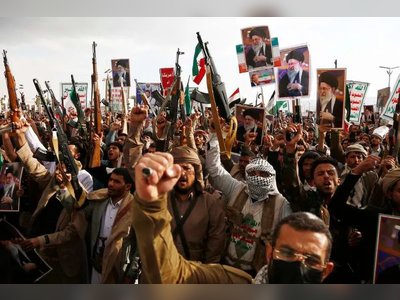
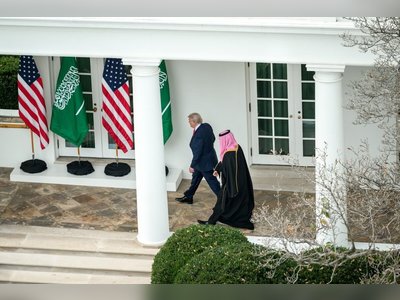
Saudi Arabia and the United Arab Emirates are continuing to advance major investment and trade deals despite uncertainty linked to tensions involving Iran, signalling confidence in their long-term economic strategies and commitment to regional stability.
Both countries have maintained a steady pace of dealmaking across sectors including energy, infrastructure, technology, and finance, even as geopolitical risks in the Middle East have intensified.
The ongoing activity reflects a deliberate effort by Gulf leaders to insulate economic development from short-term volatility and reinforce their positions as global investment hubs.
Saudi Arabia, in particular, has accelerated initiatives aligned with its economic transformation programme, pursuing partnerships and projects designed to diversify its economy beyond oil.
The United Arab Emirates has similarly continued to expand its international investment footprint, leveraging its established role as a financial and logistics centre connecting global markets.
Officials in both countries have emphasised that maintaining economic momentum is essential, even in periods of uncertainty.
By continuing to sign agreements and attract capital, they aim to send a clear signal of resilience and reliability to global partners.
The persistence of dealmaking comes as regional tensions have raised concerns about potential disruptions to trade routes and energy flows.
However, Gulf states have focused on ensuring continuity in business operations, supported by strong infrastructure, strategic reserves, and coordinated security measures.
Investors have responded by maintaining engagement with projects in the region, particularly those linked to long-term growth sectors such as renewable energy, digital infrastructure, and advanced manufacturing.
Analysts note that while geopolitical risks remain a factor, the scale of opportunity in Gulf markets continues to attract international interest.
The approach taken by Saudi Arabia and the UAE highlights a broader shift toward economic resilience and strategic autonomy, with both countries seeking to balance geopolitical challenges with sustained development.
Their continued dealmaking activity suggests that, rather than pausing in the face of uncertainty, they are positioning themselves to emerge stronger in a changing global landscape.
As the situation involving Iran evolves, the ability of Gulf economies to maintain stability and forward momentum is likely to play a key role in shaping regional confidence and global investment flows.
Both countries have maintained a steady pace of dealmaking across sectors including energy, infrastructure, technology, and finance, even as geopolitical risks in the Middle East have intensified.
The ongoing activity reflects a deliberate effort by Gulf leaders to insulate economic development from short-term volatility and reinforce their positions as global investment hubs.
Saudi Arabia, in particular, has accelerated initiatives aligned with its economic transformation programme, pursuing partnerships and projects designed to diversify its economy beyond oil.
The United Arab Emirates has similarly continued to expand its international investment footprint, leveraging its established role as a financial and logistics centre connecting global markets.
Officials in both countries have emphasised that maintaining economic momentum is essential, even in periods of uncertainty.
By continuing to sign agreements and attract capital, they aim to send a clear signal of resilience and reliability to global partners.
The persistence of dealmaking comes as regional tensions have raised concerns about potential disruptions to trade routes and energy flows.
However, Gulf states have focused on ensuring continuity in business operations, supported by strong infrastructure, strategic reserves, and coordinated security measures.
Investors have responded by maintaining engagement with projects in the region, particularly those linked to long-term growth sectors such as renewable energy, digital infrastructure, and advanced manufacturing.
Analysts note that while geopolitical risks remain a factor, the scale of opportunity in Gulf markets continues to attract international interest.
The approach taken by Saudi Arabia and the UAE highlights a broader shift toward economic resilience and strategic autonomy, with both countries seeking to balance geopolitical challenges with sustained development.
Their continued dealmaking activity suggests that, rather than pausing in the face of uncertainty, they are positioning themselves to emerge stronger in a changing global landscape.
As the situation involving Iran evolves, the ability of Gulf economies to maintain stability and forward momentum is likely to play a key role in shaping regional confidence and global investment flows.