Saudi Press

Saudi Arabia and the world
Thursday, Jul 23, 2026

What’s really going on with Covid deaths data?

What’s really going on with Covid deaths data?

Covid deaths are rising sharply in the UK, but an increasing proportion of these are actually due to something else, BBC analysis suggests.

That's because some people die with Covid rather than from it.

The Omicron wave is driving rising infections, which means more people will catch it and some will get sick.

Deaths will inevitably increase too, but not all will be "true" Covid ones. Others will be people who happened to test positive.

There are a number of ways we monitor the number of deaths connected to Covid. The most prominent is the daily count of anyone who has died within 28 days of testing positive.

For the vast majority of those people, Covid has been the primary cause of their death.

But there has always been a minority who died from another cause. And with Omicron infecting so many people, there is a higher likelihood of people dying from an unrelated reason in the month after testing positive than there has been in the past.

Doctors registering a death record what may have contributed to it, and what most likely caused it.

If Covid contributed in some way, that's a death "involving Covid". The number of these deaths has tracked the daily death count closely throughout most of the pandemic.

During autumn and the run-up to Christmas, only about 15% of deaths involving Covid in England and Wales did not list Covid as the cause.

In the week after Christmas, that rose to 22%.

And in the coming weeks "we might expect that to rise further" says Cambridge statistician Prof Sir David Spiegelhalter "reflecting the very high levels of people with coronavirus".
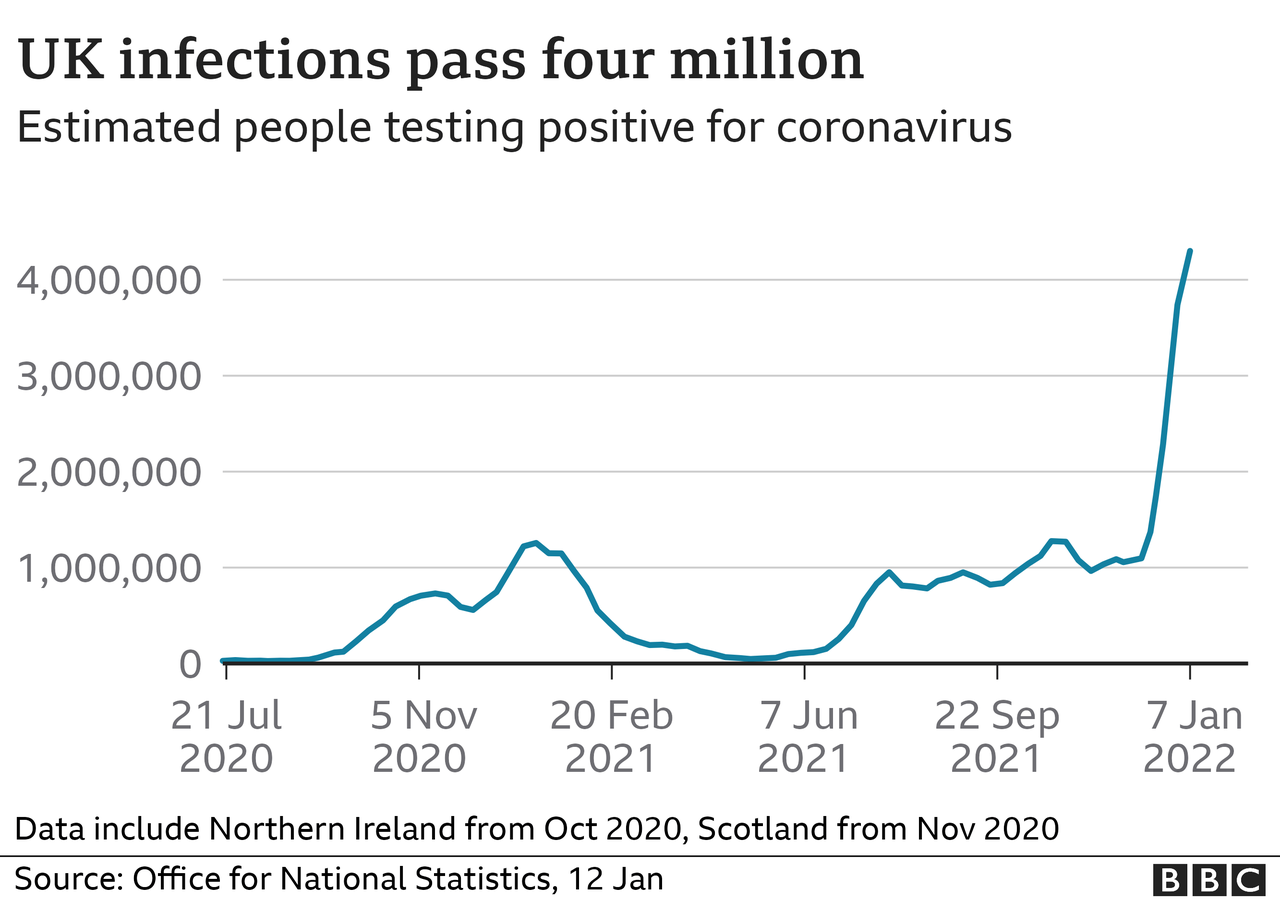

About 4.3 million people in the UK have coronavirus at the moment - a historically high level - and four times more than at the start of December.

So the number of people who might happen to test positive for coronavirus in the month before their death is likely to be on the rise too.

This wasn't as much of an issue when fewer people had coronavirus.

But at the moment you might expect to see, very roughly, about 55 of these "coincidental" Covid deaths a day, based on the roughly 2,000 people who die each day in the winter months - and the nearly 6% of people in the UK who have tested positive in the past four weeks (mostly young people at lower risk of dying).

Current figures show, on average, nearly 210 people are dying each day within 28 days of a positive test, up from 110 just before Christmas.
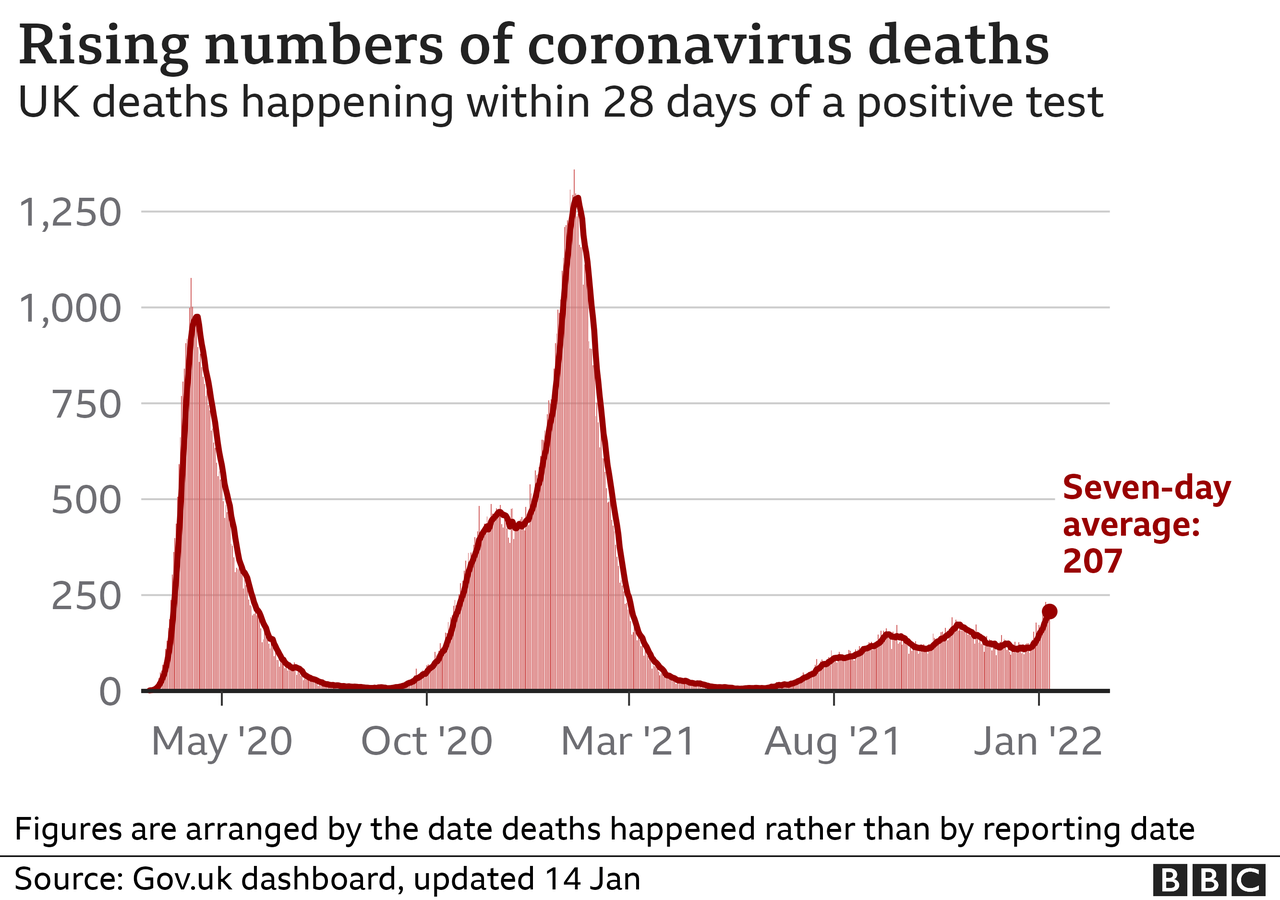

So a small portion of the daily Covid deaths would be "coincidental", but the rise in this type of death would account for nearly half of the rise we've seen in Covid deaths since Christmas.

The daily death figure will be a tricky measure to follow in the coming weeks says Prof Sylvia Richardson, president of the Royal Statistical Society, since it can be so influenced by how many people have tested positive recently.

She thinks the number of deaths caused by coronavirus, based on death registrations, is the "best number to watch".

That requires patience. Deaths that happen this week may not be registered until next week, and not reported for another week or two after that. So they take longer to arrive.

But they will increasingly become our best picture of Covid's sad death toll.

Newsletter

Related Articles

Saudi Press
0:00
0:00
Close
Miliband Sets Climate and International Law at Centre of UK Diplomacy
Pentagon Discloses Nearly 100 US Troop Injuries During Renewed Iran Fighting
Trump Readies New Tariffs as Temporary Global Levy Nears Expiry
High Prices Push Coffee Drinkers Toward Whole Beans and Home Brewing
Trump Draws Boos and Podium Scrutiny at Spain’s World Cup Triumph
Spain Defeats Argentina in Extra Time to Win Second World Cup
Turkey Explores S-400 Transfer to UAE in Bid to Rejoin F-35 Program
US Retaliates Against Iran After Two American Troops Killed in Jordan
Proposed U.S.-Saudi Nuclear Pact Could Permit Limited Uranium Enrichment Under International Safeguards
Why Kentucky Fried Chicken Became KFC—and Why the False Explanations Persist
Iran Claims It Destroyed Bahrain’s Main Artificial Intelligence Center in Missile and Drone Strike
Ukrainian Drones Strike Wildberries Warehouses Deep Inside Russia
Reported CIA Mission Helped Clear the UAE’s Path to Advanced US AI Chips
Artificial Intelligence Capital Fuels Markets While Governments and Regulators Face Mounting Strategic Tests
China’s Moonshot’s Kimi K3 Narrows the Gap With Anthropic Through Scale, Openness and Lower Cost
Gold and Cash Seizure Puts Indonesia’s Senior Anti-Corruption Prosecutor Under Investigation
The Ledger Will Not Trust on Faith
Passenger Bound for Germany Refused to Sit Beside a Woman on a Plane — Then Slapped a Flight Attendant
Ukraine’s Leadership Rift Spills Into the Streets as Protesters Target Army Chief
The Ten World Cup Finals That Defined Football History
Smartphones Are Getting More Expensive, Sales Are Collapsing, and Even Apple Admits: "Prices Will Rise"
Leadership Change and Strategic Rivalry Redraw the Political Map
The AI Race Enters Its Infrastructure Era
Britain Nationalises British Steel to Protect Scunthorpe Production and Strategic Supply
Thomas Tuchel Faces Fierce Backlash After Tactical Retreat Costs England World Cup Final Berth
A Quiet Bastille Day: France Grapples with World Cup Heartbreak and Leftover Fireworks
Spain in Ecstasy: "We Feel Unbeatable, We Taught the Whole World a Lesson"
Harvard Astrophysicist to Lead U.S. Scientific Advisory on Unidentified Aerial Phenomena
Emergency Sirens Activated Across Bahrain as Interior Ministry Issues Shelter Directives
World Cup Visitors Turn American Big-Box Stores Into Souvenir Stops
Netflix Weighs Always-On Channels, Bundles and Short-Form Video
The AI Invoice Shock: Layoffs Didn't Save Managers Money — They Cost Them More
Concern: Sexually Transmitted Bacterium Among Men Develops Antibiotic Resistance
Passenger Partially Pulled Out of Ryanair Jet After Cabin Window Fails Mid-Flight
Severe Heatwave Drives Dangerous Ground-Level Ozone Pollution Across Two Thirds of European Union
The Physical and Electronic Barriers Disrupting Domestic Wireless Networks
France and Morocco Open World Cup Quarter-Finals as Collina Defends Refereeing
Tech Pulse: The Future of AI and Screen Culture
Global News Briefing: Escalating Geopolitical Tensions and Corporate Shakeups
Global News Brief: Escalating Conflicts, Public Health Crises, and World Cup Drama
Europe's Growing Struggle with Extreme Heat and Air Conditioning
Anthropic Reengineers Agentic Architecture to Shift Autonomous Workplace Automation to the Cloud
Logic Flaw in Windows 11 Permission Architecture Silently Consumes Hundreds of Gigabytes of Local Storage
Apple Advances Late-Stage Operating Systems with Fourth Beta Deployments
Global Crisis Alert: Escalating Middle East Tensions and UK Political Upheaval
Japanese Technology Firm Fujitsu Launches Advanced Artificial Intelligence Tool for Corporate Disclosures
South Africa Officially Launches Nationwide Campaign for Highly Contested Local Government Elections
United Kingdom Commits Additional Funding for Unexploded Ordnance Clearance in Laos
Singapore Announces Stringent New Greenhouse Gas Regulations for Commercial Cooling Systems
Cambodia and Thailand Hold High-Level Border Security Talks at United Nations Headquarters
×