
Venezuela’s Oil Paradox: How a Nation Richer in Oil Than Saudi Arabia Became Economically Devastated
Despite the world’s largest proven oil reserves, structural decline, mismanagement and sanctions have left Venezuela impoverished and producing far less oil than its potential
Venezuela, a country with proven crude oil reserves surpassing even those of Saudi Arabia, has suffered decades of economic collapse and impoverishment as its oil industry deteriorated and failed to deliver prosperity.
With roughly 303 billion barrels of proven oil — about 17 percent of the global total — concentrated mainly in the heavy, high-sulfur fields of the Orinoco Belt, Venezuela’s endowment on paper dwarfs Saudi Arabia’s roughly 267 billion barrels.
Yet Venezuela has struggled to translate that geological wealth into sustained production and national income, producing fewer than a million barrels per day in recent years — a fraction of Saudi Arabia’s output and well below Venezuela’s historic peaks.
Venezuela’s oil is technically challenging: extra-heavy crude requires energy-intensive extraction, significant diluents, specialised refining and modern infrastructure to produce economically, making it far more expensive and complex than Saudi Arabia’s light, sweet crude.
Over successive administrations, state oil company PDVSA was starved of investment, saw the departure of skilled personnel and became burdened by corruption and political interference.
The expropriation of foreign partners in the 2000s removed capital and expertise essential for operating Venezuela’s technically demanding fields, driving away major international oil firms and leaving the industry unable to maintain its infrastructure.
Economic sanctions imposed by the United States and others since 2017 further constricted access to markets, capital and equipment, contributing to a steep decline in production capacity.
With ageing refineries running at limited capacity, diluent shortages and storage bottlenecks compounding the problem, Venezuela now exports a small fraction of what it once did, generating only a few billion dollars in oil revenues while Saudi Arabia earns tens of billions annually.
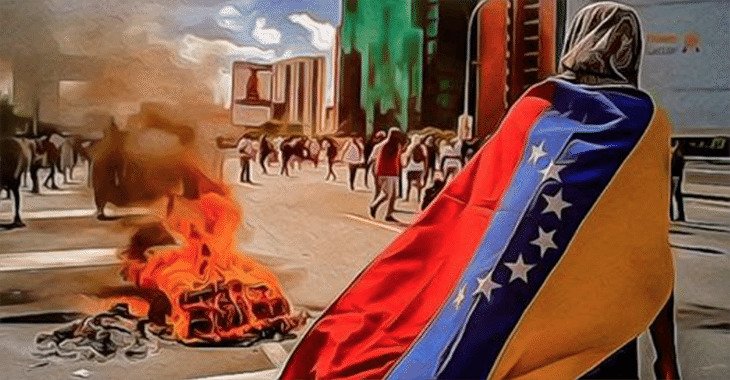
The consequences have been profound: decades of mismanagement, overreliance on oil exports, hyperinflation, currency collapse, shortages of basic goods and mass emigration have left millions in poverty.
Venezuela’s economic crisis illustrates how vast natural resources can become a burden rather than a blessing when governance, investment, political stability and global integration falter.
As debates continue over potential foreign investment and political transitions, experts caution that reversing the decline will require not only capital and technology but deep institutional reforms to restore productivity and economic resilience.
With roughly 303 billion barrels of proven oil — about 17 percent of the global total — concentrated mainly in the heavy, high-sulfur fields of the Orinoco Belt, Venezuela’s endowment on paper dwarfs Saudi Arabia’s roughly 267 billion barrels.
Yet Venezuela has struggled to translate that geological wealth into sustained production and national income, producing fewer than a million barrels per day in recent years — a fraction of Saudi Arabia’s output and well below Venezuela’s historic peaks.
Venezuela’s oil is technically challenging: extra-heavy crude requires energy-intensive extraction, significant diluents, specialised refining and modern infrastructure to produce economically, making it far more expensive and complex than Saudi Arabia’s light, sweet crude.
Over successive administrations, state oil company PDVSA was starved of investment, saw the departure of skilled personnel and became burdened by corruption and political interference.
The expropriation of foreign partners in the 2000s removed capital and expertise essential for operating Venezuela’s technically demanding fields, driving away major international oil firms and leaving the industry unable to maintain its infrastructure.
Economic sanctions imposed by the United States and others since 2017 further constricted access to markets, capital and equipment, contributing to a steep decline in production capacity.
With ageing refineries running at limited capacity, diluent shortages and storage bottlenecks compounding the problem, Venezuela now exports a small fraction of what it once did, generating only a few billion dollars in oil revenues while Saudi Arabia earns tens of billions annually.
The consequences have been profound: decades of mismanagement, overreliance on oil exports, hyperinflation, currency collapse, shortages of basic goods and mass emigration have left millions in poverty.
Venezuela’s economic crisis illustrates how vast natural resources can become a burden rather than a blessing when governance, investment, political stability and global integration falter.
As debates continue over potential foreign investment and political transitions, experts caution that reversing the decline will require not only capital and technology but deep institutional reforms to restore productivity and economic resilience.