Saudi–UAE Tensions Expose Deepening Power Struggle Over the Gulf’s Strategic Corridor
Competing security, economic and political ambitions between Riyadh and Abu Dhabi reshape alliances and influence across the Arabian Peninsula
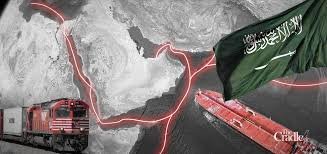
A widening rift between Saudi Arabia and the United Arab Emirates is emerging as a defining power struggle over control and influence along the Gulf’s strategic corridor, stretching from the Red Sea to the Arabian Sea.
Once close partners aligned on regional security and economic reform, the two leading Gulf states are now increasingly pursuing divergent agendas that are reshaping political, military and commercial dynamics across the Middle East.
At the heart of the tensions are conflicting visions for regional leadership, trade routes and security architecture.
Saudi Arabia has intensified efforts to position itself as the primary hub for logistics, finance and energy flows linking Europe, Asia and Africa, investing heavily in ports, transport corridors and industrial zones.
The UAE, long established as a global trading and maritime centre, has responded by reinforcing its own influence through port operations, free zones and strategic partnerships across the Gulf of Aden and the Horn of Africa.
These rival ambitions have become particularly visible in Yemen, where Saudi Arabia and the UAE now back different local actors and political outcomes.
Riyadh has focused on securing its southern border and promoting a unified Yemeni state aligned with its security interests, while Abu Dhabi has supported southern factions that favour greater autonomy and control over key ports and coastal routes.
The divergence has complicated peace efforts and highlighted the extent to which the two powers now see the region through competing strategic lenses.
Economic competition has further strained relations.
Saudi Arabia’s push to attract multinational headquarters to Riyadh, revise investment rules and localise supply chains has challenged the UAE’s long-held position as the Gulf’s commercial gateway.
Abu Dhabi and Dubai, in turn, have doubled down on regulatory flexibility, global connectivity and defence of their established business ecosystems, underscoring a growing contest for capital, talent and influence.
Despite the tensions, both governments continue to emphasise cooperation on shared security concerns and maintain formal diplomatic ties.
Officials in Riyadh and Abu Dhabi stress that disagreements reflect differing national priorities rather than a complete breakdown in relations.
Nonetheless, the Saudi–UAE rivalry is increasingly shaping the balance of power in the Gulf corridor, influencing conflict dynamics, trade routes and the future political order of one of the world’s most strategically vital regions.
Once close partners aligned on regional security and economic reform, the two leading Gulf states are now increasingly pursuing divergent agendas that are reshaping political, military and commercial dynamics across the Middle East.
At the heart of the tensions are conflicting visions for regional leadership, trade routes and security architecture.
Saudi Arabia has intensified efforts to position itself as the primary hub for logistics, finance and energy flows linking Europe, Asia and Africa, investing heavily in ports, transport corridors and industrial zones.
The UAE, long established as a global trading and maritime centre, has responded by reinforcing its own influence through port operations, free zones and strategic partnerships across the Gulf of Aden and the Horn of Africa.
These rival ambitions have become particularly visible in Yemen, where Saudi Arabia and the UAE now back different local actors and political outcomes.
Riyadh has focused on securing its southern border and promoting a unified Yemeni state aligned with its security interests, while Abu Dhabi has supported southern factions that favour greater autonomy and control over key ports and coastal routes.
The divergence has complicated peace efforts and highlighted the extent to which the two powers now see the region through competing strategic lenses.
Economic competition has further strained relations.
Saudi Arabia’s push to attract multinational headquarters to Riyadh, revise investment rules and localise supply chains has challenged the UAE’s long-held position as the Gulf’s commercial gateway.
Abu Dhabi and Dubai, in turn, have doubled down on regulatory flexibility, global connectivity and defence of their established business ecosystems, underscoring a growing contest for capital, talent and influence.
Despite the tensions, both governments continue to emphasise cooperation on shared security concerns and maintain formal diplomatic ties.
Officials in Riyadh and Abu Dhabi stress that disagreements reflect differing national priorities rather than a complete breakdown in relations.
Nonetheless, the Saudi–UAE rivalry is increasingly shaping the balance of power in the Gulf corridor, influencing conflict dynamics, trade routes and the future political order of one of the world’s most strategically vital regions.