Saudi Arabia’s $2.5 Trillion Mineral Wealth Could Transform Its Role in Global Rare Earth Supply
Riyadh’s expanded mineral reserve estimates and strategic partnerships position the kingdom to challenge China’s dominance in critical metals
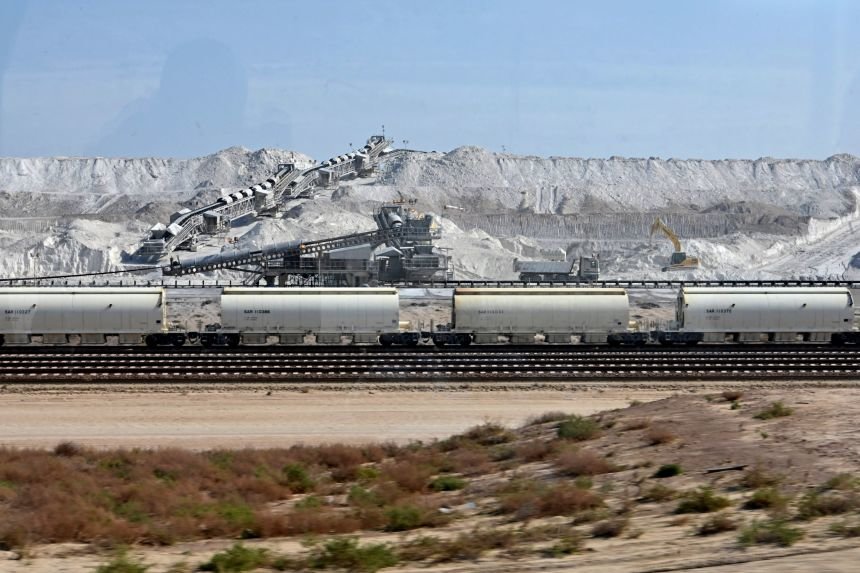
Saudi Arabia has revised the estimated value of its untapped mineral resources to around $2.5 trillion, a dramatic upward revision that reflects new discoveries of rare earth elements and other strategic metals alongside traditional deposits such as phosphate, gold and copper.
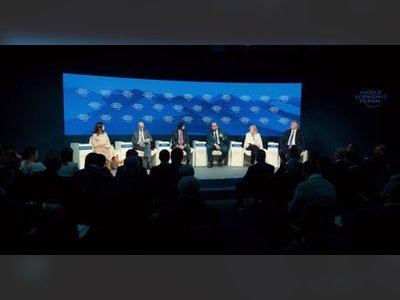
The reassessment — announced by the industry and mineral resources minister at a major mining forum in Riyadh — nearly doubles the previous valuation of about $1.3 trillion and includes a growing inventory of critical minerals essential for advanced technologies and clean energy systems.
Within this vast geological wealth, rare earth elements such as dysprosium, terbium and neodymium have been identified as part of the resource base underpinning Saudi Arabia’s ambition to reduce reliance on oil revenues and play a more influential role in the global supply chain for high-tech materials.
These rare earths are crucial components in electric vehicles, wind turbines, electronics and defence systems — sectors currently dominated by China, which controls the majority of rare earth processing and supply.
To develop this potential, the kingdom is accelerating exploration and partnering with international firms: Saudi mining giant Ma’aden has signed memoranda of understanding with United States, Chinese, Australian and Canadian companies to build an integrated rare earth supply chain that could encompass extraction, refining and magnet production.
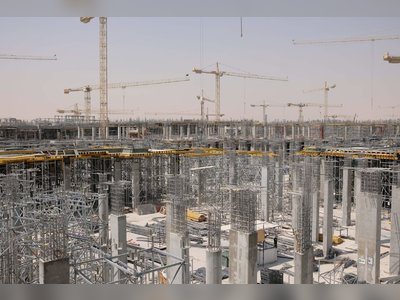
Efforts are also underway to attract foreign investment and technology transfer, with Saudi authorities issuing extensive exploration licenses and expanding geological surveys across the Arabian Shield region, which hosts much of the country’s mineral diversity.
Investment in infrastructure and regulatory reforms aim to make mining one of the core pillars of the economy alongside oil and petrochemicals.
Analysts say that while extracting and processing rare earths is capital-intensive and technologically demanding, Saudi Arabia’s strategic reserves, stable business environment and financial resources give it a significant competitive advantage in diversifying global supply, potentially easing reliance on current major producers and enhancing geopolitical leverage in critical metals markets.
The reassessment — announced by the industry and mineral resources minister at a major mining forum in Riyadh — nearly doubles the previous valuation of about $1.3 trillion and includes a growing inventory of critical minerals essential for advanced technologies and clean energy systems.
Within this vast geological wealth, rare earth elements such as dysprosium, terbium and neodymium have been identified as part of the resource base underpinning Saudi Arabia’s ambition to reduce reliance on oil revenues and play a more influential role in the global supply chain for high-tech materials.
These rare earths are crucial components in electric vehicles, wind turbines, electronics and defence systems — sectors currently dominated by China, which controls the majority of rare earth processing and supply.
To develop this potential, the kingdom is accelerating exploration and partnering with international firms: Saudi mining giant Ma’aden has signed memoranda of understanding with United States, Chinese, Australian and Canadian companies to build an integrated rare earth supply chain that could encompass extraction, refining and magnet production.
Efforts are also underway to attract foreign investment and technology transfer, with Saudi authorities issuing extensive exploration licenses and expanding geological surveys across the Arabian Shield region, which hosts much of the country’s mineral diversity.
Investment in infrastructure and regulatory reforms aim to make mining one of the core pillars of the economy alongside oil and petrochemicals.
Analysts say that while extracting and processing rare earths is capital-intensive and technologically demanding, Saudi Arabia’s strategic reserves, stable business environment and financial resources give it a significant competitive advantage in diversifying global supply, potentially easing reliance on current major producers and enhancing geopolitical leverage in critical metals markets.