Saudi Arabia Drives New Regional Security Alignment Across the Middle East
Riyadh’s expanding defence diplomacy is reshaping alliances and redefining cooperation among Muslim-majority states
Saudi Arabia is accelerating efforts to reshape the Middle East’s security architecture through an expanding web of defence partnerships that are altering long-standing regional alignments.
Recent moves by Riyadh to deepen military, intelligence and strategic coordination with a broad group of Muslim-majority countries have prompted renewed discussion about the emergence of a new, rules-based regional security framework anchored by the Kingdom.
Rather than announcing a formal bloc or treaty, Saudi Arabia has pursued a pragmatic, incremental strategy focused on interoperability, joint exercises, defence industrial cooperation and coordinated responses to shared threats.
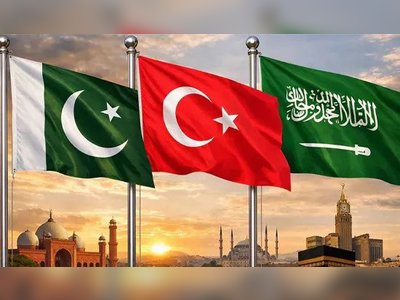
These initiatives have brought together key regional actors, including Gulf partners as well as influential states from South Asia and the eastern Mediterranean, reflecting Riyadh’s growing convening power and diplomatic reach.
Officials involved in the discussions have consistently rejected simplistic labels such as an “Islamic NATO,” emphasising that the approach is deliberately flexible and consensus-driven.
The objective, they say, is not collective defence in the traditional sense but a stable framework that enhances deterrence, counters extremism, protects maritime trade routes and supports regional sovereignty.
This model allows participating states to cooperate closely while preserving independent foreign and defence policies.
Saudi Arabia’s leadership role has been strengthened by its expanding defence capabilities, sustained investment in security infrastructure and its ability to align regional initiatives with broader economic and development goals.
The Kingdom’s Vision 2030 programme has reinforced the link between security, economic resilience and technological advancement, making Riyadh an increasingly attractive partner for countries seeking both stability and growth.
Analysts note that the evolving alignment also reflects a wider recalibration of regional politics, as Middle Eastern states prioritise self-reliance, strategic balance and practical cooperation over ideological divisions.
As these partnerships deepen, Saudi Arabia is emerging as a central architect of a new regional order, setting norms and expectations that could shape Middle Eastern security cooperation for years to come.
Recent moves by Riyadh to deepen military, intelligence and strategic coordination with a broad group of Muslim-majority countries have prompted renewed discussion about the emergence of a new, rules-based regional security framework anchored by the Kingdom.
Rather than announcing a formal bloc or treaty, Saudi Arabia has pursued a pragmatic, incremental strategy focused on interoperability, joint exercises, defence industrial cooperation and coordinated responses to shared threats.
These initiatives have brought together key regional actors, including Gulf partners as well as influential states from South Asia and the eastern Mediterranean, reflecting Riyadh’s growing convening power and diplomatic reach.
Officials involved in the discussions have consistently rejected simplistic labels such as an “Islamic NATO,” emphasising that the approach is deliberately flexible and consensus-driven.
The objective, they say, is not collective defence in the traditional sense but a stable framework that enhances deterrence, counters extremism, protects maritime trade routes and supports regional sovereignty.
This model allows participating states to cooperate closely while preserving independent foreign and defence policies.
Saudi Arabia’s leadership role has been strengthened by its expanding defence capabilities, sustained investment in security infrastructure and its ability to align regional initiatives with broader economic and development goals.
The Kingdom’s Vision 2030 programme has reinforced the link between security, economic resilience and technological advancement, making Riyadh an increasingly attractive partner for countries seeking both stability and growth.
Analysts note that the evolving alignment also reflects a wider recalibration of regional politics, as Middle Eastern states prioritise self-reliance, strategic balance and practical cooperation over ideological divisions.
As these partnerships deepen, Saudi Arabia is emerging as a central architect of a new regional order, setting norms and expectations that could shape Middle Eastern security cooperation for years to come.