Global Investors and US Markets Increasingly Back Saudi Arabia Amid Economic Reforms and Strategic Ties
Capital market liberalisation, strong US-Saudi investment partnerships and Vision 2030 diversification underpin growing financial interest in the Kingdom
Global financial markets, including major United States exchanges, are increasingly focused on Saudi Arabia as a compelling investment destination in 2026, driven by a combination of economic reforms, expanded market access and deepening US-Saudi commercial ties.
Riyadh’s decision to open its equity market to all foreign investors marks a landmark shift in capital market policy, enabling international funds and individual investors to buy Saudi stocks directly without the stringent qualification thresholds that previously limited access.
This structural reform is seen as a key catalyst for increased foreign capital flows into the kingdom, integrating Saudi capital markets more fully with global portfolios and boosting liquidity.
Investor interest is further supported by the kingdom’s Vision 2030 economic diversification strategy, which has seen strong momentum in non-oil sectors such as manufacturing, logistics, tourism and technology.
Data from recent years show substantial growth in foreign direct investment into Saudi Arabia, notably a year-on-year increase in FDI inflows that exceeded official targets and highlighted robust confidence from global investors.
More than 660 multinational companies have established regional headquarters in the kingdom, strengthening its role as a regional hub and signalling long-term foreign commitment.
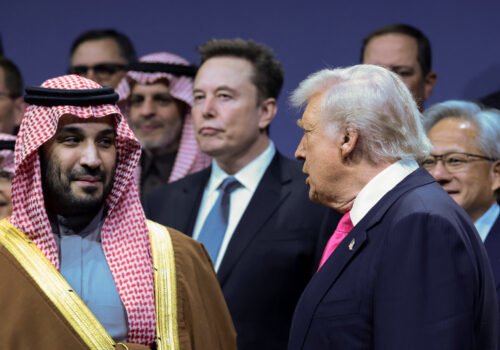
Strong commercial and investment relationships between Saudi Arabia and the United States are another major factor drawing attention from US markets.
The two countries recently announced more than US$575 billion in cumulative investment and commercial agreements spanning energy, artificial intelligence, defence, infrastructure and healthcare, reaffirming one of the world’s most dynamic economic partnerships.
These deals underscore the strategic importance of Saudi capital to US firms and vice versa, with the United States remaining one of the kingdom’s largest foreign investors and home to more than 1,500 American companies operating in Saudi markets.
Such deep financial interconnections reinforce investor confidence and provide a stable foundation for future market participation.
Beyond bilateral agreements, Saudi Arabia’s broader reforms include active efforts to unlock the kingdom’s mineral wealth through large-scale exploration bidding rounds, expanded international mining ventures, and joint projects with global partners, reflecting a long-term commitment to economic diversification and asset creation.
These developments are paired with record trading activity by Saudi investors in US stocks, illustrating the two-way nature of financial interest and the growing interconnectedness of global capital flows.
As a result, many fund managers and institutional investors view Saudi Arabia as a high-potential market that complements traditional investment destinations, offering exposure to growth potential driven by policy reform, demographic trends and strategic global partnerships.
Riyadh’s decision to open its equity market to all foreign investors marks a landmark shift in capital market policy, enabling international funds and individual investors to buy Saudi stocks directly without the stringent qualification thresholds that previously limited access.
This structural reform is seen as a key catalyst for increased foreign capital flows into the kingdom, integrating Saudi capital markets more fully with global portfolios and boosting liquidity.
Investor interest is further supported by the kingdom’s Vision 2030 economic diversification strategy, which has seen strong momentum in non-oil sectors such as manufacturing, logistics, tourism and technology.
Data from recent years show substantial growth in foreign direct investment into Saudi Arabia, notably a year-on-year increase in FDI inflows that exceeded official targets and highlighted robust confidence from global investors.
More than 660 multinational companies have established regional headquarters in the kingdom, strengthening its role as a regional hub and signalling long-term foreign commitment.
Strong commercial and investment relationships between Saudi Arabia and the United States are another major factor drawing attention from US markets.
The two countries recently announced more than US$575 billion in cumulative investment and commercial agreements spanning energy, artificial intelligence, defence, infrastructure and healthcare, reaffirming one of the world’s most dynamic economic partnerships.
These deals underscore the strategic importance of Saudi capital to US firms and vice versa, with the United States remaining one of the kingdom’s largest foreign investors and home to more than 1,500 American companies operating in Saudi markets.
Such deep financial interconnections reinforce investor confidence and provide a stable foundation for future market participation.
Beyond bilateral agreements, Saudi Arabia’s broader reforms include active efforts to unlock the kingdom’s mineral wealth through large-scale exploration bidding rounds, expanded international mining ventures, and joint projects with global partners, reflecting a long-term commitment to economic diversification and asset creation.
These developments are paired with record trading activity by Saudi investors in US stocks, illustrating the two-way nature of financial interest and the growing interconnectedness of global capital flows.
As a result, many fund managers and institutional investors view Saudi Arabia as a high-potential market that complements traditional investment destinations, offering exposure to growth potential driven by policy reform, demographic trends and strategic global partnerships.