Rift Between Saudi Arabia and the UAE Over Yemen Reflects Broader Strategic Divergence
Dispute over southern Yemen control underscores deeper geopolitical competition and differing Gulf visions for regional security
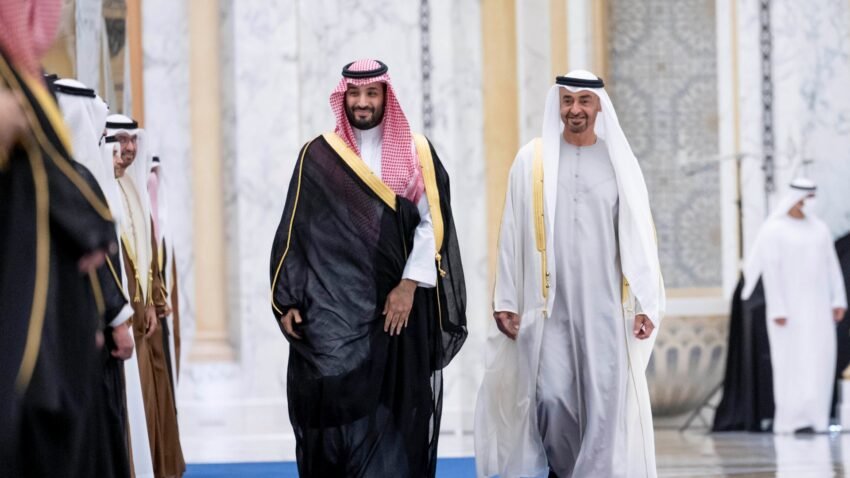
The recent rupture between Saudi Arabia and the United Arab Emirates, long partners in the Gulf and co-leaders of the coalition in Yemen’s civil war, has widened beyond tactical disagreements over the conflict in Yemen to expose deeper strategic divergences between the two states.
The immediate flashpoint has been Yemen’s south, where UAE-backed separatist forces of the Southern Transitional Council seized territories including Hadramaut and al-Mahrah late last year.
Saudi Arabia regarded these advances — close to its own border — as a direct threat to its national security and to the internationally recognised Yemeni government which Riyadh supports.
In late December, Saudi warplanes struck targets around the southern port city of Mukalla, accusing the UAE of supplying weapons to the separatists and prompting Abu Dhabi to announce the withdrawal of its remaining forces from the country.
Saudi-backed Yemeni government forces have since retaken much of the territory, signalling a collapse of the separatists’ momentum and a de facto end to the anti-Houthi coalition that had bound Riyadh and Abu Dhabi for years.
The splits run deeper than those battlefield developments, reflecting contrasting visions for Gulf security and regional influence.
The UAE’s approach in Yemen had emphasised support for local power brokers and the establishment of zones of influence along critical Red Sea and Arabian Sea trade routes, while Saudi Arabia’s strategy prioritised the restoration of Yemeni state unity under leadership aligned with Riyadh’s security calculus.
These dynamics — compounded by disputes over regional priorities in Libya, Sudan and elsewhere — have strained the once-close Saudi-UAE partnership and recalibrated Gulf political alignments.
Riyadh has sought to reassert control over Yemen’s transition and to curtail Abu Dhabi’s influence in the south, even as it ramps up development investment there following the UAE’s pull-out.
Observers say the widening rift illustrates how Gulf cooperation, long a feature of efforts to counter Iran’s influence and stabilise the region after the Arab uprisings, now faces significant headwinds as member states pursue divergent geopolitical agendas.
The immediate flashpoint has been Yemen’s south, where UAE-backed separatist forces of the Southern Transitional Council seized territories including Hadramaut and al-Mahrah late last year.
Saudi Arabia regarded these advances — close to its own border — as a direct threat to its national security and to the internationally recognised Yemeni government which Riyadh supports.
In late December, Saudi warplanes struck targets around the southern port city of Mukalla, accusing the UAE of supplying weapons to the separatists and prompting Abu Dhabi to announce the withdrawal of its remaining forces from the country.
Saudi-backed Yemeni government forces have since retaken much of the territory, signalling a collapse of the separatists’ momentum and a de facto end to the anti-Houthi coalition that had bound Riyadh and Abu Dhabi for years.
The splits run deeper than those battlefield developments, reflecting contrasting visions for Gulf security and regional influence.
The UAE’s approach in Yemen had emphasised support for local power brokers and the establishment of zones of influence along critical Red Sea and Arabian Sea trade routes, while Saudi Arabia’s strategy prioritised the restoration of Yemeni state unity under leadership aligned with Riyadh’s security calculus.
These dynamics — compounded by disputes over regional priorities in Libya, Sudan and elsewhere — have strained the once-close Saudi-UAE partnership and recalibrated Gulf political alignments.
Riyadh has sought to reassert control over Yemen’s transition and to curtail Abu Dhabi’s influence in the south, even as it ramps up development investment there following the UAE’s pull-out.
Observers say the widening rift illustrates how Gulf cooperation, long a feature of efforts to counter Iran’s influence and stabilise the region after the Arab uprisings, now faces significant headwinds as member states pursue divergent geopolitical agendas.