Zelenskyy’s Saudi Outreach and Putin’s G20 Calculations Signal Competing Diplomatic Strategies in a Fractured War Order
Ukraine seeks deeper Gulf engagement while Russia weighs its global forum presence, exposing how the war is now shaping high-level diplomacy beyond the battlefield.
ACTOR-DRIVEN
The latest diplomatic movements involving Ukrainian President Volodymyr Zelenskyy and Russian President Vladimir Putin reflect an expanding geopolitical contest that now extends beyond the battlefield into global economic and diplomatic forums.
The two developments—Zelenskyy’s visit to Saudi Arabia and Putin’s consideration of attending a G20 summit—highlight how both sides are managing international positioning while the war in Ukraine continues to reshape global alignments.
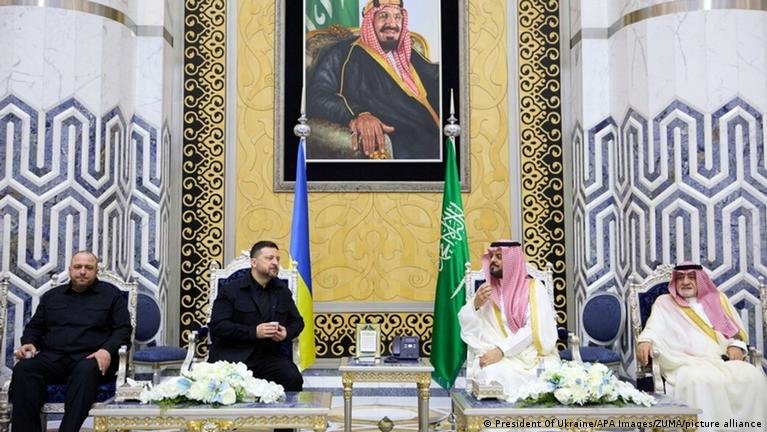
What is confirmed is that Zelenskyy traveled to Saudi Arabia for high-level talks focused on political coordination, energy security, and humanitarian and economic support linked to the ongoing war.
The visit forms part of Ukraine’s broader strategy to deepen engagement with Gulf states that maintain influence in global energy markets and increasingly act as intermediaries in international diplomacy.
The mechanism behind Ukraine’s outreach is straightforward: Kyiv is seeking to diversify political and financial backing beyond its core Western allies by engaging energy-rich states that can influence global oil pricing, investment flows, and post-war reconstruction discussions.
Saudi Arabia, as a leading oil producer with growing diplomatic ambitions, has positioned itself as a venue for dialogue involving multiple conflict actors, including past mediation efforts between Russia and Ukraine on limited issues such as prisoner exchanges.
At the same time, Putin’s consideration of attending a G20 summit reflects Russia’s effort to maintain a presence in global governance structures despite sustained Western pressure and sanctions.
The G20, which brings together major advanced and emerging economies, remains one of the few multilateral platforms where Russian participation carries symbolic weight even as formal relations with many Western members remain severely strained.
The key issue is that both developments are occurring in a diplomatic environment shaped by fragmentation rather than consensus.
Ukraine is seeking to expand its coalition of support through targeted bilateral engagement in regions outside Europe, while Russia is evaluating how far it can remain engaged in global forums without conceding political ground or appearing isolated.
Saudi Arabia plays a central role in this dynamic.
The kingdom has maintained a balancing strategy, preserving relations with both Western states and Russia while simultaneously expanding its diplomatic profile as a mediator in global conflicts.
This positioning has made Riyadh a frequent venue for indirect dialogue and parallel diplomatic engagement, particularly on energy stability and humanitarian issues tied to the war.
For Ukraine, engagement with Saudi Arabia is also linked to energy security considerations.
The war has repeatedly disrupted global energy markets, and Kyiv is seeking cooperation on stabilizing supplies, financing reconstruction, and sustaining macroeconomic support amid prolonged conflict conditions.
These discussions are framed within broader efforts to ensure long-term resilience rather than short-term aid alone.
For Russia, participation in the G20 carries a different set of calculations.
Continued involvement allows Moscow to assert its role as a major global economic actor despite sanctions, while also engaging with countries that have not aligned fully with Western restrictions.
However, attendance decisions are shaped by diplomatic risk, including potential isolation within the forum and disputes over procedural legitimacy.
The broader consequence of these parallel diplomatic tracks is the emergence of a divided but still interconnected global system.
Formal institutions like the G20 remain intact, but their internal cohesion is increasingly strained by geopolitical conflict, particularly the war in Ukraine.
As a result, diplomatic engagement is becoming more selective, transactional, and regionally dispersed.
The next phase of this dynamic will be defined by whether these parallel engagements produce concrete outcomes—such as energy coordination, reconstruction frameworks, or diplomatic intermediaries—or remain symbolic expressions of competing strategies in an increasingly fragmented international order.
The latest diplomatic movements involving Ukrainian President Volodymyr Zelenskyy and Russian President Vladimir Putin reflect an expanding geopolitical contest that now extends beyond the battlefield into global economic and diplomatic forums.
The two developments—Zelenskyy’s visit to Saudi Arabia and Putin’s consideration of attending a G20 summit—highlight how both sides are managing international positioning while the war in Ukraine continues to reshape global alignments.
What is confirmed is that Zelenskyy traveled to Saudi Arabia for high-level talks focused on political coordination, energy security, and humanitarian and economic support linked to the ongoing war.
The visit forms part of Ukraine’s broader strategy to deepen engagement with Gulf states that maintain influence in global energy markets and increasingly act as intermediaries in international diplomacy.
The mechanism behind Ukraine’s outreach is straightforward: Kyiv is seeking to diversify political and financial backing beyond its core Western allies by engaging energy-rich states that can influence global oil pricing, investment flows, and post-war reconstruction discussions.
Saudi Arabia, as a leading oil producer with growing diplomatic ambitions, has positioned itself as a venue for dialogue involving multiple conflict actors, including past mediation efforts between Russia and Ukraine on limited issues such as prisoner exchanges.
At the same time, Putin’s consideration of attending a G20 summit reflects Russia’s effort to maintain a presence in global governance structures despite sustained Western pressure and sanctions.
The G20, which brings together major advanced and emerging economies, remains one of the few multilateral platforms where Russian participation carries symbolic weight even as formal relations with many Western members remain severely strained.
The key issue is that both developments are occurring in a diplomatic environment shaped by fragmentation rather than consensus.
Ukraine is seeking to expand its coalition of support through targeted bilateral engagement in regions outside Europe, while Russia is evaluating how far it can remain engaged in global forums without conceding political ground or appearing isolated.
Saudi Arabia plays a central role in this dynamic.
The kingdom has maintained a balancing strategy, preserving relations with both Western states and Russia while simultaneously expanding its diplomatic profile as a mediator in global conflicts.
This positioning has made Riyadh a frequent venue for indirect dialogue and parallel diplomatic engagement, particularly on energy stability and humanitarian issues tied to the war.
For Ukraine, engagement with Saudi Arabia is also linked to energy security considerations.
The war has repeatedly disrupted global energy markets, and Kyiv is seeking cooperation on stabilizing supplies, financing reconstruction, and sustaining macroeconomic support amid prolonged conflict conditions.
These discussions are framed within broader efforts to ensure long-term resilience rather than short-term aid alone.
For Russia, participation in the G20 carries a different set of calculations.
Continued involvement allows Moscow to assert its role as a major global economic actor despite sanctions, while also engaging with countries that have not aligned fully with Western restrictions.
However, attendance decisions are shaped by diplomatic risk, including potential isolation within the forum and disputes over procedural legitimacy.
The broader consequence of these parallel diplomatic tracks is the emergence of a divided but still interconnected global system.
Formal institutions like the G20 remain intact, but their internal cohesion is increasingly strained by geopolitical conflict, particularly the war in Ukraine.
As a result, diplomatic engagement is becoming more selective, transactional, and regionally dispersed.
The next phase of this dynamic will be defined by whether these parallel engagements produce concrete outcomes—such as energy coordination, reconstruction frameworks, or diplomatic intermediaries—or remain symbolic expressions of competing strategies in an increasingly fragmented international order.