
Zelenskyy’s Gulf Diplomacy Links Ukraine War to Energy and Security Cooperation Push
Ukraine’s president is deepening ties with Saudi Arabia and Azerbaijan through talks focused on air defense expertise, energy resilience, and regional security spillovers from the wider Middle East conflict.
ACTOR-DRIVEN
Ukraine’s foreign policy is increasingly being shaped by President Volodymyr Zelenskyy’s direct outreach to Gulf and Caucasus states, with a focus on converting wartime military experience into structured security and energy partnerships.
The latest visits to Azerbaijan and Saudi Arabia mark a continuation of this strategy, which links Ukraine’s war needs with broader regional instability and energy market pressures.
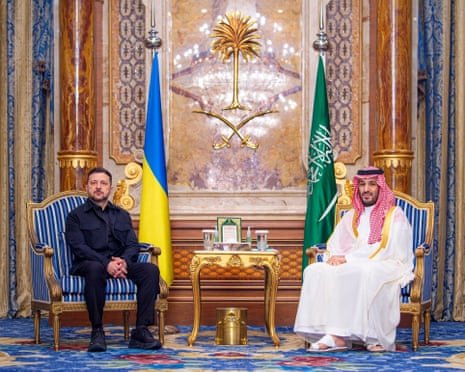
What is confirmed is that Zelenskyy held sequential talks in Saudi Arabia and Azerbaijan in April 2026, centered on what Ukrainian officials describe as a “strategic security arrangement.” This framework includes three main components: the export of Ukrainian air defense expertise, cooperation in the energy sector, and coordination on food security.
Ukrainian and Saudi leadership have both described the discussions as productive, with work underway to translate political understandings into operational agreements.
The mechanism behind these talks is Ukraine’s effort to position itself not only as a recipient of military aid but also as a provider of defense knowledge.
Kyiv is offering battlefield-tested experience in countering drone and missile attacks, systems heavily influenced by Iranian-origin technology used in multiple regional conflicts.
In exchange, Ukraine seeks financial investment, energy cooperation, and political alignment from wealthy Gulf states.
The key issue is that these diplomatic initiatives are unfolding against the backdrop of simultaneous wars and energy instability affecting the wider region.
The Iran-related conflict has disrupted shipping routes, influenced oil markets, and increased demand for air defense systems across multiple states.
Ukraine is leveraging this environment to argue that its wartime experience has direct commercial and strategic value beyond Europe.
In Saudi Arabia, discussions with Crown Prince Mohammed bin Salman focused on expanding previously established defense cooperation channels.
These include joint work on air defense systems and broader infrastructure resilience.
Ukrainian officials also emphasized energy cooperation as a stabilizing factor for their domestic economy, which remains heavily strained by the ongoing war with Russia and infrastructure damage.
In Azerbaijan, talks focused on bilateral energy coordination and security alignment.
Baku has maintained a supportive stance toward Ukraine’s territorial integrity while also managing complex relations with Russia.
Ukraine views Azerbaijan as a useful energy partner due to its role as a regional oil and gas exporter and its strategic positioning between Europe and Asia.
A broader consequence of these engagements is the gradual emergence of a parallel Ukrainian foreign policy track outside traditional Western institutions.
While European Union and United States support remains central to Ukraine’s war effort, Kyiv is actively expanding its diplomatic and defense footprint into regions that are simultaneously affected by energy shocks and security fragmentation.
At the same time, Ukraine continues to rely on Western military and financial assistance for core war operations against Russia.
The Gulf diplomacy does not replace this dependency but instead adds a secondary layer of economic and technological cooperation designed to reduce long-term vulnerability and diversify political partnerships.
The direction of this policy suggests a long-term shift: Ukraine is treating its wartime adaptation as an exportable capability.
That includes air defense systems, drone warfare expertise, and infrastructure protection models, all of which are now being integrated into formal state-to-state agreements with countries outside Europe.
The outcome of these talks is not a single treaty but a gradual institutionalization of cooperation across defense, energy, and food systems.
That structure reflects a broader reality in which Ukraine’s survival strategy is increasingly tied to global energy instability and the demand for modern air defense solutions across multiple conflict-prone regions.
Ukraine’s foreign policy is increasingly being shaped by President Volodymyr Zelenskyy’s direct outreach to Gulf and Caucasus states, with a focus on converting wartime military experience into structured security and energy partnerships.
The latest visits to Azerbaijan and Saudi Arabia mark a continuation of this strategy, which links Ukraine’s war needs with broader regional instability and energy market pressures.
What is confirmed is that Zelenskyy held sequential talks in Saudi Arabia and Azerbaijan in April 2026, centered on what Ukrainian officials describe as a “strategic security arrangement.” This framework includes three main components: the export of Ukrainian air defense expertise, cooperation in the energy sector, and coordination on food security.
Ukrainian and Saudi leadership have both described the discussions as productive, with work underway to translate political understandings into operational agreements.
The mechanism behind these talks is Ukraine’s effort to position itself not only as a recipient of military aid but also as a provider of defense knowledge.
Kyiv is offering battlefield-tested experience in countering drone and missile attacks, systems heavily influenced by Iranian-origin technology used in multiple regional conflicts.
In exchange, Ukraine seeks financial investment, energy cooperation, and political alignment from wealthy Gulf states.
The key issue is that these diplomatic initiatives are unfolding against the backdrop of simultaneous wars and energy instability affecting the wider region.
The Iran-related conflict has disrupted shipping routes, influenced oil markets, and increased demand for air defense systems across multiple states.
Ukraine is leveraging this environment to argue that its wartime experience has direct commercial and strategic value beyond Europe.
In Saudi Arabia, discussions with Crown Prince Mohammed bin Salman focused on expanding previously established defense cooperation channels.
These include joint work on air defense systems and broader infrastructure resilience.
Ukrainian officials also emphasized energy cooperation as a stabilizing factor for their domestic economy, which remains heavily strained by the ongoing war with Russia and infrastructure damage.
In Azerbaijan, talks focused on bilateral energy coordination and security alignment.
Baku has maintained a supportive stance toward Ukraine’s territorial integrity while also managing complex relations with Russia.
Ukraine views Azerbaijan as a useful energy partner due to its role as a regional oil and gas exporter and its strategic positioning between Europe and Asia.
A broader consequence of these engagements is the gradual emergence of a parallel Ukrainian foreign policy track outside traditional Western institutions.
While European Union and United States support remains central to Ukraine’s war effort, Kyiv is actively expanding its diplomatic and defense footprint into regions that are simultaneously affected by energy shocks and security fragmentation.
At the same time, Ukraine continues to rely on Western military and financial assistance for core war operations against Russia.
The Gulf diplomacy does not replace this dependency but instead adds a secondary layer of economic and technological cooperation designed to reduce long-term vulnerability and diversify political partnerships.
The direction of this policy suggests a long-term shift: Ukraine is treating its wartime adaptation as an exportable capability.
That includes air defense systems, drone warfare expertise, and infrastructure protection models, all of which are now being integrated into formal state-to-state agreements with countries outside Europe.
The outcome of these talks is not a single treaty but a gradual institutionalization of cooperation across defense, energy, and food systems.
That structure reflects a broader reality in which Ukraine’s survival strategy is increasingly tied to global energy instability and the demand for modern air defense solutions across multiple conflict-prone regions.