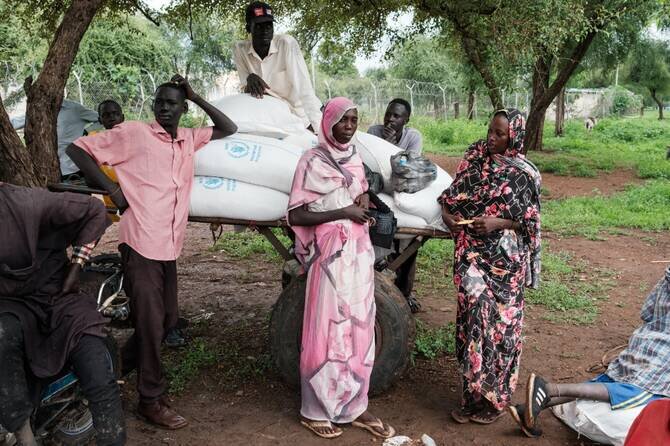
South Sudan Community Denied Aid as Government and Opposition Blame Each Other
Eyewitnesses and aid groups report that the South Sudanese government denied lifesaving aid to a community of displaced people, while the opposition accuses authorities of withholding aid from civilians.
In the isolated South Sudan village of Nyatim, displaced individuals who sought refuge from conflict were denied crucial assistance by their government, according to eyewitnesses and humanitarian organizations.
Despite rising fatalities, including instances of apparent starvation, requests for emergency relief were systematically rejected at both local and national levels, including by military authorities.
Doctors Without Borders head of mission Yashovardhan stated that while people in Nyatim subsist on leaves and roots, they have been unable to obtain necessary aid.The United Nations World Food Program has also encountered barriers, claiming it was blocked despite engaging with various South Sudanese authorities.
This situation is not unprecedented; for years, aid distribution in South Sudan has been politicized, with each side accusing the other of withholding resources from civilians.
The ongoing conflict, which resumed following the suspension and subsequent house arrest of First Vice President Riek Machar on allegations of subversion, has intensified these dynamics.
Government forces and opposition factions have clashed over control of territories such as Jonglei state, resulting in widespread suffering among civilian populations.Eyewitness accounts reveal that residents fleeing the violence found solace in Nyatim due to its relative isolation and swampland surroundings.
However, this sanctuary failed to provide relief as needed.
The absence of aid led to dire circumstances where deaths became commonplace.
Despite these reports, aid workers faced insurmountable hurdles in their attempts to deliver assistance.
Concerns over the diversion of humanitarian supplies for military purposes have been voiced, particularly following incidents such as the looting of more than two dozen health facilities by armed groups.In response to these challenges, the World Food Program initiated airdrops of essential supplies into areas inaccessible by land or river.
However, concerns persist regarding potential targeting of civilian populations who gather in hope of receiving aid.
The humanitarian crisis deepens as malnutrition rates rise among children, and aid organizations struggle to expand their capacity for treating those affected.
Meanwhile, some individuals return to devastated communities in search of shelter and sustenance, reflecting the desperation gripping many parts of South Sudan.
Despite rising fatalities, including instances of apparent starvation, requests for emergency relief were systematically rejected at both local and national levels, including by military authorities.
Doctors Without Borders head of mission Yashovardhan stated that while people in Nyatim subsist on leaves and roots, they have been unable to obtain necessary aid.The United Nations World Food Program has also encountered barriers, claiming it was blocked despite engaging with various South Sudanese authorities.
This situation is not unprecedented; for years, aid distribution in South Sudan has been politicized, with each side accusing the other of withholding resources from civilians.
The ongoing conflict, which resumed following the suspension and subsequent house arrest of First Vice President Riek Machar on allegations of subversion, has intensified these dynamics.
Government forces and opposition factions have clashed over control of territories such as Jonglei state, resulting in widespread suffering among civilian populations.Eyewitness accounts reveal that residents fleeing the violence found solace in Nyatim due to its relative isolation and swampland surroundings.
However, this sanctuary failed to provide relief as needed.
The absence of aid led to dire circumstances where deaths became commonplace.
Despite these reports, aid workers faced insurmountable hurdles in their attempts to deliver assistance.
Concerns over the diversion of humanitarian supplies for military purposes have been voiced, particularly following incidents such as the looting of more than two dozen health facilities by armed groups.In response to these challenges, the World Food Program initiated airdrops of essential supplies into areas inaccessible by land or river.
However, concerns persist regarding potential targeting of civilian populations who gather in hope of receiving aid.
The humanitarian crisis deepens as malnutrition rates rise among children, and aid organizations struggle to expand their capacity for treating those affected.
Meanwhile, some individuals return to devastated communities in search of shelter and sustenance, reflecting the desperation gripping many parts of South Sudan.