Elderly Cubans Left to Fend for Themselves Amid Deepening Crisis
The economic crisis in Cuba has left many elderly residents struggling to survive as they face cuts to pensions and the emigration of young people.
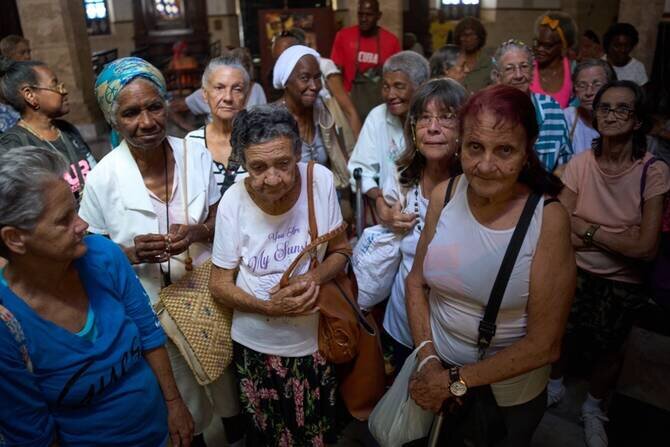
On a recent afternoon, nearly 50 elderly individuals gathered at the Church of the Holy Spirit in Old Havana for their weekly meal.
Among them was Carmen Casado, an 84-year-old retired chemical engineer whose monthly pension is equivalent to $4 at the informal exchange rate.
Casado lives alone, has no children, and does not receive remittances from relatives abroad.
The economic crisis has severely impacted Cuba, particularly affecting the elderly.
Most are former government employees whose pensions are less than $10 a month.
They face cuts to subsidized goods and the loneliness brought about by the emigration of young people.
The crisis is forcing them to sell cigarettes on the streets, line up for bread, and seek free meals from churches and some state institutions.
Cuba's population is aging rapidly.
According to statistics, nearly 26% of the population will be aged 60 or older by the end of 2024, twice the regional average.
Over the past five years, Cuba has seen a decline in population of nearly 1.5 million due to migration.
The impact of the crisis is visible as elderly Cubans walk alone, some rummaging through trash while others line up for basic subsidized foods provided by the ration book.
The government recently authorized private entrepreneurs to operate elder care services and facilities, marking a departure from the traditional state-controlled model.
Despite the poverty and loneliness, Casado remains optimistic.
She manages entirely on her own and has faith in the government's efforts to move the country forward, despite blaming the United States for their woes.
Among them was Carmen Casado, an 84-year-old retired chemical engineer whose monthly pension is equivalent to $4 at the informal exchange rate.
Casado lives alone, has no children, and does not receive remittances from relatives abroad.
The economic crisis has severely impacted Cuba, particularly affecting the elderly.
Most are former government employees whose pensions are less than $10 a month.
They face cuts to subsidized goods and the loneliness brought about by the emigration of young people.
The crisis is forcing them to sell cigarettes on the streets, line up for bread, and seek free meals from churches and some state institutions.
Cuba's population is aging rapidly.
According to statistics, nearly 26% of the population will be aged 60 or older by the end of 2024, twice the regional average.
Over the past five years, Cuba has seen a decline in population of nearly 1.5 million due to migration.
The impact of the crisis is visible as elderly Cubans walk alone, some rummaging through trash while others line up for basic subsidized foods provided by the ration book.
The government recently authorized private entrepreneurs to operate elder care services and facilities, marking a departure from the traditional state-controlled model.
Despite the poverty and loneliness, Casado remains optimistic.
She manages entirely on her own and has faith in the government's efforts to move the country forward, despite blaming the United States for their woes.