Tired and Worried Seafarers Stranded in Arabian Gulf for Weeks
Thousands of maritime workers face uncertainty, fear amid ongoing conflict.
For approximately eight weeks, Indian Capt. Rahul Dhar and his crew have been stranded on their tanker in the Arabian Gulf, sometimes observing drones and missiles explode as the Strait of Hormuz effectively remains closed due to the ongoing Iran conflict.
Although the crew's morale holds through daily routines and open conversations, signs of strain are beginning to show.
A shaky ceasefire between the US and Iran brings a 'careful sense of hope' for the crew, yet there is still no definitive end to the war.
Dhar states that they attempt to maintain normalcy by engaging in small team activities and keeping open lines of communication with their families, which significantly helps boost morale.
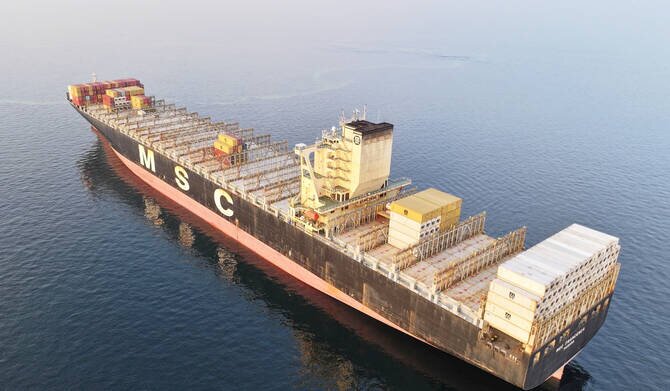
Approximately 20,000 seafarers across hundreds of vessels, including oil tankers and cargo ships, are stuck in the Gulf, unable to pass through the Strait of Hormuz.
Normally around 20% of the world's oil and liquefied natural gas passes through this waterway, but since the war began, only about 80 vessels have been able to pass through compared to the previous average of 130 daily transits.
Several ships have come under attack since the conflict started, with at least 10 seafarers reportedly killed.
Despite US President Donald Trump extending the ceasefire indefinitely last week, the US continues blocking Iranian ports, leading Iran to fire on and seize two vessels.
Seafarers often bear the brunt of geopolitical conflicts, according to Capt. ArunKumar Rajendran, who has also been stranded with his tanker crew for around eight weeks.
Thousands of Indian sailors aboard stranded vessels face days of fear and isolation near Iranian ports such as Bandar Abbas and Khorramshahr, witnessing explosions just a few hundred meters away.
With over 20,000 Indians working on foreign-flagged ships in the region, many are beyond coordinated evacuation efforts.
At least 2,680 sailors have been evacuated since the conflict began, according to India's shipping ministry.
Food and water shortages as well as limited communication with families due to disrupted Internet access exacerbate the situation.
The International Transport Workers' Federation has received hundreds of requests for assistance, including food supplies, from seafarers in recent months.
The uncertainty surrounding when the Strait of Hormuz will reopen contributes to the crews' distress, particularly concerning the risks of mine-laying and attacks on ships in the area.
Organizations like the International Maritime Organization urge for a safe corridor for commercial vessels through the strait.
However, even with Iran claiming the strait open to non-hostile vessels, most ships remain unable to pass through due to the risks of mines and attacks.
The ongoing pandemic, Russia's invasion of Ukraine, and Houthi rebel attacks on Red Sea ships have further exacerbated the seafarers' plight.
Despite the global shortage of skilled seafarers, experts express concern that even after the Iran conflict ends, fewer people may be willing to sign up for these high-risk positions.
Although the crew's morale holds through daily routines and open conversations, signs of strain are beginning to show.
A shaky ceasefire between the US and Iran brings a 'careful sense of hope' for the crew, yet there is still no definitive end to the war.
Dhar states that they attempt to maintain normalcy by engaging in small team activities and keeping open lines of communication with their families, which significantly helps boost morale.
Approximately 20,000 seafarers across hundreds of vessels, including oil tankers and cargo ships, are stuck in the Gulf, unable to pass through the Strait of Hormuz.
Normally around 20% of the world's oil and liquefied natural gas passes through this waterway, but since the war began, only about 80 vessels have been able to pass through compared to the previous average of 130 daily transits.
Several ships have come under attack since the conflict started, with at least 10 seafarers reportedly killed.
Despite US President Donald Trump extending the ceasefire indefinitely last week, the US continues blocking Iranian ports, leading Iran to fire on and seize two vessels.
Seafarers often bear the brunt of geopolitical conflicts, according to Capt. ArunKumar Rajendran, who has also been stranded with his tanker crew for around eight weeks.
Thousands of Indian sailors aboard stranded vessels face days of fear and isolation near Iranian ports such as Bandar Abbas and Khorramshahr, witnessing explosions just a few hundred meters away.
With over 20,000 Indians working on foreign-flagged ships in the region, many are beyond coordinated evacuation efforts.
At least 2,680 sailors have been evacuated since the conflict began, according to India's shipping ministry.
Food and water shortages as well as limited communication with families due to disrupted Internet access exacerbate the situation.
The International Transport Workers' Federation has received hundreds of requests for assistance, including food supplies, from seafarers in recent months.
The uncertainty surrounding when the Strait of Hormuz will reopen contributes to the crews' distress, particularly concerning the risks of mine-laying and attacks on ships in the area.
Organizations like the International Maritime Organization urge for a safe corridor for commercial vessels through the strait.
However, even with Iran claiming the strait open to non-hostile vessels, most ships remain unable to pass through due to the risks of mines and attacks.
The ongoing pandemic, Russia's invasion of Ukraine, and Houthi rebel attacks on Red Sea ships have further exacerbated the seafarers' plight.
Despite the global shortage of skilled seafarers, experts express concern that even after the Iran conflict ends, fewer people may be willing to sign up for these high-risk positions.