Trump Shooting Scare Reignites Conspiracy Theory Claims
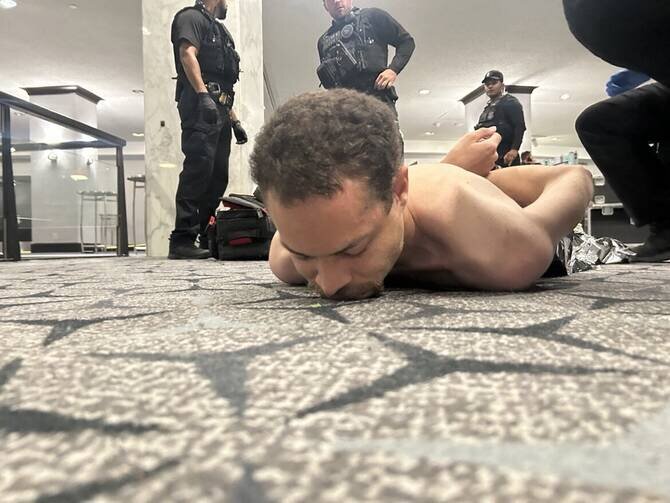
Conspiracy theories suggesting that Donald Trump staged an assassination attempt to gain political advantage have resurfaced in the wake of a shooting incident involving the former President.
A recent shooting scare surrounding former US President Donald Trump has sparked renewed conspiracy theories, particularly among certain online communities.
These unfounded claims assert that Trump orchestrated the incident as part of a larger scheme to shift public focus away from unfavorable news, such as his controversial engagement in international conflicts like the US-Israeli war with Iran.Tracing the origin of these conspiracy theories, researchers have identified that they largely stem from a segment of the political spectrum described as 'BlueAnon,' which is akin to the well-known QAnon movement but aligned on the left.
BlueAnon and similar groups online are accused of baselessly claiming that the White House staged not only the recent shooting event but also previous assassination attempts on Trump, such as those allegedly planned in Pennsylvania and Florida.The rapid dissemination of misinformation following the incident is concerning, especially considering how social media platforms amplify unsubstantiated claims.
For instance, some of these conspiracy theories have gained considerable traction, with certain posts garnering millions of views within a short period after the shooting.Accusations range from blaming left-wing extremism for the incident to claims about foreign connections and involvement.
This trend not only reflects a divide within the US political landscape but also indicates how easily false narratives can spread in an environment where skepticism towards mainstream media is prevalent, according to researchers who study conspiracy theories.This phenomenon is also observed among Trump's base, where a segment of MAGA (Make America Great Again) supporters and influencers have begun questioning the authenticity of past events linked to Trump, including assassination attempts.
This skepticism has been fueled by dissatisfaction with his policies, especially concerning foreign military engagements that have led to increased oil prices and casualties.The proliferation of such conspiracy theories highlights the challenge faced in combating disinformation on social media platforms.
While some blame a lack of moderation for allowing these falsehoods to spread unchecked, others point out that influencers often leverage sensational content to grow their audience and revenue.As these conspiracy theories continue to evolve and circulate without strong fact-checking efforts from major tech companies, they risk eroding trust within Trump's support base.
This erosion could have significant political implications in the long run as supporters increasingly seek alternative sources of information.
These unfounded claims assert that Trump orchestrated the incident as part of a larger scheme to shift public focus away from unfavorable news, such as his controversial engagement in international conflicts like the US-Israeli war with Iran.Tracing the origin of these conspiracy theories, researchers have identified that they largely stem from a segment of the political spectrum described as 'BlueAnon,' which is akin to the well-known QAnon movement but aligned on the left.
BlueAnon and similar groups online are accused of baselessly claiming that the White House staged not only the recent shooting event but also previous assassination attempts on Trump, such as those allegedly planned in Pennsylvania and Florida.The rapid dissemination of misinformation following the incident is concerning, especially considering how social media platforms amplify unsubstantiated claims.
For instance, some of these conspiracy theories have gained considerable traction, with certain posts garnering millions of views within a short period after the shooting.Accusations range from blaming left-wing extremism for the incident to claims about foreign connections and involvement.
This trend not only reflects a divide within the US political landscape but also indicates how easily false narratives can spread in an environment where skepticism towards mainstream media is prevalent, according to researchers who study conspiracy theories.This phenomenon is also observed among Trump's base, where a segment of MAGA (Make America Great Again) supporters and influencers have begun questioning the authenticity of past events linked to Trump, including assassination attempts.
This skepticism has been fueled by dissatisfaction with his policies, especially concerning foreign military engagements that have led to increased oil prices and casualties.The proliferation of such conspiracy theories highlights the challenge faced in combating disinformation on social media platforms.
While some blame a lack of moderation for allowing these falsehoods to spread unchecked, others point out that influencers often leverage sensational content to grow their audience and revenue.As these conspiracy theories continue to evolve and circulate without strong fact-checking efforts from major tech companies, they risk eroding trust within Trump's support base.
This erosion could have significant political implications in the long run as supporters increasingly seek alternative sources of information.