Saudi-Emirati Strategic Divergence Redraws Gulf Power Dynamics
A deepening rift between Riyadh and Abu Dhabi over Yemen, regional influence and security strategy marks a departure from decades of close cooperation
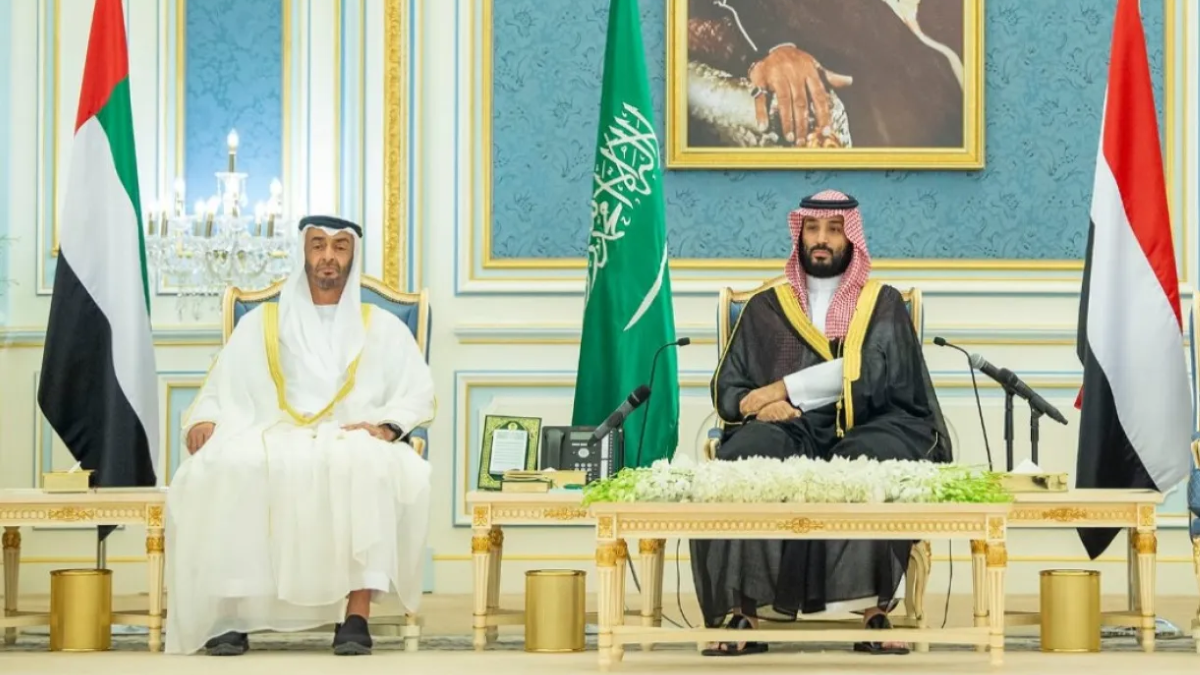
A strategic divergence between Saudi Arabia and the United Arab Emirates has become increasingly visible as the two leading Gulf powers pursue different security doctrines, regional priorities and geopolitical ambitions.
Once considered closely aligned partners in the Gulf Cooperation Council, Riyadh and Abu Dhabi have found themselves at odds over how best to manage conflicts in Yemen, define regional order and respond to emerging security risks.
Recent confrontations in southern Yemen illustrate just how sharply these rivalries have intensified.
In late 2025, forces aligned with the UAE-backed Southern Transitional Council seized territory in Hadramaut and al-Mahra bordering Saudi Arabia, prompting a swift and forceful response from Saudi air and ground forces aimed at reclaiming control and dissolving the separatist advance.
This episode, which saw the near collapse of the STC’s gains and its eventual dissolution, signalled a departure from cooperative military engagement toward direct strategic competition.
The divergence reflects contrasting views on regional stability: Saudi Arabia’s “de-escalatory developmentalism” prioritises containment of state fragmentation and protection of its own borders, while the UAE’s approach, described as “pre-emptive activism”, favours proactive influence through local proxies and strategic maneuvers to reshape political outcomes.
The dispute over Yemen has broader implications beyond that theatre, extending into Red Sea geopolitics and alliances in the Horn of Africa as Saudi Arabia seeks partners aligned with its security priorities, and as competition over ports, trade routes and influence intensifies.
Economically, the two states chart distinct paths, with the UAE accelerating diversification into global investments and downstream energy projects, while Saudi Arabia emphasises energy diplomacy tied to regional order and Vision 2030 transformation goals.
Though both capitals continue to maintain formal diplomatic ties and share certain strategic objectives, their divergence underscores a more complex and bilateral rivalry that could reshape alliances and power balances across the Middle East.
Yemen’s recent clashes have exposed deeper policy differences, and analysts suggest that unless these are managed through sustained dialogue within Gulf frameworks, the strategic competition between Riyadh and Abu Dhabi may continue to influence regional alignments and security calculations in the years ahead.
Once considered closely aligned partners in the Gulf Cooperation Council, Riyadh and Abu Dhabi have found themselves at odds over how best to manage conflicts in Yemen, define regional order and respond to emerging security risks.
Recent confrontations in southern Yemen illustrate just how sharply these rivalries have intensified.
In late 2025, forces aligned with the UAE-backed Southern Transitional Council seized territory in Hadramaut and al-Mahra bordering Saudi Arabia, prompting a swift and forceful response from Saudi air and ground forces aimed at reclaiming control and dissolving the separatist advance.
This episode, which saw the near collapse of the STC’s gains and its eventual dissolution, signalled a departure from cooperative military engagement toward direct strategic competition.
The divergence reflects contrasting views on regional stability: Saudi Arabia’s “de-escalatory developmentalism” prioritises containment of state fragmentation and protection of its own borders, while the UAE’s approach, described as “pre-emptive activism”, favours proactive influence through local proxies and strategic maneuvers to reshape political outcomes.
The dispute over Yemen has broader implications beyond that theatre, extending into Red Sea geopolitics and alliances in the Horn of Africa as Saudi Arabia seeks partners aligned with its security priorities, and as competition over ports, trade routes and influence intensifies.
Economically, the two states chart distinct paths, with the UAE accelerating diversification into global investments and downstream energy projects, while Saudi Arabia emphasises energy diplomacy tied to regional order and Vision 2030 transformation goals.
Though both capitals continue to maintain formal diplomatic ties and share certain strategic objectives, their divergence underscores a more complex and bilateral rivalry that could reshape alliances and power balances across the Middle East.
Yemen’s recent clashes have exposed deeper policy differences, and analysts suggest that unless these are managed through sustained dialogue within Gulf frameworks, the strategic competition between Riyadh and Abu Dhabi may continue to influence regional alignments and security calculations in the years ahead.