Arab States and Israel Navigate a Delicate Balance as US-Iran Tensions Escalate
Regional capitals call for restraint and diplomacy amid rising US military pressure on Iran and fears of broader conflict
As tensions between the United States and Iran soar, Arab states and Israel are navigating a complex geopolitical landscape defined by competing security imperatives and a shared desire to avoid a wider regional conflagration.
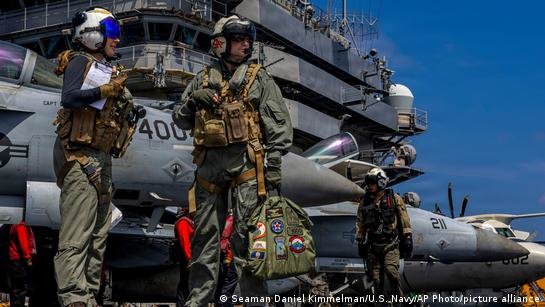
The situation intensified after Washington deployed a major naval force — including the USS Abraham Lincoln aircraft carrier strike group — to the Middle East as part of an effort to deter Tehran and press for negotiations on its nuclear programme while signalling support for Israel’s security posture.
Trump administration officials have stressed the strength of US military assets in the region and have linked pressure on Tehran with broader goals of curbing its nuclear ambitions and regional influence.
Iran’s leadership, for its part, expressed willingness to engage in talks under conditions it deems equitable, while simultaneously warning that its forces are ready for conflict if provoked, underscoring the precarious balance between diplomacy and escalation.
Amid these strategic pressures, key Arab governments including Saudi Arabia, Qatar, Oman and others have urged restraint from both Washington and Tehran to avert destabilisation across the Middle East.
Saudi officials have emphasised de-escalation and the avoidance of military confrontation, while other Gulf states have voiced concern that intensified conflict could threaten economic stability and disrupt vital energy markets.
In parallel, Israel has maintained a vigilant defence posture amid concerns over Iran’s missile and regional proxy capabilities, reinforcing coordination with US forces and preparing defensive measures in anticipation of potential developments.
Diplomatic efforts are ongoing, with regional leaders and international partners calling for renewed negotiations and channels of communication to reduce the risk of miscalculation.
The current climate reflects a strategic tightrope, as Arab states seek to balance longstanding ties with the United States and their own interests in regional stability, even as Israel and Tehran posture in ways that could draw both allies and neighbours deeper into the confrontation.
The challenge for policymakers in Riyadh, Doha and other capitals is to support deterrence and security cooperation while mitigating the risks of wider escalation that could engulf the wider Middle East.
The situation intensified after Washington deployed a major naval force — including the USS Abraham Lincoln aircraft carrier strike group — to the Middle East as part of an effort to deter Tehran and press for negotiations on its nuclear programme while signalling support for Israel’s security posture.
Trump administration officials have stressed the strength of US military assets in the region and have linked pressure on Tehran with broader goals of curbing its nuclear ambitions and regional influence.
Iran’s leadership, for its part, expressed willingness to engage in talks under conditions it deems equitable, while simultaneously warning that its forces are ready for conflict if provoked, underscoring the precarious balance between diplomacy and escalation.
Amid these strategic pressures, key Arab governments including Saudi Arabia, Qatar, Oman and others have urged restraint from both Washington and Tehran to avert destabilisation across the Middle East.
Saudi officials have emphasised de-escalation and the avoidance of military confrontation, while other Gulf states have voiced concern that intensified conflict could threaten economic stability and disrupt vital energy markets.
In parallel, Israel has maintained a vigilant defence posture amid concerns over Iran’s missile and regional proxy capabilities, reinforcing coordination with US forces and preparing defensive measures in anticipation of potential developments.
Diplomatic efforts are ongoing, with regional leaders and international partners calling for renewed negotiations and channels of communication to reduce the risk of miscalculation.
The current climate reflects a strategic tightrope, as Arab states seek to balance longstanding ties with the United States and their own interests in regional stability, even as Israel and Tehran posture in ways that could draw both allies and neighbours deeper into the confrontation.
The challenge for policymakers in Riyadh, Doha and other capitals is to support deterrence and security cooperation while mitigating the risks of wider escalation that could engulf the wider Middle East.