Saudi Arabia Accelerates Grid Shift With Massive 3GW Battery Storage Procurement
A new multi-gigawatt tender marks one of the world’s largest battery storage pushes, designed to stabilize renewables-heavy power generation under Vision 2030.
SYSTEM-DRIVEN
Saudi Arabia has begun qualifying bidders for a large-scale energy storage procurement program targeting approximately three gigawatts of power capacity and twelve gigawatt-hours of storage, a move that signals one of the most ambitious grid modernization efforts currently underway globally.
The initiative is part of the kingdom’s broader strategy to restructure its electricity system around renewable energy, reduce dependence on liquid fuels for domestic power generation, and stabilize a grid increasingly shaped by solar expansion.
What is confirmed is that the process has entered the pre-qualification stage, where companies are being assessed before submitting full technical and financial bids for what is effectively a nationwide battery energy storage rollout.
The project is expected to be developed in multiple sites across the country, integrated into transmission infrastructure operated by the national grid system, and deployed in phases rather than as a single installation.
The mechanism behind the program reflects a structural shift in how Saudi Arabia manages electricity supply.
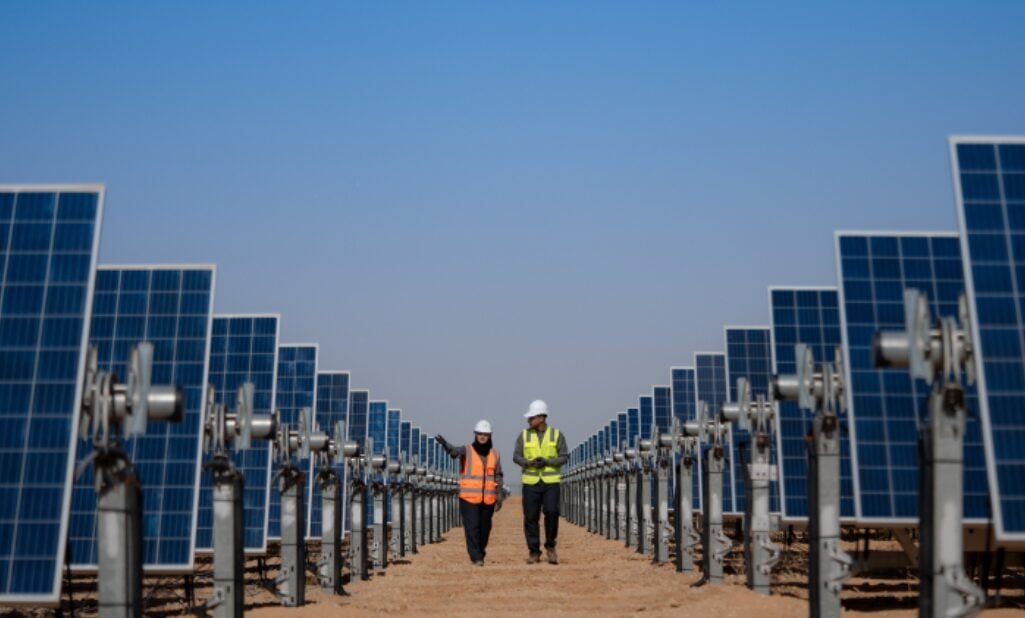
As solar generation expands rapidly under the country’s energy diversification plan, the grid faces inherent volatility due to the intermittent nature of renewable output.
Large-scale battery storage is designed to absorb excess generation during peak sunlight hours and release it during evening demand spikes, effectively flattening supply curves and reducing reliance on gas or oil-fired backup plants.
The scale of the procurement places it among the largest battery storage tenders globally.
A three-gigawatt capacity is sufficient to support peak load balancing across multiple major urban centers, while twelve gigawatt-hours of storage indicates a focus on multi-hour discharge capability rather than short-duration frequency stabilization.
This positions the project as a foundational component of long-duration grid reliability rather than a supplementary system.
The key issue is that Saudi Arabia is attempting to solve two interconnected problems simultaneously: domestic energy security and export optimization.
By replacing oil and liquid fuel consumption in electricity generation with stored renewable power, the kingdom can redirect hydrocarbons toward higher-value export markets, strengthening fiscal revenues while reducing internal energy inefficiencies.
Industrial participation is expected to be highly competitive, with global energy storage manufacturers, engineering firms, and infrastructure investors qualifying for participation.
The pre-qualification phase is designed to filter technical capacity, financial strength, and delivery capability at a scale that requires coordination across manufacturing supply chains, grid engineering, and long-term operational management.
This initiative also reflects the acceleration of Saudi Arabia’s broader Vision 2030 agenda, which prioritizes energy diversification, infrastructure modernization, and large-scale industrial development.
Battery storage is now being treated as core national infrastructure rather than experimental technology, reflecting a shift in global energy economics where storage is becoming as critical as generation capacity itself.
The broader consequence is that Saudi Arabia is positioning itself as a major global market for utility-scale energy storage deployment.
This has implications for international battery supply chains, raw material demand, and grid technology standards, particularly as other energy-intensive economies evaluate similar transitions toward renewable-heavy systems.
If fully deployed as planned, the program will significantly reshape the operational structure of the Saudi power grid, reducing peak load stress, improving renewable utilization rates, and enabling more flexible integration of future solar and wind projects across the kingdom’s energy network.
Saudi Arabia has begun qualifying bidders for a large-scale energy storage procurement program targeting approximately three gigawatts of power capacity and twelve gigawatt-hours of storage, a move that signals one of the most ambitious grid modernization efforts currently underway globally.
The initiative is part of the kingdom’s broader strategy to restructure its electricity system around renewable energy, reduce dependence on liquid fuels for domestic power generation, and stabilize a grid increasingly shaped by solar expansion.
What is confirmed is that the process has entered the pre-qualification stage, where companies are being assessed before submitting full technical and financial bids for what is effectively a nationwide battery energy storage rollout.
The project is expected to be developed in multiple sites across the country, integrated into transmission infrastructure operated by the national grid system, and deployed in phases rather than as a single installation.
The mechanism behind the program reflects a structural shift in how Saudi Arabia manages electricity supply.
As solar generation expands rapidly under the country’s energy diversification plan, the grid faces inherent volatility due to the intermittent nature of renewable output.
Large-scale battery storage is designed to absorb excess generation during peak sunlight hours and release it during evening demand spikes, effectively flattening supply curves and reducing reliance on gas or oil-fired backup plants.
The scale of the procurement places it among the largest battery storage tenders globally.
A three-gigawatt capacity is sufficient to support peak load balancing across multiple major urban centers, while twelve gigawatt-hours of storage indicates a focus on multi-hour discharge capability rather than short-duration frequency stabilization.
This positions the project as a foundational component of long-duration grid reliability rather than a supplementary system.
The key issue is that Saudi Arabia is attempting to solve two interconnected problems simultaneously: domestic energy security and export optimization.
By replacing oil and liquid fuel consumption in electricity generation with stored renewable power, the kingdom can redirect hydrocarbons toward higher-value export markets, strengthening fiscal revenues while reducing internal energy inefficiencies.
Industrial participation is expected to be highly competitive, with global energy storage manufacturers, engineering firms, and infrastructure investors qualifying for participation.
The pre-qualification phase is designed to filter technical capacity, financial strength, and delivery capability at a scale that requires coordination across manufacturing supply chains, grid engineering, and long-term operational management.
This initiative also reflects the acceleration of Saudi Arabia’s broader Vision 2030 agenda, which prioritizes energy diversification, infrastructure modernization, and large-scale industrial development.
Battery storage is now being treated as core national infrastructure rather than experimental technology, reflecting a shift in global energy economics where storage is becoming as critical as generation capacity itself.
The broader consequence is that Saudi Arabia is positioning itself as a major global market for utility-scale energy storage deployment.
This has implications for international battery supply chains, raw material demand, and grid technology standards, particularly as other energy-intensive economies evaluate similar transitions toward renewable-heavy systems.
If fully deployed as planned, the program will significantly reshape the operational structure of the Saudi power grid, reducing peak load stress, improving renewable utilization rates, and enabling more flexible integration of future solar and wind projects across the kingdom’s energy network.