Israel's Expansion of Buffer Zone Raises Concerns Over Lebanon's Offshore Gas Resources
Lebanon faces concerns over Israeli military expansion into its offshore energy resources, potentially affecting the Qana gas field and a US-brokered maritime border agreement.
Lebanon is facing growing concern over what officials describe as potential Israeli encroachment onto its offshore energy resources.
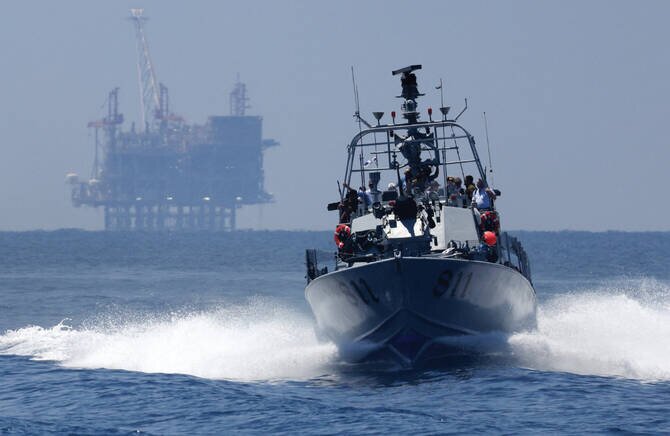
The Israeli military published a map extending its buffer zone into the Mediterranean Sea, raising questions about the fate of the Qana gas field.
The newly delineated 'Yellow Line' marks an expanded buffer zone about 5-10 km into Lebanese territory and appears to extend into maritime areas linked to the Qana gas field.
This has triggered alarm in Beirut as Lebanon secured exploration rights in Qana under a US-brokered maritime border agreement with Israel in 2022, following years of complex negotiations.
Analysts warn that Israel's expansion into its operational map could signal a shift towards asserting influence over offshore resources.
Retired Brig. Gen. Mounir Shehadeh, former head of Lebanon’s Military Court, states that controlling gas fields is not simple and requires extensive infrastructure.
Any attempt to seize Lebanese oil fields would escalate the situation and threaten regional economic stability.
The 2022 agreement mediated by US envoy Amos Hochstein serves as a significant deterrent for Israel's unilateral actions, clearly defining the maritime boundary and implicitly recognizing Lebanon’s right to develop the Qana field.
However, political balance and deterrence are crucial in preventing military violations.
Lebanese officials describe Israel's move as an attempt to reshape regional maps and expand maneuvering room.
While legal measures and military capabilities alone are insufficient for safeguarding rights, diplomatic pressure from the US and Europe remains essential.
The agreement also stipulates that any changes require both parties' consent, of which no formal amendments have occurred.
Lebanon has divided its exclusive economic zone into ten blocks for oil and gas exploration, with seismic surveys conducted in most areas except Block 8 adjacent to the disputed maritime border with Israel.
Lebanon's offshore gas reserves are estimated at 96 trillion cubic feet, and oil reserves at 865 million barrels.
The Israeli military published a map extending its buffer zone into the Mediterranean Sea, raising questions about the fate of the Qana gas field.
The newly delineated 'Yellow Line' marks an expanded buffer zone about 5-10 km into Lebanese territory and appears to extend into maritime areas linked to the Qana gas field.
This has triggered alarm in Beirut as Lebanon secured exploration rights in Qana under a US-brokered maritime border agreement with Israel in 2022, following years of complex negotiations.
Analysts warn that Israel's expansion into its operational map could signal a shift towards asserting influence over offshore resources.
Retired Brig. Gen. Mounir Shehadeh, former head of Lebanon’s Military Court, states that controlling gas fields is not simple and requires extensive infrastructure.
Any attempt to seize Lebanese oil fields would escalate the situation and threaten regional economic stability.
The 2022 agreement mediated by US envoy Amos Hochstein serves as a significant deterrent for Israel's unilateral actions, clearly defining the maritime boundary and implicitly recognizing Lebanon’s right to develop the Qana field.
However, political balance and deterrence are crucial in preventing military violations.
Lebanese officials describe Israel's move as an attempt to reshape regional maps and expand maneuvering room.
While legal measures and military capabilities alone are insufficient for safeguarding rights, diplomatic pressure from the US and Europe remains essential.
The agreement also stipulates that any changes require both parties' consent, of which no formal amendments have occurred.
Lebanon has divided its exclusive economic zone into ten blocks for oil and gas exploration, with seismic surveys conducted in most areas except Block 8 adjacent to the disputed maritime border with Israel.
Lebanon's offshore gas reserves are estimated at 96 trillion cubic feet, and oil reserves at 865 million barrels.