
Gulf Unity Urged to Maximize Global Capital Inflows
Economic experts advocate for unifying Gulf markets to attract foreign investment.
During a virtual meeting on Sunday, economic experts discussed the potential benefits of unifying the Gulf market in order to maximize inflows of capital from abroad.
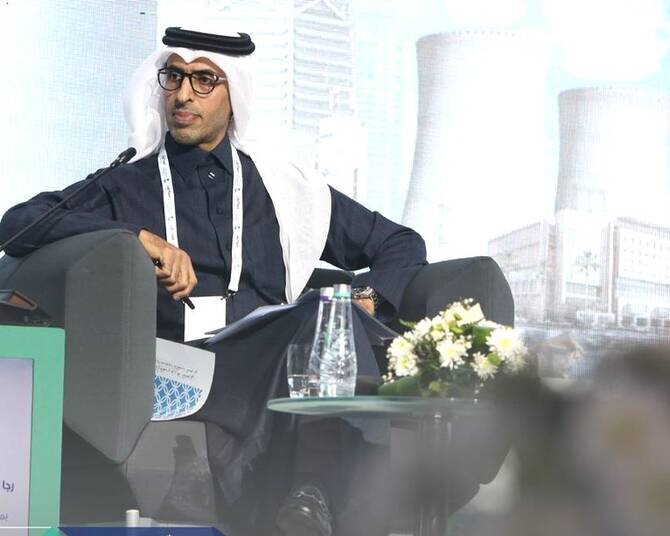
Dr. Raja Al-Marzoqi, General Coordinator for Negotiations and head of the GCC Negotiating Team, suggested that completing the unified Gulf market and developing mechanisms for resolving investment disputes would attract more foreign investment and contribute to economic diversification in Gulf states.
The decline in foreign investment in recent years can be attributed to geopolitical tensions stemming from shifting US trade policies, unstable global inflation trends, and rising energy prices resulting from the Iran war and its impact on the international economy.
Al-Marzoqi emphasized that membership in formal integration agreements and the signing of free trade agreements send a credible signal to investors that market liberalization policies will not be reversed, thus reducing obstacles for small-scale investment projects.
According to World Bank estimates, regulatory disparities between countries add between 8 and 15 percent to the operating costs of companies serving fragmented markets.
Al-Marzoqi reviewed global figures showing enormous leaps in trade and investment, noting the rise in foreign direct investment flows from $207 billion in 1990 to peaks of $1.9 trillion in 2007 and 2015.
These flows then declined due to the COVID-19 pandemic to $985 billion in 2020 before rebounding to $1.51 trillion in 2024, according to the UNCTAD World Investment Report.
Al-Marzoqi pointed out the structural transformations in the global economy that shaped the features of the modern economic system after the signing of the Bretton Woods Agreement in 1944 shifted the tools of economic policy from isolation to openness.
This made bilateral agreements and economic blocs the most important tools for attracting investment and achieving economic growth rates.
Al-Marzoqi highlighted that free trade agreements increase bilateral trade by an average of 60 to 100 percent over a 10-year period, according to recent estimates using updated gravity models.
The number of agreements in force worldwide has exceeded 400,600 compared to fewer than 50 in 1990, and the countries that have joined these agreements represent 90 percent of global trade.
He cited the experience of the European Union, explaining that the countries which joined in 2004 witnessed a tripling of foreign direct investment in just three years.
In Poland, for example, investment rose from $4 billion in 2003 to $19 billion in 2006 immediately after joining.
According to IMF data for 2026, global GDP is expected to grow by 3.0 percent with global inflation at 3.6 percent down from 4.3 percent in 2025.
However, the IMF warned of geopolitical risks particularly escalating tensions in the Middle East and the potential closure of the Strait of Hormuz which could drive oil prices up by as much as 80 percent.
Al-Marzoqi identified key investment opportunities in artificial intelligence and technology where capital spending is growing rapidly; infrastructure and defense supported by increased government spending in Europe and Asia; and renewable energy which enjoys strong government support.
He presented recommendations to policymakers in Gulf Cooperation Council countries, including completing the genuine unified Gulf market, accelerating Gulf negotiations, developing mechanisms for resolving investment disputes, considering the establishment of a Gulf court, and updating double taxation avoidance agreements to include the digital economy.
Al-Marzoqi called for launching proactive vocational retraining programs alongside the signing of agreements and developing technical education and training curricula.
He concluded by stating that countries that open up to the global economy in a sound manner do not lose their sovereignty but rather gain the ability to shape the terms of openness for the benefit of their people and achieve their economic security.
Dr. Raja Al-Marzoqi, General Coordinator for Negotiations and head of the GCC Negotiating Team, suggested that completing the unified Gulf market and developing mechanisms for resolving investment disputes would attract more foreign investment and contribute to economic diversification in Gulf states.
The decline in foreign investment in recent years can be attributed to geopolitical tensions stemming from shifting US trade policies, unstable global inflation trends, and rising energy prices resulting from the Iran war and its impact on the international economy.
Al-Marzoqi emphasized that membership in formal integration agreements and the signing of free trade agreements send a credible signal to investors that market liberalization policies will not be reversed, thus reducing obstacles for small-scale investment projects.
According to World Bank estimates, regulatory disparities between countries add between 8 and 15 percent to the operating costs of companies serving fragmented markets.
Al-Marzoqi reviewed global figures showing enormous leaps in trade and investment, noting the rise in foreign direct investment flows from $207 billion in 1990 to peaks of $1.9 trillion in 2007 and 2015.
These flows then declined due to the COVID-19 pandemic to $985 billion in 2020 before rebounding to $1.51 trillion in 2024, according to the UNCTAD World Investment Report.
Al-Marzoqi pointed out the structural transformations in the global economy that shaped the features of the modern economic system after the signing of the Bretton Woods Agreement in 1944 shifted the tools of economic policy from isolation to openness.
This made bilateral agreements and economic blocs the most important tools for attracting investment and achieving economic growth rates.
Al-Marzoqi highlighted that free trade agreements increase bilateral trade by an average of 60 to 100 percent over a 10-year period, according to recent estimates using updated gravity models.
The number of agreements in force worldwide has exceeded 400,600 compared to fewer than 50 in 1990, and the countries that have joined these agreements represent 90 percent of global trade.
He cited the experience of the European Union, explaining that the countries which joined in 2004 witnessed a tripling of foreign direct investment in just three years.
In Poland, for example, investment rose from $4 billion in 2003 to $19 billion in 2006 immediately after joining.
According to IMF data for 2026, global GDP is expected to grow by 3.0 percent with global inflation at 3.6 percent down from 4.3 percent in 2025.
However, the IMF warned of geopolitical risks particularly escalating tensions in the Middle East and the potential closure of the Strait of Hormuz which could drive oil prices up by as much as 80 percent.
Al-Marzoqi identified key investment opportunities in artificial intelligence and technology where capital spending is growing rapidly; infrastructure and defense supported by increased government spending in Europe and Asia; and renewable energy which enjoys strong government support.
He presented recommendations to policymakers in Gulf Cooperation Council countries, including completing the genuine unified Gulf market, accelerating Gulf negotiations, developing mechanisms for resolving investment disputes, considering the establishment of a Gulf court, and updating double taxation avoidance agreements to include the digital economy.
Al-Marzoqi called for launching proactive vocational retraining programs alongside the signing of agreements and developing technical education and training curricula.
He concluded by stating that countries that open up to the global economy in a sound manner do not lose their sovereignty but rather gain the ability to shape the terms of openness for the benefit of their people and achieve their economic security.