
UK Local Elections Seen as Referendum on Keir Starmer's Leadership
British voters cast ballots in local elections that could determine the future of Prime Minister Keir Starmer and his Labour Party.
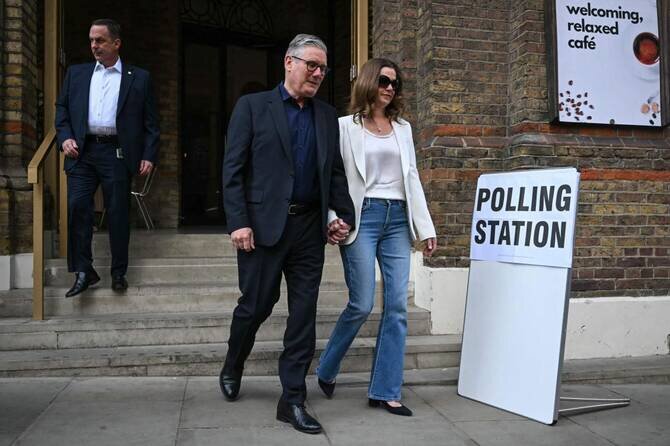
British voters have begun casting their votes in Thursday's local elections, with results expected to impact the political landscape and potentially challenge Prime Minister Keir Starmer's leadership.
The centre-left Labour Party is bracing for significant losses as approximately 5,000 local councilor positions and a few mayoral roles across England are up for grabs, alongside semiautonomous parliaments in Scotland and Wales.
Polls opened at 7:00 AM and will close at 10:00 PM (2100 GMT), with most results expected to be declared on Friday afternoon.
While local elections typically focus on issues such as garbage collection and infrastructure improvements, the upcoming vote has been framed by Starmer's opponents as a referendum on his leadership.
A poor performance could lead to calls within the Labour Party for Starmer's removal, despite having taken office less than two years ago.
Several analysts have expressed doubt about Starmer’s ability to lead the party into the next general election, which must occur by 2029.
Starmer's popularity has waned due to missteps and the government's struggles with economic growth, public service improvements, and addressing living costs.
The US-Israeli conflict involving Iran, which disrupted oil supplies through the Strait of Hormuz, exacerbated these issues.
Furthermore, Starmer's decision to appoint Peter Mandelson, a figure associated with scandal, as Britain’s ambassador to Washington has further damaged his standing.
Labour currently holds approximately 2,500 seats on English local councils and faces concern about potential losses.
The far-right Reform UK party, led by Nigel Farage, is anticipated to make significant gains.
Reform UK aims to win support in former Labour strongholds with an anti-establishment and anti-immigration platform.
The Green Party may also see increases in council seat counts, particularly in urban areas and university towns.
Meanwhile, the main opposition Conservative Party is expected to lose ground, with the centrist Liberal Democrats potentially making some gains.
Starmer refrained from mentioning the Conservatives in his final pre-election message, instead framing it as a choice between Labour’s vision for progress and the alternatives offered by Reform UK or the Greens.
Both Reform UK and the Greens have seen rapid growth and face increased scrutiny.
Questions have been raised over a $6.8 million cryptocurrency donation Farage received but did not disclose.
The Green Party has dismissed candidates with antisemitic social media posts, emphasizing their pro-Palestinian stance under leader Zack Polanski.
Reform UK also seeks breakthroughs in Scotland and Wales, although Scottish National Party (SNP) and Plaid Cymru are likely to form governments in Edinburgh and Cardiff respectively.
According to Tony Travers of the London School of Economics, Labour faces challenges across multiple fronts, defending seats against Reform, Greens, Liberal Democrats, and Conservatives.
The outcome of these local elections is seen as a crucial test for Starmer’s leadership and his party's standing ahead of the next general election.
The centre-left Labour Party is bracing for significant losses as approximately 5,000 local councilor positions and a few mayoral roles across England are up for grabs, alongside semiautonomous parliaments in Scotland and Wales.
Polls opened at 7:00 AM and will close at 10:00 PM (2100 GMT), with most results expected to be declared on Friday afternoon.
While local elections typically focus on issues such as garbage collection and infrastructure improvements, the upcoming vote has been framed by Starmer's opponents as a referendum on his leadership.
A poor performance could lead to calls within the Labour Party for Starmer's removal, despite having taken office less than two years ago.
Several analysts have expressed doubt about Starmer’s ability to lead the party into the next general election, which must occur by 2029.
Starmer's popularity has waned due to missteps and the government's struggles with economic growth, public service improvements, and addressing living costs.
The US-Israeli conflict involving Iran, which disrupted oil supplies through the Strait of Hormuz, exacerbated these issues.
Furthermore, Starmer's decision to appoint Peter Mandelson, a figure associated with scandal, as Britain’s ambassador to Washington has further damaged his standing.
Labour currently holds approximately 2,500 seats on English local councils and faces concern about potential losses.
The far-right Reform UK party, led by Nigel Farage, is anticipated to make significant gains.
Reform UK aims to win support in former Labour strongholds with an anti-establishment and anti-immigration platform.
The Green Party may also see increases in council seat counts, particularly in urban areas and university towns.
Meanwhile, the main opposition Conservative Party is expected to lose ground, with the centrist Liberal Democrats potentially making some gains.
Starmer refrained from mentioning the Conservatives in his final pre-election message, instead framing it as a choice between Labour’s vision for progress and the alternatives offered by Reform UK or the Greens.
Both Reform UK and the Greens have seen rapid growth and face increased scrutiny.
Questions have been raised over a $6.8 million cryptocurrency donation Farage received but did not disclose.
The Green Party has dismissed candidates with antisemitic social media posts, emphasizing their pro-Palestinian stance under leader Zack Polanski.
Reform UK also seeks breakthroughs in Scotland and Wales, although Scottish National Party (SNP) and Plaid Cymru are likely to form governments in Edinburgh and Cardiff respectively.
According to Tony Travers of the London School of Economics, Labour faces challenges across multiple fronts, defending seats against Reform, Greens, Liberal Democrats, and Conservatives.
The outcome of these local elections is seen as a crucial test for Starmer’s leadership and his party's standing ahead of the next general election.