Pakistan Warns of Strong Response to Any Attack Amid Tensions with India
On the anniversary of last year's four-day conflict, Pakistan's military vows a strong retaliation against any aggression from India.
Pakistan's military issued a statement on Thursday, emphasizing its readiness to counter any potential aggression from neighboring India.
This warning comes as the country marks the first anniversary of the four-day conflict that erupted between the two nuclear-armed nations in May 2025, bringing them perilously close to all-out war before a US-brokered ceasefire took effect.
The military highlighted its commitment to defending Pakistan's sovereignty and territorial integrity, stating that any 'hostile design' against the country would be met with 'greater strength, precision, and resolve' than what India experienced during the skirmishes last year.
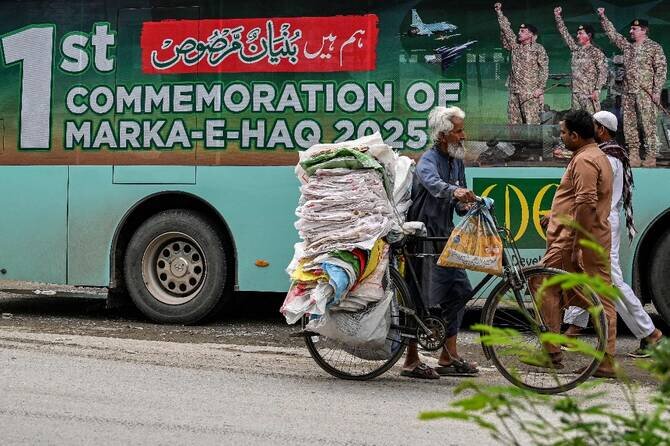
This conflict, referred to by Pakistan as "Marka-e-Haq," or "Battle of Truth," resulted from a series of tit-for-tat strikes following an attack in the Indian-controlled part of disputed Kashmir that killed 26 people, mostly Hindu tourists.
Pakistan has consistently denied involvement in the incident and called for an independent investigation.
However, tensions escalated when India launched airstrikes inside Pakistan on May 7, prompting retaliatory attacks from Pakistan, including drone incursions, missile strikes, and artillery fire.
The exchanges resulted in significant casualties on both sides before a ceasefire was brokered through US mediation on May 10.
Pakistan claims to have shot down several Indian military aircraft during the conflict, including a French-made Rafale fighter jet, while India acknowledged suffering losses without providing detailed figures.
U.S. President Donald Trump played a pivotal role in helping to de-escalate the situation, for which he took credit.
The strained relationship between Pakistan and India has its roots in decades-old tensions over Kashmir, with the two countries having fought two of their three wars over the region's control.
Both nations claim Kashmir in its entirety, further complicating the geopolitical dynamics in South Asia.
This warning comes as the country marks the first anniversary of the four-day conflict that erupted between the two nuclear-armed nations in May 2025, bringing them perilously close to all-out war before a US-brokered ceasefire took effect.
The military highlighted its commitment to defending Pakistan's sovereignty and territorial integrity, stating that any 'hostile design' against the country would be met with 'greater strength, precision, and resolve' than what India experienced during the skirmishes last year.
This conflict, referred to by Pakistan as "Marka-e-Haq," or "Battle of Truth," resulted from a series of tit-for-tat strikes following an attack in the Indian-controlled part of disputed Kashmir that killed 26 people, mostly Hindu tourists.
Pakistan has consistently denied involvement in the incident and called for an independent investigation.
However, tensions escalated when India launched airstrikes inside Pakistan on May 7, prompting retaliatory attacks from Pakistan, including drone incursions, missile strikes, and artillery fire.
The exchanges resulted in significant casualties on both sides before a ceasefire was brokered through US mediation on May 10.
Pakistan claims to have shot down several Indian military aircraft during the conflict, including a French-made Rafale fighter jet, while India acknowledged suffering losses without providing detailed figures.
U.S. President Donald Trump played a pivotal role in helping to de-escalate the situation, for which he took credit.
The strained relationship between Pakistan and India has its roots in decades-old tensions over Kashmir, with the two countries having fought two of their three wars over the region's control.
Both nations claim Kashmir in its entirety, further complicating the geopolitical dynamics in South Asia.