Strait of Hormuz Risk Rises as Saudi Warning Highlights Fragile Gulf Energy Security
A warning over a potential US-linked blockade scenario underscores how quickly a regional confrontation could disrupt global oil flows and trigger price shocks
EVENT-DRIVEN geopolitical tensions in the Gulf have sharpened concerns over the Strait of Hormuz, the narrow maritime corridor through which a significant share of the world’s oil exports transit.
A warning attributed to Saudi officials that a US blockade scenario could trigger a wider regional crisis reflects a broader anxiety in energy markets: the vulnerability of global supply chains to rapid escalation in a heavily militarized waterway.
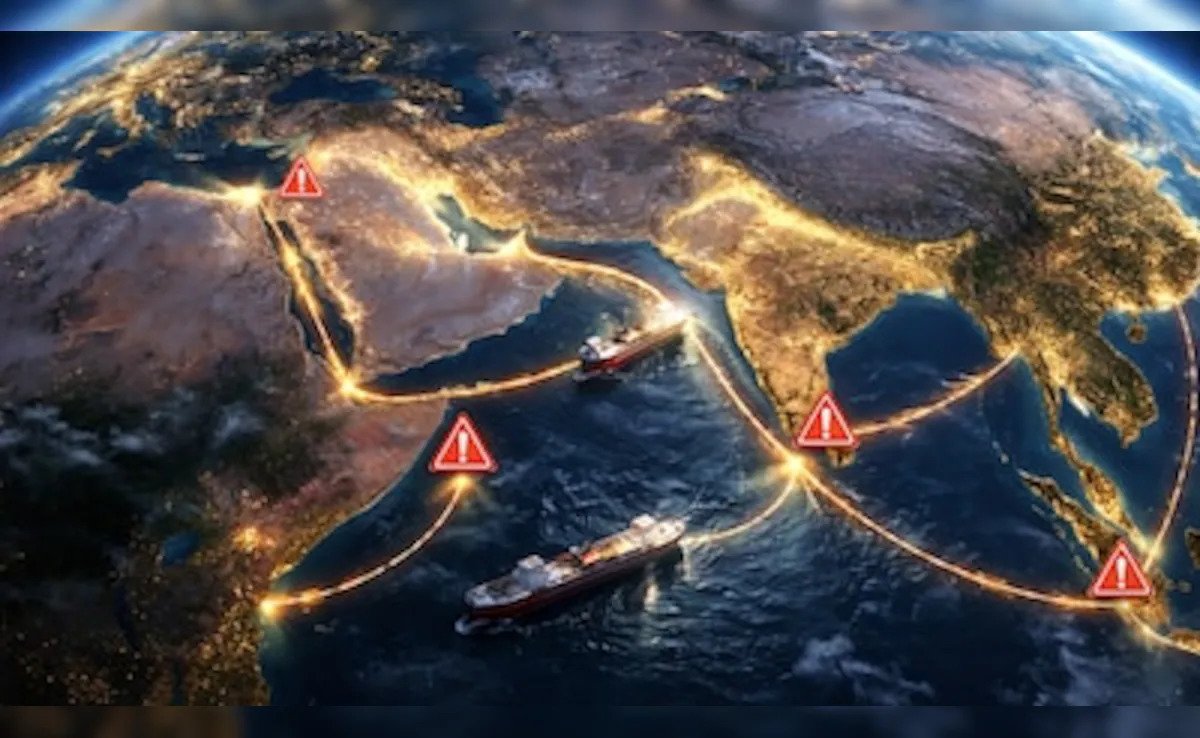
The Strait of Hormuz sits between Iran and the Arabian Peninsula and functions as one of the most strategically important chokepoints in global energy logistics.
Tankers carrying crude oil and liquefied natural gas from Saudi Arabia, Iraq, the United Arab Emirates, and Kuwait pass through it before reaching international markets.
Any disruption in this corridor has historically been associated with immediate price volatility, even when no physical interruption ultimately occurs.
The reported warning emerges against a backdrop of persistent US–Iran tensions and periodic maritime confrontations involving commercial shipping in the Gulf region.
Iran has repeatedly signaled in past crises that it could disrupt traffic through the strait in response to external military pressure or sanctions escalation.
Saudi Arabia and other Gulf exporters, whose economies depend heavily on uninterrupted hydrocarbon exports, have consistently framed freedom of navigation as a non-negotiable security priority.
The key issue is not an imminent declared blockade, but the strategic risk created when military signaling overlaps with critical infrastructure.
Even the perception that shipping lanes could be threatened is enough to affect insurance premiums for tankers, increase freight costs, and inject volatility into global oil benchmarks.
Markets tend to price in geopolitical risk long before any physical disruption occurs, amplifying the economic impact of warnings alone.
For Saudi Arabia, the stakes are particularly direct.
As one of the world’s largest oil exporters, its fiscal stability is closely tied to predictable export volumes and stable global prices.
Any escalation affecting Hormuz would not only impact Saudi revenues but also complicate broader economic diversification plans that rely on stable energy income to finance domestic investment programs.
For the United States, the strategic dimension is centered on maintaining open sea lanes and deterring any attempt to militarize or obstruct one of the world’s most critical trade routes.
US naval presence in the Gulf has long been framed as a stabilizing force, but it also places Washington at the center of any escalation dynamics involving Iran and its regional rivals.
Global implications extend well beyond the immediate region.
A sustained disruption or even credible threat to shipping through Hormuz would likely trigger sharp increases in oil prices, affecting inflation trajectories in importing economies across Europe and Asia.
Energy-dependent states would face immediate pressure on fuel costs, industrial input prices, and broader consumer inflation.
At the same time, Gulf states have invested heavily in alternative export infrastructure, including pipelines designed to bypass the Strait of Hormuz.
However, these routes do not fully replace the volume capacity of maritime shipping, meaning the strait remains structurally irreplaceable in global energy logistics.
The diplomatic framing of the issue reflects a broader pattern in Gulf security policy: deterrence through visibility.
Public warnings about the consequences of escalation are intended not only for external actors but also for markets, reinforcing the message that stability in the region is a shared global economic interest.
The immediate consequence of heightened rhetoric around Hormuz is already visible in increased attention from energy traders and shipping insurers.
Any further deterioration in regional signaling would likely translate quickly into higher risk premiums across global energy supply chains, reinforcing the Strait of Hormuz as one of the most sensitive pressure points in the international system.
A warning attributed to Saudi officials that a US blockade scenario could trigger a wider regional crisis reflects a broader anxiety in energy markets: the vulnerability of global supply chains to rapid escalation in a heavily militarized waterway.
The Strait of Hormuz sits between Iran and the Arabian Peninsula and functions as one of the most strategically important chokepoints in global energy logistics.
Tankers carrying crude oil and liquefied natural gas from Saudi Arabia, Iraq, the United Arab Emirates, and Kuwait pass through it before reaching international markets.
Any disruption in this corridor has historically been associated with immediate price volatility, even when no physical interruption ultimately occurs.
The reported warning emerges against a backdrop of persistent US–Iran tensions and periodic maritime confrontations involving commercial shipping in the Gulf region.
Iran has repeatedly signaled in past crises that it could disrupt traffic through the strait in response to external military pressure or sanctions escalation.
Saudi Arabia and other Gulf exporters, whose economies depend heavily on uninterrupted hydrocarbon exports, have consistently framed freedom of navigation as a non-negotiable security priority.
The key issue is not an imminent declared blockade, but the strategic risk created when military signaling overlaps with critical infrastructure.
Even the perception that shipping lanes could be threatened is enough to affect insurance premiums for tankers, increase freight costs, and inject volatility into global oil benchmarks.
Markets tend to price in geopolitical risk long before any physical disruption occurs, amplifying the economic impact of warnings alone.
For Saudi Arabia, the stakes are particularly direct.
As one of the world’s largest oil exporters, its fiscal stability is closely tied to predictable export volumes and stable global prices.
Any escalation affecting Hormuz would not only impact Saudi revenues but also complicate broader economic diversification plans that rely on stable energy income to finance domestic investment programs.
For the United States, the strategic dimension is centered on maintaining open sea lanes and deterring any attempt to militarize or obstruct one of the world’s most critical trade routes.
US naval presence in the Gulf has long been framed as a stabilizing force, but it also places Washington at the center of any escalation dynamics involving Iran and its regional rivals.
Global implications extend well beyond the immediate region.
A sustained disruption or even credible threat to shipping through Hormuz would likely trigger sharp increases in oil prices, affecting inflation trajectories in importing economies across Europe and Asia.
Energy-dependent states would face immediate pressure on fuel costs, industrial input prices, and broader consumer inflation.
At the same time, Gulf states have invested heavily in alternative export infrastructure, including pipelines designed to bypass the Strait of Hormuz.
However, these routes do not fully replace the volume capacity of maritime shipping, meaning the strait remains structurally irreplaceable in global energy logistics.
The diplomatic framing of the issue reflects a broader pattern in Gulf security policy: deterrence through visibility.
Public warnings about the consequences of escalation are intended not only for external actors but also for markets, reinforcing the message that stability in the region is a shared global economic interest.
The immediate consequence of heightened rhetoric around Hormuz is already visible in increased attention from energy traders and shipping insurers.
Any further deterioration in regional signaling would likely translate quickly into higher risk premiums across global energy supply chains, reinforcing the Strait of Hormuz as one of the most sensitive pressure points in the international system.