
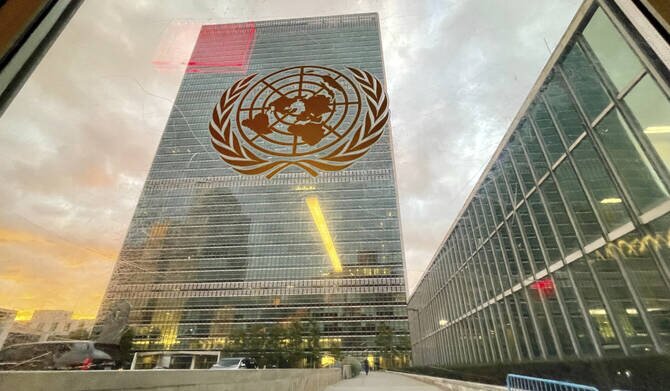
Four Candidates Compete to Lead the United Nations
Chile’s Michelle Bachelet, Argentina’s Rafael Grossi, Costa Rica’s Rebeca Grynspan and Senegal’s Macky Sall face rigorous interviews to succeed António Guterres as UN Secretary-General.
UNITED NATIONS: Four candidates vying for the position of United Nations Secretary-General have recently undergone intense questioning from UN ambassadors.
Chile’s Michelle Bachelet, Argentina’s Rafael Grossi, Costa Rica’s Rebeca Grynspan, and Senegal’s Macky Sall were all put through their paces in what has been described as one of the most challenging job interviews globally.
With no clear frontrunner, additional candidates may still enter the race before January 1st to succeed current Secretary-General António Guterres.The role of UN Secretary-General is significant, as noted by General Assembly President Annalena Baerbock.
The position not only represents the United Nations but also serves as its chief diplomat and defender of the UN Charter, leading on peace, development, and human rights issues.All four candidates emphasized their commitment to the three pillars of the UN: international peace and security, development, and human rights.
They each pledged to drive reforms within the institution, which has been active for over eight decades.Bachelet, a two-time former President of Chile and former UN Human Rights Chief, highlighted her leadership skills and the need for dialogue to address global issues.
Grossi emphasized the necessity of effective leadership and support from all countries in order for the UN to regain its standing on the international stage.
Grynspan stated that she would serve as both a moral and impartial voice for the organization, while Sall expressed his commitment to being a 'bridge-builder' between nations.Some candidates faced criticism during their interviews.
Bachelet responded to allegations from 28 Republican US lawmakers branding her as 'pro-abortion zealot.' She maintained that she respects each country's right to decide on reproductive health issues and reaffirmed her dedication to gender equality.Traditionally, the role of Secretary-General rotates by region, with Latin America currently in line for the position.
Sall, the only candidate from outside this region, has insisted that the UN Charter does not bar non-regional candidates, while also facing demonstrations both for and against his candidacy.
He denies accusations of corruption.The final selection process will be conducted by the 15-member UN Security Council, particularly the five veto-wielding nations - the United States, Russia, China, United Kingdom, and France.
The choice must then receive approval from the 193-member General Assembly.
Observers have expressed a desire for a Secretary-General who is willing to take risks in promoting peace, as they believe that the current UN has not been proactive enough in addressing major crises.
Chile’s Michelle Bachelet, Argentina’s Rafael Grossi, Costa Rica’s Rebeca Grynspan, and Senegal’s Macky Sall were all put through their paces in what has been described as one of the most challenging job interviews globally.
With no clear frontrunner, additional candidates may still enter the race before January 1st to succeed current Secretary-General António Guterres.The role of UN Secretary-General is significant, as noted by General Assembly President Annalena Baerbock.
The position not only represents the United Nations but also serves as its chief diplomat and defender of the UN Charter, leading on peace, development, and human rights issues.All four candidates emphasized their commitment to the three pillars of the UN: international peace and security, development, and human rights.
They each pledged to drive reforms within the institution, which has been active for over eight decades.Bachelet, a two-time former President of Chile and former UN Human Rights Chief, highlighted her leadership skills and the need for dialogue to address global issues.
Grossi emphasized the necessity of effective leadership and support from all countries in order for the UN to regain its standing on the international stage.
Grynspan stated that she would serve as both a moral and impartial voice for the organization, while Sall expressed his commitment to being a 'bridge-builder' between nations.Some candidates faced criticism during their interviews.
Bachelet responded to allegations from 28 Republican US lawmakers branding her as 'pro-abortion zealot.' She maintained that she respects each country's right to decide on reproductive health issues and reaffirmed her dedication to gender equality.Traditionally, the role of Secretary-General rotates by region, with Latin America currently in line for the position.
Sall, the only candidate from outside this region, has insisted that the UN Charter does not bar non-regional candidates, while also facing demonstrations both for and against his candidacy.
He denies accusations of corruption.The final selection process will be conducted by the 15-member UN Security Council, particularly the five veto-wielding nations - the United States, Russia, China, United Kingdom, and France.
The choice must then receive approval from the 193-member General Assembly.
Observers have expressed a desire for a Secretary-General who is willing to take risks in promoting peace, as they believe that the current UN has not been proactive enough in addressing major crises.