Saudi Arabia’s shifting alliances raise questions over China’s role in post-conflict Middle East order
As regional tensions ease following the Iran conflict, analysts examine whether Beijing could deepen its strategic and economic footprint in Gulf security and diplomacy.
With regional tensions entering a post-conflict phase following the Iran war, attention has turned to the evolving balance of power in the Gulf and the potential for China to assume a more prominent diplomatic and economic role alongside Saudi Arabia.
The discussion reflects broader uncertainty over how traditional Western influence in the Middle East may be recalibrated in the wake of shifting security dynamics.
Saudi Arabia’s foreign policy has in recent years moved towards greater diversification, balancing long-standing security ties with Western partners against expanding engagement with emerging global powers, particularly China.
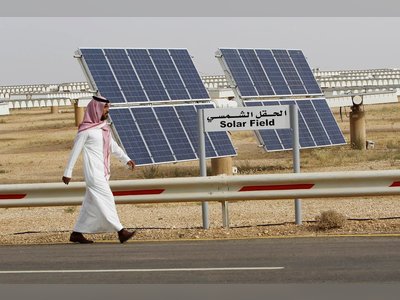
This approach has been most visible in energy cooperation, infrastructure investment, and participation in Beijing’s Belt and Road Initiative, which has deepened economic interdependence between the two countries.
China’s role in the region has also grown through diplomatic initiatives, most notably its facilitation of the 2023 agreement between Saudi Arabia and Iran to restore diplomatic relations.
That development was widely interpreted as a signal of Beijing’s increasing willingness to act as a mediator in regional disputes, complementing its expanding commercial presence.
In the aftermath of the Iran conflict, analysts suggest that Saudi Arabia may further explore partnerships that reduce reliance on any single security guarantor.
While the United States remains a central defence partner, Riyadh’s strategic outlook has increasingly emphasised flexibility, economic diversification, and multi-vector diplomacy.
China, meanwhile, has positioned itself as a key energy customer and infrastructure investor in the Gulf, while avoiding direct military entanglement in regional disputes.
This stance has enabled Beijing to maintain strong ties with multiple regional actors, including Saudi Arabia and Iran, even amid periods of heightened tension.
Despite this growing engagement, questions remain over whether China is prepared or willing to take on a more formal security role in the Middle East.
For now, its influence appears concentrated in economic statecraft and diplomatic facilitation rather than direct strategic guarantees.
As Saudi Arabia continues to refine its post-conflict foreign policy posture, the evolving relationship with China is likely to remain a central feature of broader regional realignment, shaped by economic ambition, geopolitical caution, and the search for diversified partnerships.
The discussion reflects broader uncertainty over how traditional Western influence in the Middle East may be recalibrated in the wake of shifting security dynamics.
Saudi Arabia’s foreign policy has in recent years moved towards greater diversification, balancing long-standing security ties with Western partners against expanding engagement with emerging global powers, particularly China.
This approach has been most visible in energy cooperation, infrastructure investment, and participation in Beijing’s Belt and Road Initiative, which has deepened economic interdependence between the two countries.
China’s role in the region has also grown through diplomatic initiatives, most notably its facilitation of the 2023 agreement between Saudi Arabia and Iran to restore diplomatic relations.
That development was widely interpreted as a signal of Beijing’s increasing willingness to act as a mediator in regional disputes, complementing its expanding commercial presence.
In the aftermath of the Iran conflict, analysts suggest that Saudi Arabia may further explore partnerships that reduce reliance on any single security guarantor.
While the United States remains a central defence partner, Riyadh’s strategic outlook has increasingly emphasised flexibility, economic diversification, and multi-vector diplomacy.
China, meanwhile, has positioned itself as a key energy customer and infrastructure investor in the Gulf, while avoiding direct military entanglement in regional disputes.
This stance has enabled Beijing to maintain strong ties with multiple regional actors, including Saudi Arabia and Iran, even amid periods of heightened tension.
Despite this growing engagement, questions remain over whether China is prepared or willing to take on a more formal security role in the Middle East.
For now, its influence appears concentrated in economic statecraft and diplomatic facilitation rather than direct strategic guarantees.
As Saudi Arabia continues to refine its post-conflict foreign policy posture, the evolving relationship with China is likely to remain a central feature of broader regional realignment, shaped by economic ambition, geopolitical caution, and the search for diversified partnerships.