Ancient Footprints Discovered in Saudi Arabia Reveal Human Activity from 120,000 Years Ago
Remarkable find offers new insight into early human migration and life in the Arabian Peninsula
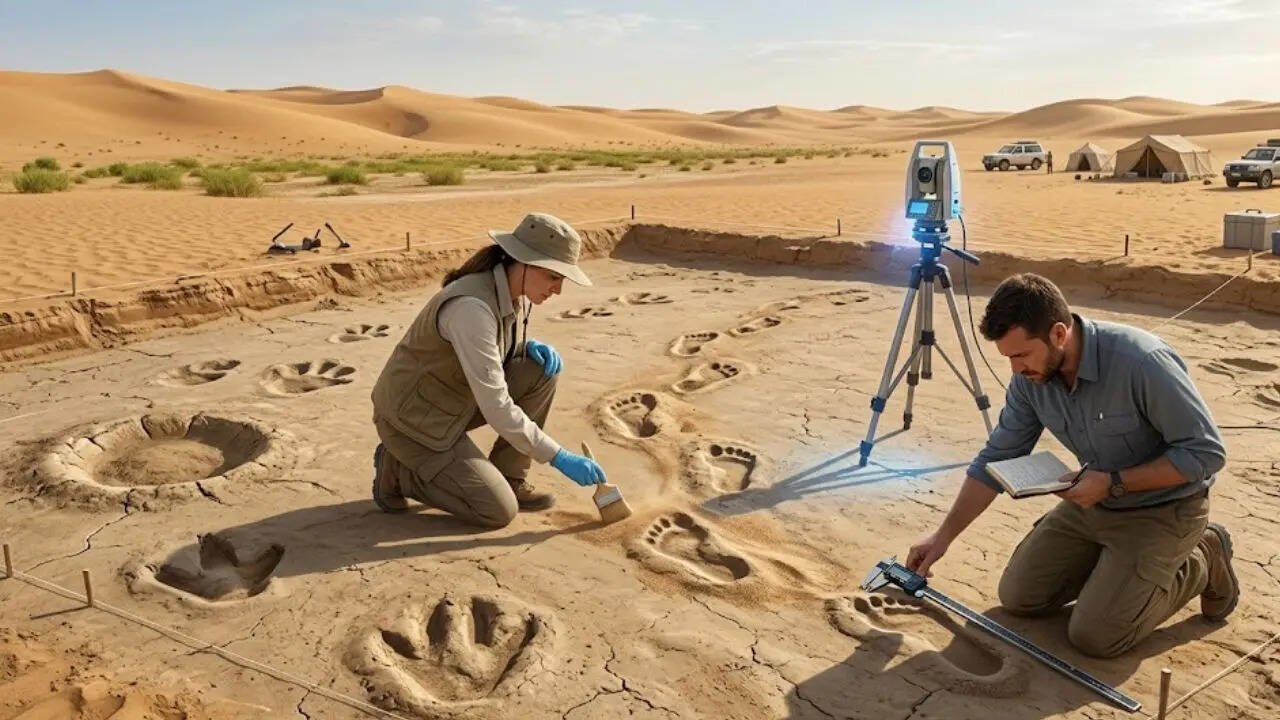
A remarkable archaeological discovery in Saudi Arabia has uncovered a series of human footprints dating back approximately 120,000 years, shedding new light on early human presence and movement across the Arabian Peninsula.
The footprints, preserved in what was once a lakeshore environment, provide rare and direct evidence of human activity in the region during a period when climatic conditions were significantly different from today.
Researchers believe the area would have been wetter and more hospitable, supporting wildlife and offering resources that attracted early human groups.
The site contains numerous footprints, some believed to belong to modern humans, alongside tracks from animals that likely coexisted in the landscape.
The arrangement and spacing of the impressions suggest that individuals may have been travelling together, offering a glimpse into social behaviour and movement patterns.
Scientists say the discovery helps fill important gaps in understanding how early humans migrated out of Africa and dispersed across other regions.
The Arabian Peninsula is increasingly recognised as a key corridor in these movements, linking Africa with Eurasia.
Advanced dating techniques have been used to establish the age of the footprints, reinforcing their significance as one of the oldest known records of human presence in the region.
The preservation of such detailed impressions is considered rare, making the find particularly valuable for ongoing research.
The discovery highlights Saudi Arabia’s growing role in global archaeological research, as exploration efforts continue to reveal new evidence about the deep history of human civilisation.
Further studies at the site are expected to provide additional insights into the environmental conditions and behaviours of early human populations.
The footprints, preserved in what was once a lakeshore environment, provide rare and direct evidence of human activity in the region during a period when climatic conditions were significantly different from today.
Researchers believe the area would have been wetter and more hospitable, supporting wildlife and offering resources that attracted early human groups.
The site contains numerous footprints, some believed to belong to modern humans, alongside tracks from animals that likely coexisted in the landscape.
The arrangement and spacing of the impressions suggest that individuals may have been travelling together, offering a glimpse into social behaviour and movement patterns.
Scientists say the discovery helps fill important gaps in understanding how early humans migrated out of Africa and dispersed across other regions.
The Arabian Peninsula is increasingly recognised as a key corridor in these movements, linking Africa with Eurasia.
Advanced dating techniques have been used to establish the age of the footprints, reinforcing their significance as one of the oldest known records of human presence in the region.
The preservation of such detailed impressions is considered rare, making the find particularly valuable for ongoing research.
The discovery highlights Saudi Arabia’s growing role in global archaeological research, as exploration efforts continue to reveal new evidence about the deep history of human civilisation.
Further studies at the site are expected to provide additional insights into the environmental conditions and behaviours of early human populations.