Saudi Arabia’s Oil Revenues Rise as Hormuz Risks Push Up Global Energy Prices
Heightened tensions around the Strait of Hormuz are tightening supply expectations, reinforcing Saudi fiscal gains while exposing global vulnerability to maritime disruption
EVENT-DRIVEN pressure in global energy markets is intensifying as geopolitical risk around the Strait of Hormuz—one of the world’s most critical oil shipping chokepoints—drives upward pressure on crude prices and strengthens revenues for major Gulf producers, particularly Saudi Arabia.
What is confirmed in current market conditions is that the Strait of Hormuz remains the most strategically sensitive maritime corridor for global oil flows.
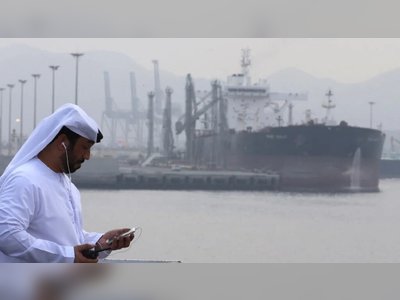
A significant share of seaborne crude exports from Gulf producers passes through this narrow waterway, making it highly sensitive to any perception of military escalation or shipping disruption.
Even without physical interruption, the risk premium associated with potential instability is sufficient to influence global oil pricing.
Saudi Arabia, as the world’s largest crude exporter and the de facto leader of the OPEC+ production alliance, is structurally positioned to benefit from higher oil prices driven by geopolitical risk.
Its fiscal framework remains heavily dependent on hydrocarbon revenues, meaning that elevated price environments can significantly improve budget balances and accelerate sovereign investment capacity tied to its long-term economic diversification program.
The price impact mechanism is relatively direct.
When risk perception increases in or around the Strait of Hormuz, shipping insurance costs rise, traders factor in potential supply disruptions, and speculative positioning in oil futures markets tends to increase.
These dynamics amplify baseline prices even if physical supply remains unchanged.
This creates what markets describe as a “risk premium,” which is embedded into global benchmark crude prices.
Saudi Arabia’s advantage in such conditions is amplified by its spare production capacity, which allows it to adjust output in coordination with OPEC+ policy decisions.
While production discipline agreements can limit short-term volume increases, higher prices often offset volume constraints, improving net revenue per barrel and strengthening fiscal inflows.
At the same time, the broader regional environment remains structurally unstable.
Iran’s strategic posture, combined with the activity of aligned non-state actors across the region, continues to shape maritime security assessments.
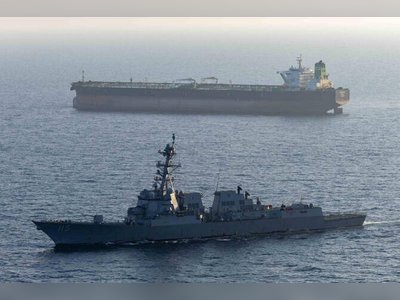
Past incidents involving oil tankers, drone attacks, and missile threats have contributed to an enduring perception of elevated risk, even during periods without active confrontation.
This risk environment also exposes a systemic vulnerability in global energy supply chains.
Despite diversification efforts by importing economies, a substantial portion of internationally traded oil still depends on a small number of maritime chokepoints, with the Strait of Hormuz being the most significant.
Any disruption scenario—even a temporary one—would likely produce immediate global price shocks and logistical rerouting pressures.
For Saudi Arabia, the current environment creates a dual effect: increased fiscal strength in the short term alongside heightened strategic exposure in the long term.
Higher revenues support domestic investment and sovereign wealth accumulation, but they also reinforce the Kingdom’s central role in a volatile energy system where geopolitical shocks can rapidly translate into economic consequences.
What is emerging is a structural pattern in which Saudi Arabia’s economic performance is increasingly tied not only to production strategy but also to regional security dynamics.
The interaction between maritime risk, market pricing mechanisms, and coordinated OPEC+ policy continues to define both revenue outcomes and strategic planning across the global energy system.
The result is a global oil market that remains highly sensitive to geopolitical signals, with the Strait of Hormuz functioning as both a physical chokepoint and a financial amplifier for risk-driven price movements that directly affect producer revenues and consumer costs worldwide.
What is confirmed in current market conditions is that the Strait of Hormuz remains the most strategically sensitive maritime corridor for global oil flows.
A significant share of seaborne crude exports from Gulf producers passes through this narrow waterway, making it highly sensitive to any perception of military escalation or shipping disruption.
Even without physical interruption, the risk premium associated with potential instability is sufficient to influence global oil pricing.
Saudi Arabia, as the world’s largest crude exporter and the de facto leader of the OPEC+ production alliance, is structurally positioned to benefit from higher oil prices driven by geopolitical risk.
Its fiscal framework remains heavily dependent on hydrocarbon revenues, meaning that elevated price environments can significantly improve budget balances and accelerate sovereign investment capacity tied to its long-term economic diversification program.
The price impact mechanism is relatively direct.
When risk perception increases in or around the Strait of Hormuz, shipping insurance costs rise, traders factor in potential supply disruptions, and speculative positioning in oil futures markets tends to increase.
These dynamics amplify baseline prices even if physical supply remains unchanged.
This creates what markets describe as a “risk premium,” which is embedded into global benchmark crude prices.
Saudi Arabia’s advantage in such conditions is amplified by its spare production capacity, which allows it to adjust output in coordination with OPEC+ policy decisions.
While production discipline agreements can limit short-term volume increases, higher prices often offset volume constraints, improving net revenue per barrel and strengthening fiscal inflows.
At the same time, the broader regional environment remains structurally unstable.
Iran’s strategic posture, combined with the activity of aligned non-state actors across the region, continues to shape maritime security assessments.
Past incidents involving oil tankers, drone attacks, and missile threats have contributed to an enduring perception of elevated risk, even during periods without active confrontation.
This risk environment also exposes a systemic vulnerability in global energy supply chains.
Despite diversification efforts by importing economies, a substantial portion of internationally traded oil still depends on a small number of maritime chokepoints, with the Strait of Hormuz being the most significant.
Any disruption scenario—even a temporary one—would likely produce immediate global price shocks and logistical rerouting pressures.
For Saudi Arabia, the current environment creates a dual effect: increased fiscal strength in the short term alongside heightened strategic exposure in the long term.
Higher revenues support domestic investment and sovereign wealth accumulation, but they also reinforce the Kingdom’s central role in a volatile energy system where geopolitical shocks can rapidly translate into economic consequences.
What is emerging is a structural pattern in which Saudi Arabia’s economic performance is increasingly tied not only to production strategy but also to regional security dynamics.
The interaction between maritime risk, market pricing mechanisms, and coordinated OPEC+ policy continues to define both revenue outcomes and strategic planning across the global energy system.
The result is a global oil market that remains highly sensitive to geopolitical signals, with the Strait of Hormuz functioning as both a physical chokepoint and a financial amplifier for risk-driven price movements that directly affect producer revenues and consumer costs worldwide.