Saudi Arabia's Innovative Sustainable Agriculture: Adapting to Climate Change and Water Scarcity with Vertical Farming and Treated Water
Climate change is causing decreased crop yields and water scarcity in agriculture, leading to food insecurity and higher prices.
Agriculture contributes about 24% of human-induced greenhouse gas emissions.
To address these issues, governments and businesses are adopting sustainable farming practices and technologies to reduce environmental harm and adapt to hotter, drier conditions.
The Food and Agriculture Organization of the UN states that sustainable strategies in agriculture and forestry can enhance resilience and reduce greenhouse gas emissions.
Sustainable agriculture involves practices that protect the environment, conserve resources, secure food supply chains, and provide profitable returns for farmers.
Saudi Arabia is implementing such initiatives, like using treated water for irrigation and adopting soilless farming techniques.
The World Bank projects that by 2045, the global urban population will double, leading to a need for new food production and distribution methods as people move from rural areas to cities.
Saudi Arabia is considering vertical farming as a solution to address the challenges of limited land, seasonality, and a growing population.
Vertical farming is a method of growing plants without soil, using hydroponics to deliver nutrients through water.
This technique saves 98% more water than traditional farming and is beneficial for areas with water scarcity, poor soil fertility, or salinity issues.
It also enables year-round crop production and reduces pesticide usage.
The National Research and Development Center for Sustainable Agriculture (Estidamah) in Saudi Arabia focuses on optimizing crop production, particularly leafy vegetables and strawberries, through its vertical farming program.
Estidamah has been successful in growing high-yield tomatoes in greenhouses.
To support this initiative, the Ministry of Environment, Water, and Agriculture allocated SR100 million ($27 million).
In 2021, scientists from Estidamah and Wageningen University in The Netherlands cultivated the Estavana variety strawberries in a Riyadh greenhouse, resulting in a significantly higher yield than local farmers, showcasing the technology's potential.
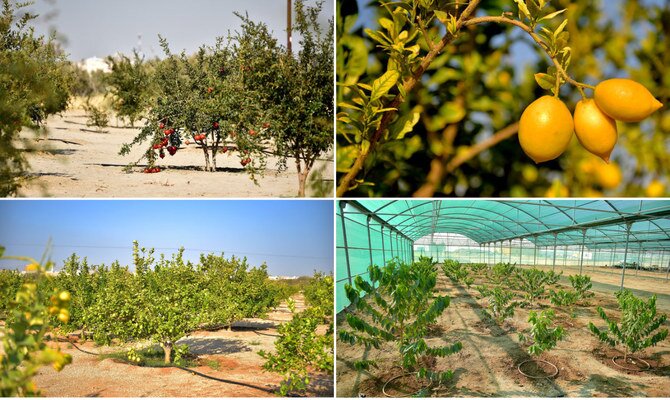
Saudi Arabia's dedication to sustainable agriculture is highlighted by Wadi Bin Hashbal, the world's largest sustainable research farm, spanning over 3.2 million square meters.
The farm, located in the southwestern Asir region, holds a Guinness World Record recognition.
Notably, the farm utilizes treated water for irrigation, which is divided into municipal and industrial wastewater, each requiring distinct treatment plants.
Saudi Arabia exports various agricultural products, including wheat, dates, dairy products, eggs, fish, poultry, fruits, vegetables, and flowers.
Wadi bin Hashbal's farm, recognized by Guinness World Records as the largest in the world using treated water for irrigation, is just one example of Saudi Arabia's adoption of sustainable agricultural practices.
Urban farming and treating wastewater for irrigation are other initiatives.
The wastewater treatment process includes primary, secondary, and tertiary phases.
The primary phase removes large particles and oils, the secondary phase uses aerobic bacteria, and the tertiary phase uses filters to remove remaining pollutants and odors.
The treated water is chlorinated to eliminate microbes and is suitable for all uses except direct human consumption.
The Asir region produces over 240,000 cubic meters of treated water daily from four main treatment plants, all of which use the triple treatment method and are suitable for irrigating all crops.
Wadi Bin Hashbal is a farm in Saudi Arabia with approximately 16,000 fruit-bearing trees and 2,400 non-fruiting local trees.
The farm also includes a field for growing fodder and raising livestock, as well as five research farms.
The farm's success is significant for climate-vulnerable nations.
Regular monitoring of water and soil quality is essential and is carried out by taking samples and analyzing them in accredited laboratories.
The farm also measures temperature, humidity, rainfall, and wind speed through a climate station.
The Asir region was chosen for the farm due to its unique geography, fertile soil, and favorable climate.
Al-Mujthal, a representative, stated that the Asir region in Saudi Arabia receives an average annual rainfall of over 300 mm, with some mountainous areas experiencing up to 500 mm.
The region also has abundant surface and groundwater and advanced infrastructure for drainage and water treatment.
The success of sustainable agriculture projects in this region offers hope to climate-vulnerable nations facing water scarcity and rising temperatures.
To address these issues, governments and businesses are adopting sustainable farming practices and technologies to reduce environmental harm and adapt to hotter, drier conditions.
The Food and Agriculture Organization of the UN states that sustainable strategies in agriculture and forestry can enhance resilience and reduce greenhouse gas emissions.
Sustainable agriculture involves practices that protect the environment, conserve resources, secure food supply chains, and provide profitable returns for farmers.
Saudi Arabia is implementing such initiatives, like using treated water for irrigation and adopting soilless farming techniques.
The World Bank projects that by 2045, the global urban population will double, leading to a need for new food production and distribution methods as people move from rural areas to cities.
Saudi Arabia is considering vertical farming as a solution to address the challenges of limited land, seasonality, and a growing population.
Vertical farming is a method of growing plants without soil, using hydroponics to deliver nutrients through water.
This technique saves 98% more water than traditional farming and is beneficial for areas with water scarcity, poor soil fertility, or salinity issues.
It also enables year-round crop production and reduces pesticide usage.
The National Research and Development Center for Sustainable Agriculture (Estidamah) in Saudi Arabia focuses on optimizing crop production, particularly leafy vegetables and strawberries, through its vertical farming program.
Estidamah has been successful in growing high-yield tomatoes in greenhouses.
To support this initiative, the Ministry of Environment, Water, and Agriculture allocated SR100 million ($27 million).
In 2021, scientists from Estidamah and Wageningen University in The Netherlands cultivated the Estavana variety strawberries in a Riyadh greenhouse, resulting in a significantly higher yield than local farmers, showcasing the technology's potential.
Saudi Arabia's dedication to sustainable agriculture is highlighted by Wadi Bin Hashbal, the world's largest sustainable research farm, spanning over 3.2 million square meters.
The farm, located in the southwestern Asir region, holds a Guinness World Record recognition.
Notably, the farm utilizes treated water for irrigation, which is divided into municipal and industrial wastewater, each requiring distinct treatment plants.
Saudi Arabia exports various agricultural products, including wheat, dates, dairy products, eggs, fish, poultry, fruits, vegetables, and flowers.
Wadi bin Hashbal's farm, recognized by Guinness World Records as the largest in the world using treated water for irrigation, is just one example of Saudi Arabia's adoption of sustainable agricultural practices.
Urban farming and treating wastewater for irrigation are other initiatives.
The wastewater treatment process includes primary, secondary, and tertiary phases.
The primary phase removes large particles and oils, the secondary phase uses aerobic bacteria, and the tertiary phase uses filters to remove remaining pollutants and odors.
The treated water is chlorinated to eliminate microbes and is suitable for all uses except direct human consumption.
The Asir region produces over 240,000 cubic meters of treated water daily from four main treatment plants, all of which use the triple treatment method and are suitable for irrigating all crops.
Wadi Bin Hashbal is a farm in Saudi Arabia with approximately 16,000 fruit-bearing trees and 2,400 non-fruiting local trees.
The farm also includes a field for growing fodder and raising livestock, as well as five research farms.
The farm's success is significant for climate-vulnerable nations.
Regular monitoring of water and soil quality is essential and is carried out by taking samples and analyzing them in accredited laboratories.
The farm also measures temperature, humidity, rainfall, and wind speed through a climate station.
The Asir region was chosen for the farm due to its unique geography, fertile soil, and favorable climate.
Al-Mujthal, a representative, stated that the Asir region in Saudi Arabia receives an average annual rainfall of over 300 mm, with some mountainous areas experiencing up to 500 mm.
The region also has abundant surface and groundwater and advanced infrastructure for drainage and water treatment.
The success of sustainable agriculture projects in this region offers hope to climate-vulnerable nations facing water scarcity and rising temperatures.
Translation:
Translated by AI