Armenia Hosts First EU Summit as It Charts New Course Away from Russia
Armenia formally seeks EU membership and loosens ties with longtime ally Russia amid diplomatic shifts.
Yerevan, the capital of Armenia, is hosting its first bilateral summit with the European Union (EU) on Tuesday.
This landmark diplomatic moment marks Armenia's formal declaration of its ambition to join the bloc and signifies a strategic shift away from its long-standing alliance with Russia.
The EU-Armenia summit follows closely on the heels of the eighth gathering of the European Political Community, which brought together dozens of European leaders in Yerevan.
During these meetings, officials addressed key issues such as European security concerns and the US-Israeli conflict concerning Iran.
The two gatherings highlight Armenia's quest to pivot westward and reduce Russian influence.
Tensions between Yerevan and Moscow have escalated since 2023 when Azerbaijan reclaimed the Karabakh region, ending decades of ethnic Armenian rule.
Armenian authorities accused Russian peacekeepers of failing to halt Azerbaijan's advances, a claim Moscow rejected, citing a lack of intervention mandate due to its ongoing conflict in Ukraine.
Following this significant event, Prime Minister Nikol Pashinyan's government has actively pursued closer ties with the West, a move welcomed by the EU.
In remarks to the European Political Community conference on Monday, EU Council President Antonio Costa commended Pashinyan for his 'courageous political decisions' aimed at bringing Armenia closer to the EU.
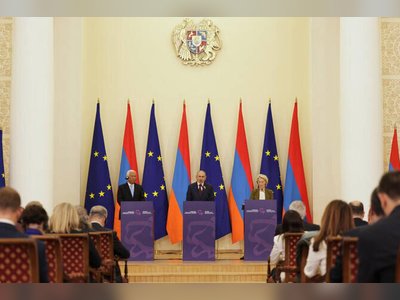
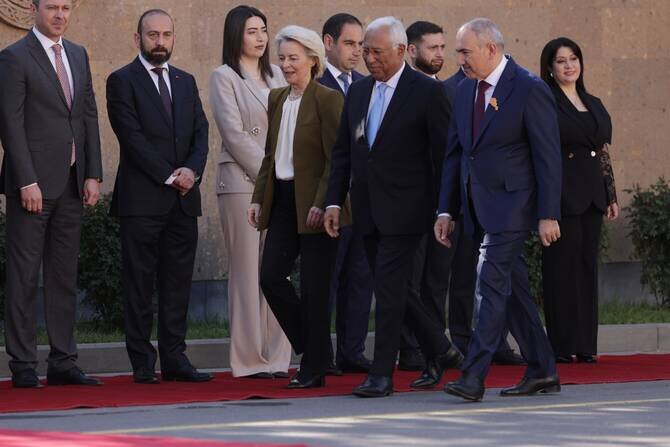
The EU-Armenia summit opening ceremony saw high-level EU representation, with Presidents Costa and von der Leyen joining Prime Minister Pashinyan.
European Commission President Ursula von der Leyen emphasized that Europe is prepared to support Armenia's development into a regional trade hub, focusing on infrastructure investment in energy production, digital connectivity, and growth opportunities.
Armenia's diplomatic endeavors extend beyond EU engagement.
It has joined the International Criminal Court (ICC) and frozen participation in the Moscow-led Collective Security Treaty Organization.
In 2024, the Armenian parliament passed legislation formalizing the country's intent to pursue EU membership.
Despite these developments, Armenia remains a member of the Russia-led Eurasian Economic Union, which includes Belarus, Kazakhstan, and Kyrgyzstan.
Russian President Vladimir Putin has cautioned that membership in both the Eurasian Economic Union and the EU is incompatible due to discrepancies in economic advantages.
However, Armenian Prime Minister Pashinyan believes it is possible for Armenia to temporarily maintain dual membership while strengthening its ties with the EU.
The summit is expected to yield concrete results such as financial support for domestic reform and military assistance through the European Peace Facility fund.
An EU monitoring mission has been deployed along Armenia's border with Azerbaijan, and a new mission targeting hybrid threats has recently been approved.
The timing of this summit coincides with heightened tensions between Azerbaijan and the EU.
Baku summoned the EU ambassador to protest a European Parliament resolution condemning the treatment of Armenians in Karabakh and demanding the release of Armenian prisoners of war.
In response, Azerbaijani lawmakers voted to suspend all cooperation with the European Parliament.
The EU-Armenia summit also drew protests outside the summit venue, highlighting concerns regarding the treatment of Armenians in Azerbaijan.
Opposition leader Aram Sargsyan criticized the EU's support for Pashinyan ahead of upcoming parliamentary elections while emphasizing the issue of Armenian prisoners held in Azerbaijan.
This landmark diplomatic moment marks Armenia's formal declaration of its ambition to join the bloc and signifies a strategic shift away from its long-standing alliance with Russia.
The EU-Armenia summit follows closely on the heels of the eighth gathering of the European Political Community, which brought together dozens of European leaders in Yerevan.
During these meetings, officials addressed key issues such as European security concerns and the US-Israeli conflict concerning Iran.
The two gatherings highlight Armenia's quest to pivot westward and reduce Russian influence.
Tensions between Yerevan and Moscow have escalated since 2023 when Azerbaijan reclaimed the Karabakh region, ending decades of ethnic Armenian rule.
Armenian authorities accused Russian peacekeepers of failing to halt Azerbaijan's advances, a claim Moscow rejected, citing a lack of intervention mandate due to its ongoing conflict in Ukraine.
Following this significant event, Prime Minister Nikol Pashinyan's government has actively pursued closer ties with the West, a move welcomed by the EU.
In remarks to the European Political Community conference on Monday, EU Council President Antonio Costa commended Pashinyan for his 'courageous political decisions' aimed at bringing Armenia closer to the EU.
The EU-Armenia summit opening ceremony saw high-level EU representation, with Presidents Costa and von der Leyen joining Prime Minister Pashinyan.
European Commission President Ursula von der Leyen emphasized that Europe is prepared to support Armenia's development into a regional trade hub, focusing on infrastructure investment in energy production, digital connectivity, and growth opportunities.
Armenia's diplomatic endeavors extend beyond EU engagement.
It has joined the International Criminal Court (ICC) and frozen participation in the Moscow-led Collective Security Treaty Organization.
In 2024, the Armenian parliament passed legislation formalizing the country's intent to pursue EU membership.
Despite these developments, Armenia remains a member of the Russia-led Eurasian Economic Union, which includes Belarus, Kazakhstan, and Kyrgyzstan.
Russian President Vladimir Putin has cautioned that membership in both the Eurasian Economic Union and the EU is incompatible due to discrepancies in economic advantages.
However, Armenian Prime Minister Pashinyan believes it is possible for Armenia to temporarily maintain dual membership while strengthening its ties with the EU.
The summit is expected to yield concrete results such as financial support for domestic reform and military assistance through the European Peace Facility fund.
An EU monitoring mission has been deployed along Armenia's border with Azerbaijan, and a new mission targeting hybrid threats has recently been approved.
The timing of this summit coincides with heightened tensions between Azerbaijan and the EU.
Baku summoned the EU ambassador to protest a European Parliament resolution condemning the treatment of Armenians in Karabakh and demanding the release of Armenian prisoners of war.
In response, Azerbaijani lawmakers voted to suspend all cooperation with the European Parliament.
The EU-Armenia summit also drew protests outside the summit venue, highlighting concerns regarding the treatment of Armenians in Azerbaijan.
Opposition leader Aram Sargsyan criticized the EU's support for Pashinyan ahead of upcoming parliamentary elections while emphasizing the issue of Armenian prisoners held in Azerbaijan.