Saudi Arabia Deepens Industrial Push with New Agreements at Hannover Messe 2026
Ministry signs multiple memorandums to expand smart manufacturing, grid technologies, and industrial localization as part of Vision 2030 strategy
Saudi Arabia’s industrial policy apparatus used its participation at Hannover Messe 2026 in Germany to advance a coordinated push toward localized manufacturing, signing multiple memorandums of understanding aimed at accelerating technology transfer and strengthening domestic production capacity in high-value sectors.
The agreements were concluded by the Ministry of Industry and Mineral Resources during the global industrial exhibition held from April 20 to 24 in Hannover, a major international platform for automation, digital manufacturing, and industrial innovation.
The Saudi presence centered on expanding partnerships with established industrial firms and positioning the Kingdom as a long-term hub for advanced production.
What is confirmed is that three memorandums of understanding were signed with partners including Phoenix Contact Saudi Arabia, Alfanar Company, Abunayyan Trading, and United Technology of Electric Substations & Switchgears.
The focus areas include electrical manufacturing, smart grid technologies, and broader industrial localization efforts.
These sectors are central to Saudi Arabia’s strategy to reduce import dependence in critical industrial components while building domestic capability in energy systems and manufacturing infrastructure.
The agreements are not standalone projects but part of a wider industrial framework tied to Saudi Arabia’s Vision 2030 economic transformation agenda.
The policy direction prioritizes building local supply chains, increasing private sector participation, and attracting foreign industrial investment into the Kingdom’s expanding manufacturing base.
Alongside the formal agreements, Saudi officials held meetings with global industrial and technology companies, including Siemens, Schneider Electric, Festo, Fraunhofer Society, SEW-Eurodrive, Schaeffler Technologies, and Karlsruhe Institute of Technology.
These engagements centered on potential cooperation in automation systems, industrial software, and advanced production technologies.
The discussions also emphasized knowledge transfer and integration of Fourth Industrial Revolution technologies such as artificial intelligence-enabled manufacturing systems and robotics.
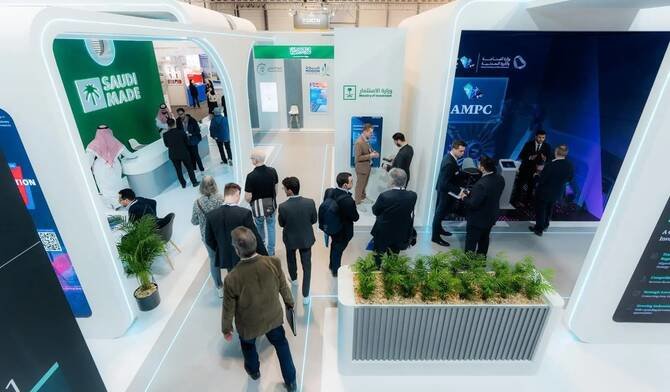
The Saudi pavilion also served as a showcase for the country’s industrial incentives, including its investment environment and access to large-scale mineral resources, which officials describe as a foundation for downstream industries and clean-energy supply chains.
Public statements from the industrial ecosystem have consistently framed these resources as strategic inputs for building future-facing sectors, particularly in energy-intensive manufacturing and critical minerals processing.
The participation comes amid a broader expansion of Saudi industrial diplomacy.
The Kingdom has increased its presence at global manufacturing events in recent years and has simultaneously developed parallel initiatives at home, including programs designed to modernize factories and qualify them for advanced manufacturing standards.
The immediate consequence of the Hannover Messe participation is the formal expansion of structured cooperation channels between Saudi industrial entities and international technology providers.
These agreements are expected to translate into pilot projects, localized production lines, and potential joint ventures aimed at building domestic manufacturing capability in electrical systems and smart infrastructure components, reinforcing Saudi Arabia’s goal of becoming a regional industrial hub.
The agreements were concluded by the Ministry of Industry and Mineral Resources during the global industrial exhibition held from April 20 to 24 in Hannover, a major international platform for automation, digital manufacturing, and industrial innovation.
The Saudi presence centered on expanding partnerships with established industrial firms and positioning the Kingdom as a long-term hub for advanced production.
What is confirmed is that three memorandums of understanding were signed with partners including Phoenix Contact Saudi Arabia, Alfanar Company, Abunayyan Trading, and United Technology of Electric Substations & Switchgears.
The focus areas include electrical manufacturing, smart grid technologies, and broader industrial localization efforts.
These sectors are central to Saudi Arabia’s strategy to reduce import dependence in critical industrial components while building domestic capability in energy systems and manufacturing infrastructure.
The agreements are not standalone projects but part of a wider industrial framework tied to Saudi Arabia’s Vision 2030 economic transformation agenda.
The policy direction prioritizes building local supply chains, increasing private sector participation, and attracting foreign industrial investment into the Kingdom’s expanding manufacturing base.
Alongside the formal agreements, Saudi officials held meetings with global industrial and technology companies, including Siemens, Schneider Electric, Festo, Fraunhofer Society, SEW-Eurodrive, Schaeffler Technologies, and Karlsruhe Institute of Technology.
These engagements centered on potential cooperation in automation systems, industrial software, and advanced production technologies.
The discussions also emphasized knowledge transfer and integration of Fourth Industrial Revolution technologies such as artificial intelligence-enabled manufacturing systems and robotics.
The Saudi pavilion also served as a showcase for the country’s industrial incentives, including its investment environment and access to large-scale mineral resources, which officials describe as a foundation for downstream industries and clean-energy supply chains.
Public statements from the industrial ecosystem have consistently framed these resources as strategic inputs for building future-facing sectors, particularly in energy-intensive manufacturing and critical minerals processing.
The participation comes amid a broader expansion of Saudi industrial diplomacy.
The Kingdom has increased its presence at global manufacturing events in recent years and has simultaneously developed parallel initiatives at home, including programs designed to modernize factories and qualify them for advanced manufacturing standards.
The immediate consequence of the Hannover Messe participation is the formal expansion of structured cooperation channels between Saudi industrial entities and international technology providers.
These agreements are expected to translate into pilot projects, localized production lines, and potential joint ventures aimed at building domestic manufacturing capability in electrical systems and smart infrastructure components, reinforcing Saudi Arabia’s goal of becoming a regional industrial hub.