Saudi Arabia Condemns Israeli Actions at Al-Aqsa Amid Rising Jerusalem Tensions
Riyadh’s criticism of Israeli conduct at the Al-Aqsa Mosque compound underscores escalating diplomatic friction over one of the region’s most sensitive religious and political flashpoints.
ACTOR-DRIVEN — the story is driven by Saudi Arabia’s official political response to Israeli actions at the Al-Aqsa Mosque compound in Jerusalem, a site central to regional religious identity and long-running geopolitical tension.
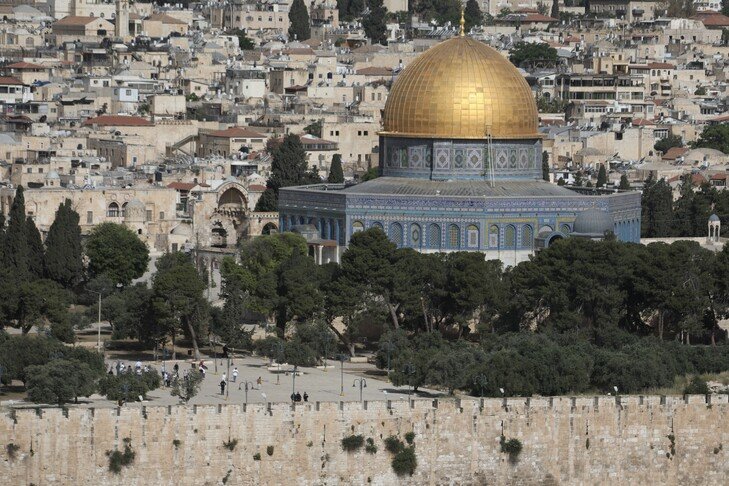
Saudi Arabia has publicly condemned what it described as “provocative practices” by Israeli authorities and affiliated groups at the Al-Aqsa Mosque compound, a location known to Muslims as Al-Haram al-Sharif and to Jews as the Temple Mount.
The statement reflects ongoing sensitivity over access, control, and activity at one of the most contested religious sites in the world, where even minor changes in policing or visitation patterns can trigger regional diplomatic reactions.
What is confirmed is that Saudi Arabia issued an official rebuke of recent actions at the site, framing them as unacceptable and warning of their potential to inflame broader instability.
The statement aligns with a pattern in which Arab and Muslim-majority states periodically respond to perceived escalations in Jerusalem by Israel, particularly when access restrictions, increased security presence, or visits by political figures to the compound are involved.
The Al-Aqsa Mosque compound sits in East Jerusalem, a territory captured by Israel in the 1967 war and later annexed in a move not internationally recognized.
Under long-standing arrangements, the Islamic Waqf, administered under Jordanian custodianship, manages the site, while Israeli security forces control access.
This dual arrangement has repeatedly generated friction, particularly during periods of heightened Israeli–Palestinian conflict.
The key issue underlying the Saudi response is the perception that changes in behavior at the site could alter the fragile status quo governing religious access.
For Palestinians and many in the broader Muslim world, any perceived expansion of Jewish prayer activity or increased Israeli political presence at the compound is viewed as a challenge to existing arrangements.
For Israel, the site remains a central element of national and historical identity, while the government maintains that it enforces rules intended to preserve public order.
Saudi Arabia’s statement also carries broader diplomatic weight beyond the immediate incident.
Riyadh has been gradually expanding its regional diplomatic engagement, balancing security coordination with Western partners and evolving relations with Israel, while still maintaining formal alignment with longstanding Arab positions on Jerusalem’s holy sites.
Public condemnation of actions at Al-Aqsa reflects the limits of normalization efforts in the absence of a comprehensive Israeli–Palestinian settlement.
The reaction also fits into a wider regional environment in which tensions over Jerusalem frequently ripple outward into broader diplomatic exchanges, protests, and political messaging.
Even when not accompanied by immediate military escalation, disputes over the compound function as a trigger point for broader regional signaling, especially among Gulf states seeking to maintain credibility with domestic and wider Muslim audiences.
The immediate consequence of Saudi Arabia’s statement is diplomatic pressure rather than direct action, reinforcing the political sensitivity of the site and signaling that developments in Jerusalem remain closely monitored by regional powers.
The situation keeps the Al-Aqsa compound at the center of Middle Eastern diplomatic calculations, where religious access, sovereignty claims, and security control continue to intersect with broader regional stability concerns.
Saudi Arabia has publicly condemned what it described as “provocative practices” by Israeli authorities and affiliated groups at the Al-Aqsa Mosque compound, a location known to Muslims as Al-Haram al-Sharif and to Jews as the Temple Mount.
The statement reflects ongoing sensitivity over access, control, and activity at one of the most contested religious sites in the world, where even minor changes in policing or visitation patterns can trigger regional diplomatic reactions.
What is confirmed is that Saudi Arabia issued an official rebuke of recent actions at the site, framing them as unacceptable and warning of their potential to inflame broader instability.
The statement aligns with a pattern in which Arab and Muslim-majority states periodically respond to perceived escalations in Jerusalem by Israel, particularly when access restrictions, increased security presence, or visits by political figures to the compound are involved.
The Al-Aqsa Mosque compound sits in East Jerusalem, a territory captured by Israel in the 1967 war and later annexed in a move not internationally recognized.
Under long-standing arrangements, the Islamic Waqf, administered under Jordanian custodianship, manages the site, while Israeli security forces control access.
This dual arrangement has repeatedly generated friction, particularly during periods of heightened Israeli–Palestinian conflict.
The key issue underlying the Saudi response is the perception that changes in behavior at the site could alter the fragile status quo governing religious access.
For Palestinians and many in the broader Muslim world, any perceived expansion of Jewish prayer activity or increased Israeli political presence at the compound is viewed as a challenge to existing arrangements.
For Israel, the site remains a central element of national and historical identity, while the government maintains that it enforces rules intended to preserve public order.
Saudi Arabia’s statement also carries broader diplomatic weight beyond the immediate incident.
Riyadh has been gradually expanding its regional diplomatic engagement, balancing security coordination with Western partners and evolving relations with Israel, while still maintaining formal alignment with longstanding Arab positions on Jerusalem’s holy sites.
Public condemnation of actions at Al-Aqsa reflects the limits of normalization efforts in the absence of a comprehensive Israeli–Palestinian settlement.
The reaction also fits into a wider regional environment in which tensions over Jerusalem frequently ripple outward into broader diplomatic exchanges, protests, and political messaging.
Even when not accompanied by immediate military escalation, disputes over the compound function as a trigger point for broader regional signaling, especially among Gulf states seeking to maintain credibility with domestic and wider Muslim audiences.
The immediate consequence of Saudi Arabia’s statement is diplomatic pressure rather than direct action, reinforcing the political sensitivity of the site and signaling that developments in Jerusalem remain closely monitored by regional powers.
The situation keeps the Al-Aqsa compound at the center of Middle Eastern diplomatic calculations, where religious access, sovereignty claims, and security control continue to intersect with broader regional stability concerns.