
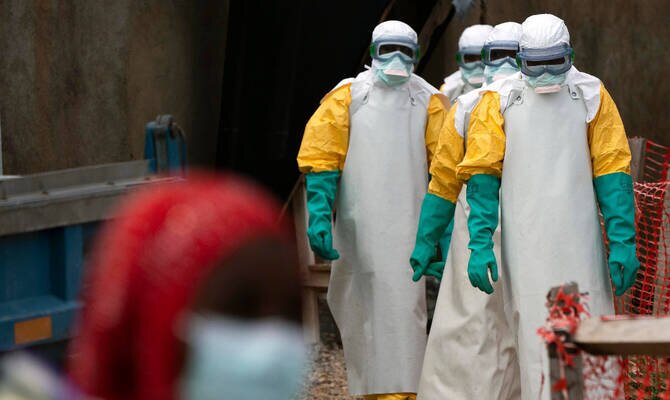
Ebola Outbreak Confirmed in Remote Congo Province
Africa’s top public health body confirms a new Ebola outbreak in Congo’s Ituri province, with 246 suspected cases and 65 deaths recorded so far.
The Africa Centers for Disease Control (CDC) has confirmed a new Ebola outbreak in the remote Ituri province of the Democratic Republic of Congo.
As of the latest reports, there are 246 suspected cases, resulting in 65 deaths.
The neighboring country of Uganda has also reported one death from an imported case.
The majority of the suspected cases and deaths have occurred within the Mongwalu and Rwampara health zones in Ituri province.
According to the Africa CDC, out of the 65 deaths attributed to the outbreak, four have been confirmed through laboratory testing.
The exact strain of Ebola responsible for the current outbreak is yet to be fully identified, with scientists determining whether it is a variant other than the Ebola Zaire strain that has previously affected the region.
The World Health Organization (WHO) notes that Ebola is highly contagious and can be contracted through bodily fluids such as blood, vomit, or semen.
Although rare, the disease it causes is severe and often fatal.
The WHO also emphasizes that three strains of Ebola viruses have been known to cause large outbreaks: the Ebola virus, Sudan virus, and Bundibugyo virus.
Uganda reported an imported case involving a Congolese man who had been hospitalized in Kampala before his death.
Subsequent testing confirmed that he was infected with the Bundibugyo virus, which is endemic in Uganda but has also been noted as a variant of the illness present within the DRC.
The WHO highlighted last year that Congo possesses a stockpile of treatments and approximately 2,000 doses of the Ervebo Ebola vaccine.
However, this vaccine is only effective against the Ebola Zaire strain, not against the Sudan virus or Bundibugyo virus.
In response to the current outbreak, Dr. Tedros Adhanom Ghebreyesus, WHO director-general, announced that a team was dispatched last week to assist in investigating the outbreak and collecting samples.
An initial analysis did not confirm Ebola, but updated results on Thursday confirmed the presence of the disease.
Congo has had experience with previous Ebola outbreaks and is regarded as having a strong track record in terms of response and control efforts.
WHO is providing $500,000 to aid in this latest response.
The affected areas are situated close to Uganda and South Sudan, which increases concerns regarding potential further spread due to population movement and mobility issues within the region.
The proximity to borders also heightens worries about regional contagion risks.
In light of these developments, the Africa CDC is convening an urgent coordination meeting with health authorities from Congo, Uganda, and South Sudan, as well as key partners such as UN agencies and other countries.
Additionally, the US Centers for Disease Control and Prevention (CDC) announced its readiness to provide necessary support to affected regions.
This new outbreak marks the 17th occurrence of Ebola in the DRC since it was first identified there in 1976.
Notably, a prior outbreak that took place between 2018 and 2020 resulted in over 1,000 fatalities.
The WHO emphasized that this previous outbreak was characterized primarily by the Ebola Zaire strain.
Professor Gabriel Nsakala, a public health expert who has participated in past Ebola responses within Congo, stated that the country has an experienced workforce and existing infrastructure such as laboratories to combat the disease.
He called for swift delivery of expertise and equipment to ensure an effective response to this latest outbreak.
As of the latest reports, there are 246 suspected cases, resulting in 65 deaths.
The neighboring country of Uganda has also reported one death from an imported case.
The majority of the suspected cases and deaths have occurred within the Mongwalu and Rwampara health zones in Ituri province.
According to the Africa CDC, out of the 65 deaths attributed to the outbreak, four have been confirmed through laboratory testing.
The exact strain of Ebola responsible for the current outbreak is yet to be fully identified, with scientists determining whether it is a variant other than the Ebola Zaire strain that has previously affected the region.
The World Health Organization (WHO) notes that Ebola is highly contagious and can be contracted through bodily fluids such as blood, vomit, or semen.
Although rare, the disease it causes is severe and often fatal.
The WHO also emphasizes that three strains of Ebola viruses have been known to cause large outbreaks: the Ebola virus, Sudan virus, and Bundibugyo virus.
Uganda reported an imported case involving a Congolese man who had been hospitalized in Kampala before his death.
Subsequent testing confirmed that he was infected with the Bundibugyo virus, which is endemic in Uganda but has also been noted as a variant of the illness present within the DRC.
The WHO highlighted last year that Congo possesses a stockpile of treatments and approximately 2,000 doses of the Ervebo Ebola vaccine.
However, this vaccine is only effective against the Ebola Zaire strain, not against the Sudan virus or Bundibugyo virus.
In response to the current outbreak, Dr. Tedros Adhanom Ghebreyesus, WHO director-general, announced that a team was dispatched last week to assist in investigating the outbreak and collecting samples.
An initial analysis did not confirm Ebola, but updated results on Thursday confirmed the presence of the disease.
Congo has had experience with previous Ebola outbreaks and is regarded as having a strong track record in terms of response and control efforts.
WHO is providing $500,000 to aid in this latest response.
The affected areas are situated close to Uganda and South Sudan, which increases concerns regarding potential further spread due to population movement and mobility issues within the region.
The proximity to borders also heightens worries about regional contagion risks.
In light of these developments, the Africa CDC is convening an urgent coordination meeting with health authorities from Congo, Uganda, and South Sudan, as well as key partners such as UN agencies and other countries.
Additionally, the US Centers for Disease Control and Prevention (CDC) announced its readiness to provide necessary support to affected regions.
This new outbreak marks the 17th occurrence of Ebola in the DRC since it was first identified there in 1976.
Notably, a prior outbreak that took place between 2018 and 2020 resulted in over 1,000 fatalities.
The WHO emphasized that this previous outbreak was characterized primarily by the Ebola Zaire strain.
Professor Gabriel Nsakala, a public health expert who has participated in past Ebola responses within Congo, stated that the country has an experienced workforce and existing infrastructure such as laboratories to combat the disease.
He called for swift delivery of expertise and equipment to ensure an effective response to this latest outbreak.