Trump Administration Prepares to Seek Indictment Against Cuba's Raul Castro
The Justice Department is preparing to seek an indictment against former Cuban President Raul Castro in connection with the 1996 shootdown of four planes operated by the Miami-based exile group Brothers to the Rescue.
The Justice Department is reportedly preparing to seek an indictment against former Cuban President Raul Castro, according to three people familiar with the matter.
The potential indictment relates to Castro's alleged role in the 1996 shootdown of four planes operated by the Miami-based exile group Brothers to the Rescue.
Castro was defense minister at the time.
The Cuban government has not yet responded to a request for comment.
The potential indictment would need to be approved by a grand jury and was previously reported by CBS.
The US Attorney in Miami has established a special working group of prosecutors and federal law enforcement to build cases against top Cuban officials, following calls from several south Florida Republicans to reopen the investigation into Castro's alleged role in the 1996 shootdown.
As President Donald Trump considers winding down the war in Iran, speculation has grown that he may turn his attention back to Cuba.
Earlier this year, Trump pledged a "friendly takeover" of the country if its leadership did not open up its economy to American investment and expel US adversaries.
CIA Director John Ratcliffe met with Cuban officials, including Castro's grandson, during a high-level visit to the island on Thursday.
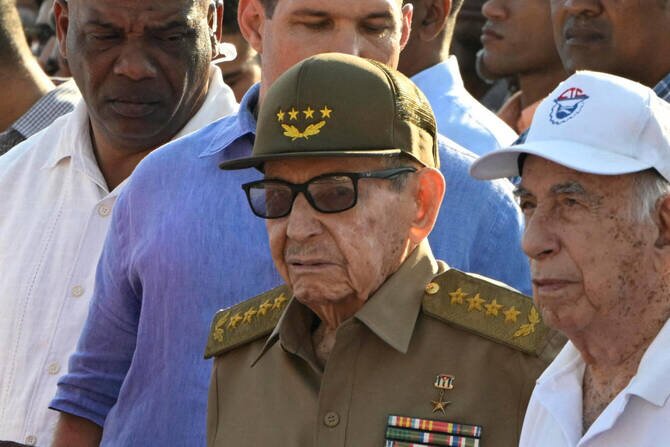
Raul Castro, 94, took over as president from his brother Fidel in 2011 before handing power to Miguel Díaz-Canel in 2019.
While he has largely avoided the spotlight since retiring in 2021, it is widely believed that he still wields significant influence behind the scenes.
In 1996, Cuba shot down two Cessna aircraft operated by Brothers to the Rescue, a watershed moment in decades of hostilities between the two countries.
The Cubans had warned the US government for months about the potential threat posed by these flyovers, but their concerns went unheeded.
On February 26, 1996, Russian-made MiG-29 fighter jets downed two unarmed civilian Cessna planes just beyond Cuba's airspace.
A third plane, carrying an International Civil Aviation Organization representative, narrowly escaped.
The shootdown led to the passage of the Helms-Burton Act in Congress, which codified a US trade embargo enacted in 1962 and made it more difficult for successive US presidents to engage with Cuba.
To date, only one person has been convicted of conspiracy to commit murder in connection with the Brothers to the Rescue shootdown: Gerardo Hernández, the leader of a Cuban espionage ring dismantled by the FBI in the 1990s.
Hernández was sentenced to life in prison but released during a prisoner swap in 2014 as part of an attempt to normalize relations with Cuba.
Two fighter jet pilots and their commanding officer have also been indicted for their roles in the shootdown, but they are currently beyond the reach of US law enforcement while living in Cuba.
The potential indictment relates to Castro's alleged role in the 1996 shootdown of four planes operated by the Miami-based exile group Brothers to the Rescue.
Castro was defense minister at the time.
The Cuban government has not yet responded to a request for comment.
The potential indictment would need to be approved by a grand jury and was previously reported by CBS.
The US Attorney in Miami has established a special working group of prosecutors and federal law enforcement to build cases against top Cuban officials, following calls from several south Florida Republicans to reopen the investigation into Castro's alleged role in the 1996 shootdown.
As President Donald Trump considers winding down the war in Iran, speculation has grown that he may turn his attention back to Cuba.
Earlier this year, Trump pledged a "friendly takeover" of the country if its leadership did not open up its economy to American investment and expel US adversaries.
CIA Director John Ratcliffe met with Cuban officials, including Castro's grandson, during a high-level visit to the island on Thursday.
Raul Castro, 94, took over as president from his brother Fidel in 2011 before handing power to Miguel Díaz-Canel in 2019.
While he has largely avoided the spotlight since retiring in 2021, it is widely believed that he still wields significant influence behind the scenes.
In 1996, Cuba shot down two Cessna aircraft operated by Brothers to the Rescue, a watershed moment in decades of hostilities between the two countries.
The Cubans had warned the US government for months about the potential threat posed by these flyovers, but their concerns went unheeded.
On February 26, 1996, Russian-made MiG-29 fighter jets downed two unarmed civilian Cessna planes just beyond Cuba's airspace.
A third plane, carrying an International Civil Aviation Organization representative, narrowly escaped.
The shootdown led to the passage of the Helms-Burton Act in Congress, which codified a US trade embargo enacted in 1962 and made it more difficult for successive US presidents to engage with Cuba.
To date, only one person has been convicted of conspiracy to commit murder in connection with the Brothers to the Rescue shootdown: Gerardo Hernández, the leader of a Cuban espionage ring dismantled by the FBI in the 1990s.
Hernández was sentenced to life in prison but released during a prisoner swap in 2014 as part of an attempt to normalize relations with Cuba.
Two fighter jet pilots and their commanding officer have also been indicted for their roles in the shootdown, but they are currently beyond the reach of US law enforcement while living in Cuba.