Rift Between Saudi Arabia and the UAE Tests Regional Order and Poses Strategic Challenges for Israel
Diplomatic fracture over Yemen and rival Gulf ambitions reshapes alliances with implications for Israeli security and normalisation efforts
A public and deepening rift between Saudi Arabia and the United Arab Emirates has emerged as one of the most significant geopolitical developments in the Middle East in early 2026, carrying implications for regional stability and for Israel’s strategic environment.
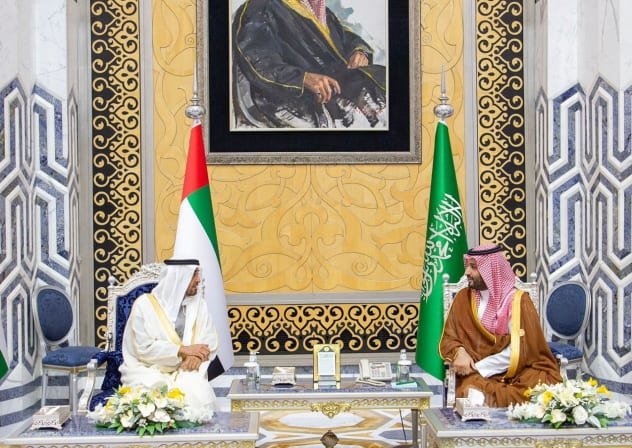
Once closely aligned Gulf powers, Riyadh and Abu Dhabi have sharply diverged in recent months over policy toward Yemen’s war and broader regional influence, culminating in direct confrontation and a rupture in their cooperation frameworks.
This breakdown has drawn international attention because both states have been central to Middle East security architectures and to efforts to integrate Israel into a broader network of partnerships.
The immediate catalyst for the dispute was the rapid advance of United Arab Emirates-backed forces in southern Yemen against the internationally recognised government — an advance that Saudi Arabia interpreted as threatening its security and its vision for a unified Yemen.
Riyadh responded with military action against Emirati proxies and demanded the withdrawal of Emirati troops, prompting Abu Dhabi to scale back its engagement and withdraw forces.
Analysts describe this episode as not merely a disagreement over Yemen but a flashpoint exposing deeper strategic competition between the two monarchies.
For Israel, the Saudi-Emirati rift resonates on several levels.
The UAE was among the first Arab states to normalise relations with Israel under the Abraham Accords, a landmark diplomatic shift that opened trade, security cooperation and informal regional forums that included Israeli participation.
Saudi Arabia, by contrast, has withheld formal normalisation pending political progress on the Israeli-Palestinian track, despite quietly expanding security cooperation with Israel and other Gulf states against shared threats such as Iran.
The fracturing of the Saudi-UAE relationship could complicate this delicate balance, weakening a united Gulf front that had offered strategic reassurance to Jerusalem and its partners.
Observers note that the rival ambitions of Riyadh and Abu Dhabi in areas such as military strategy, influence over the Red Sea and Horn of Africa, and economic corridors have already begun to redraw regional alignments.
Saudi officials have sought deeper ties with Egypt and other capitals to counter what they view as an overly assertive Emirati footprint, while the UAE has continued to pursue independent diplomatic and economic paths across North Africa and beyond.
This competition adds a layer of complexity to Israel’s foreign relations, as Jerusalem must navigate shifting Gulf dynamics even as it expands ties with multiple Arab partners.
The strategic consequence of the rift for Israel may be twofold: potentially slowing broader normalisation efforts with Riyadh while reinforcing Israel’s need for flexible partnerships across the Gulf.
It also underscores the fragility of regional coalitions that emerged in the wake of the Abraham Accords.
With both Saudi Arabia and the UAE still key interlocutors on Iran, Yemen, maritime security and economic integration, Israel’s diplomatic strategy will need to account for divergent Gulf agendas that could shape the wider Middle East order in the years ahead.
Once closely aligned Gulf powers, Riyadh and Abu Dhabi have sharply diverged in recent months over policy toward Yemen’s war and broader regional influence, culminating in direct confrontation and a rupture in their cooperation frameworks.
This breakdown has drawn international attention because both states have been central to Middle East security architectures and to efforts to integrate Israel into a broader network of partnerships.
The immediate catalyst for the dispute was the rapid advance of United Arab Emirates-backed forces in southern Yemen against the internationally recognised government — an advance that Saudi Arabia interpreted as threatening its security and its vision for a unified Yemen.
Riyadh responded with military action against Emirati proxies and demanded the withdrawal of Emirati troops, prompting Abu Dhabi to scale back its engagement and withdraw forces.
Analysts describe this episode as not merely a disagreement over Yemen but a flashpoint exposing deeper strategic competition between the two monarchies.
For Israel, the Saudi-Emirati rift resonates on several levels.
The UAE was among the first Arab states to normalise relations with Israel under the Abraham Accords, a landmark diplomatic shift that opened trade, security cooperation and informal regional forums that included Israeli participation.
Saudi Arabia, by contrast, has withheld formal normalisation pending political progress on the Israeli-Palestinian track, despite quietly expanding security cooperation with Israel and other Gulf states against shared threats such as Iran.
The fracturing of the Saudi-UAE relationship could complicate this delicate balance, weakening a united Gulf front that had offered strategic reassurance to Jerusalem and its partners.
Observers note that the rival ambitions of Riyadh and Abu Dhabi in areas such as military strategy, influence over the Red Sea and Horn of Africa, and economic corridors have already begun to redraw regional alignments.
Saudi officials have sought deeper ties with Egypt and other capitals to counter what they view as an overly assertive Emirati footprint, while the UAE has continued to pursue independent diplomatic and economic paths across North Africa and beyond.
This competition adds a layer of complexity to Israel’s foreign relations, as Jerusalem must navigate shifting Gulf dynamics even as it expands ties with multiple Arab partners.
The strategic consequence of the rift for Israel may be twofold: potentially slowing broader normalisation efforts with Riyadh while reinforcing Israel’s need for flexible partnerships across the Gulf.
It also underscores the fragility of regional coalitions that emerged in the wake of the Abraham Accords.
With both Saudi Arabia and the UAE still key interlocutors on Iran, Yemen, maritime security and economic integration, Israel’s diplomatic strategy will need to account for divergent Gulf agendas that could shape the wider Middle East order in the years ahead.