Asir Coffee Production Surpasses 82,000 kg as Rijal Almaa Prepares for Third Festival
Coffee cultivation in Asir region grows significantly with 764 productive farms operating, total trees reaching 254,101.
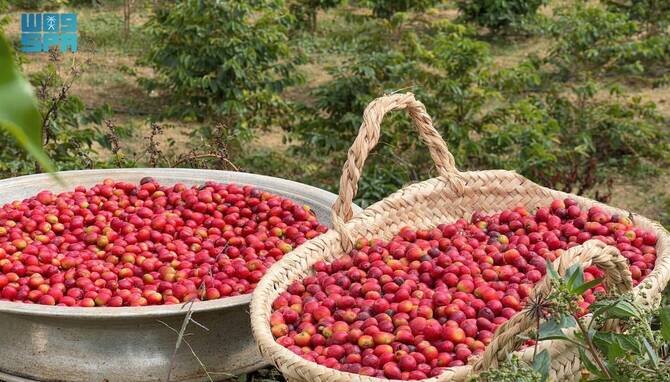
JEDDAH: The coffee sector in the Asir region is experiencing a significant surge in production, with annual output now exceeding 82,972 kg.
This growth is attributed to an expansion of farmland and increased agricultural productivity, as reported by the Coffee Cooperative Association in Rijal Almaa.
According to data from the association, there are currently 764 active farms in operation, all contributing to the sector’s efficiency and sustainability.
The total number of coffee trees has risen to 254,101, including 143,744 fruit-bearing trees, signifying ongoing agricultural expansion.
These figures were collected and analyzed by the organization as part of its regular field data collection process.
The geographical diversity of farms is noteworthy, with 178 situated on flat land and 2,656 on agricultural terraces.
This variation underscores the intricate relationship between coffee cultivation and the region’s mountainous landscape, showcasing a blend of traditional practices and modernization efforts in agricultural techniques.
Ali Sayyad, CEO of the Coffee Cooperative Association, highlighted the steady growth trajectory of the sector, driven by increasing interest from farmers and the economic and agricultural value of the crop.
This momentum is expected to propel further development in coming years.
In a related development, Rijal Almaa is gearing up to host its third annual Coffee Festival from April 28 to May 1.
The event, under the patronage of Prince Turki bin Talal bin Abdulaziz, governor of Asir, aims to spotlight the region's coffee production and enhance its standing as a promising agricultural commodity with cultural and economic significance.
The festival will serve as a platform for government entities, private sector players, farmers, and stakeholders in the coffee industry to converge.
Its objectives include promoting the status of coffee within Rijal Almaa, supporting farmers, and creating opportunities for enhanced marketing and improved production quality.
The event will feature educational booths on coffee cultivation and processing methods, as well as marketing exhibitions and cultural activities that emphasize the historical agricultural ties to coffee farming in the region.
Through initiatives promoting sustainability, boosting the local economy, and aligning with regional agricultural development goals, the festival reflects Rijal Almaa’s burgeoning potential within the coffee sector.
This growth is attributed to an expansion of farmland and increased agricultural productivity, as reported by the Coffee Cooperative Association in Rijal Almaa.
According to data from the association, there are currently 764 active farms in operation, all contributing to the sector’s efficiency and sustainability.
The total number of coffee trees has risen to 254,101, including 143,744 fruit-bearing trees, signifying ongoing agricultural expansion.
These figures were collected and analyzed by the organization as part of its regular field data collection process.
The geographical diversity of farms is noteworthy, with 178 situated on flat land and 2,656 on agricultural terraces.
This variation underscores the intricate relationship between coffee cultivation and the region’s mountainous landscape, showcasing a blend of traditional practices and modernization efforts in agricultural techniques.
Ali Sayyad, CEO of the Coffee Cooperative Association, highlighted the steady growth trajectory of the sector, driven by increasing interest from farmers and the economic and agricultural value of the crop.
This momentum is expected to propel further development in coming years.
In a related development, Rijal Almaa is gearing up to host its third annual Coffee Festival from April 28 to May 1.
The event, under the patronage of Prince Turki bin Talal bin Abdulaziz, governor of Asir, aims to spotlight the region's coffee production and enhance its standing as a promising agricultural commodity with cultural and economic significance.
The festival will serve as a platform for government entities, private sector players, farmers, and stakeholders in the coffee industry to converge.
Its objectives include promoting the status of coffee within Rijal Almaa, supporting farmers, and creating opportunities for enhanced marketing and improved production quality.
The event will feature educational booths on coffee cultivation and processing methods, as well as marketing exhibitions and cultural activities that emphasize the historical agricultural ties to coffee farming in the region.
Through initiatives promoting sustainability, boosting the local economy, and aligning with regional agricultural development goals, the festival reflects Rijal Almaa’s burgeoning potential within the coffee sector.