Saudi Press

Saudi Arabia and the world
Thursday, Dec 04, 2025

Young influencers get billions of views peddling junk food to kids, study says

Young influencers get billions of views peddling junk food to kids, study says

Young ‘influencers’ are being used to peddle unhealthy junk food to other kids via YouTube – racking up a ‘staggering’ one billion views, warns a new study.

Researchers described the use of children with ‘wildly popular’ YouTube channels to frequently promote unhealthy food and drinks in their videos to other kids as a ‘perfect storm for encouraging poor nutrition.’

American food and drink firms spend US$1.8 billion a year (£1.37 billion) marketing their products to young people.

Although TV advertising is a major source of food marketing, companies have dramatically increased online advertising in response to growing social media use.

Study senior author Dr Marie Bragg, of NYU School of Global Public Health, said: ‘Kids already see several thousand food commercials on television every year, and adding these YouTube videos on top of it may make it even more difficult for parents and children to maintain a healthy diet.

‘We need a digital media environment that supports healthy eating instead of discouraging it.’


YouTube is the second most popular website in the world


YouTube is the second most visited website in the world and is a popular destination for kids seeking entertainment.

More than 80 per cent of parents with a child under 12 allows them to watch YouTube, and 35 per cent of parents report that their child watches YouTube regularly.

Dr Bragg said: ‘The allure of YouTube may be especially strong in 2020 as many parents are working remotely and have to juggle the challenging task of having young kids at home because of Covid-19.’

She said that when finding videos for young children to watch, millions of parents turn to videos of ‘kid influencers’ – children whose parents film them doing activities such as science experiments, playing with toys, or celebrating their birthdays.

The growing popularity of such YouTube videos has caught the attention of companies, who advertise or sponsor posts to promote their products before or during videos. The highest-paid YouTube influencer of the past two years was actually an eight-year-old who earned $26 million(£19.8 million) last year.

Dr Bragg said: ‘Parents may not realise that kid influencers are often paid by food companies to promote unhealthy food and beverages in their videos.

‘Our study is the first to quantify the extent to which junk food product placements appear in YouTube videos from kid influencers.’
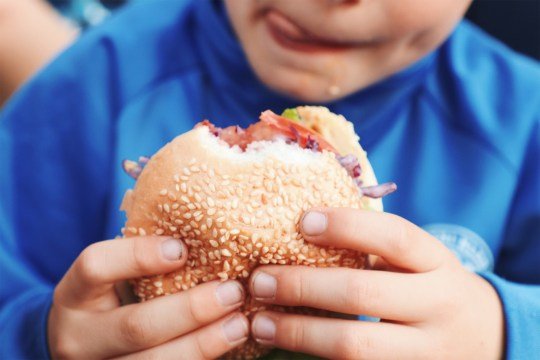

Companies have pivoted to YouTube to advertise junk food to kids


Dr Bragg and her colleagues identified the five most popular kid influencers on YouTube of 2019 – whose ages ranged from three to 14 years old – and analysed their most-watched videos.

Focusing on a sample of 418 YouTube videos, they recorded whether food or drinks were shown, what items and brands were shown, and assessed their nutritional quality.

Their findings, published in the journal Pediatrics, showed that nearly half of the most popular videos from kid influencers (42.8 per cent) promoted food and drinks.

More than 90 per cent of the products shown were unhealthy branded food, drinks, or fast food toys, with fast food as the most frequently featured junk food, followed by chocolate and fizzy drinks.

Only a few videos featured unhealthy unbranded items such as hot dogs (four per cent), healthy unbranded items such as fruit (three per cent), and healthy branded items such as yoghurt (two per cent).

The videos featuring junk food product placements were viewed more than one billion times – a ‘staggering’ level of exposure for food and drink firms.
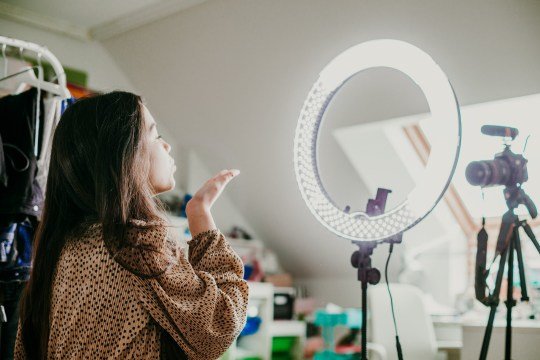

Nearly half of the videos from kid influencers had food adverts attached and 90% of those were unhealthy


Dr Bragg said: ‘It was concerning to see that kid influencers are promoting a high volume of junk food in their YouTube videos, and that those videos are generating enormous amounts of screen time for these unhealthy products.’

While the researchers don’t know which food and drink product placements were paid endorsements, they find the videos ‘problematic’ for public health because they enable food firms to directly, yet subtly, promote unhealthy food to young children and their parents.

Dr Bragg added: ‘It’s a perfect storm for encouraging poor nutrition – research shows that people trust influencers because they appear to be ‘everyday people,’ and when you see these kid influencers eating certain foods, it doesn’t necessarily look like advertising.

‘But it is advertising, and numerous studies have shown that children who see food ads consume more calories than children who see non-food ads, which is why the National Academy of Medicine and World Health Organsation identify food marketing as a major driver of childhood obesity.’

The research team called on regulators to strengthen and enforce rules on junk food advertising by kid influencers.

Study co-author Dr Jennifer Pomeranz, Assistant Professor of public health policy and management at NYU School of Global Public Health, added: ‘We hope that the results of this study encourage the Federal Trade Commission and state attorneys general to focus on this issue and identify strategies to protect children and public health.’

Newsletter

Related Articles

Saudi Press
0:00
0:00
Close
As Trump Deepens Ties with Saudi Arabia, Push for Israel Normalization Takes a Back Seat
Thai Food Village Debuts at Saudi Feast Food Festival 2025 Under Thai Commerce Minister Suphajee’s Lead
Saudi Arabia Sharpens Its Strategic Vision as Economic Transformation Enters New Phase
Saudi Arabia Projects $44 Billion Budget Shortfall in 2026 as Economy Rebalances
OPEC+ Unveils New Capacity-Based System to Anchor Future Oil Output Levels
Will Saudi Arabia End Up Bankrolling Israel’s Post-Ceasefire Order in Lebanon?
Saudi Arabia’s SAMAI Initiative Surpasses One-Million-Citizen Milestone in National AI Upskilling Drive
Saudi Arabia’s Specialty Coffee Market Set to Surge as Demand Soars and New Exhibition Drops in December
Saudi Arabia Moves to Open Two New Alcohol Stores for Foreigners Under Vision 2030 Reform
Saudi Arabia’s AI Ambitions Gain Momentum — but Water, Talent and Infrastructure Pose Major Hurdles
Tensions Surface in Trump-MBS Talks as Saudi Pushes Back on Israel Normalisation
Saudi Arabia Signals Major Maritime Crack-Down on Houthi Routes in Red Sea
Italy and Saudi Arabia Seal Over 20 Strategic Deals at Business Forum in Riyadh
COP30 Ends Without Fossil Fuel Phase-Out as US, Saudi Arabia and Russia Align in Obstruction Role
Saudi-Portuguese Economic Horizons Expand Through Strategic Business Council
DHL Commits $150 Million for Landmark Logistics Hub in Saudi Arabia
Saudi Aramco Weighs Disposals Amid $10 Billion-Plus Asset Sales Discussion
Trump Hosts Saudi Crown Prince for Major Defence and Investment Agreements
Families Accuse OpenAI of Enabling ‘AI-Driven Delusions’ After Multiple Suicides
Riyadh Metro Records Over One Hundred Million Journeys as Saudi Capital Accelerates Transit Era
Trump’s Grand Saudi Welcome Highlights U.S.–Riyadh Pivot as Israel Watches Warily
U.S. Set to Sell F-35 Jets to Saudi Arabia in Major Strategic Shift
Saudi Arabia Doubles Down on U.S. Partnership in Strategic Move
Saudi Arabia Charts Tech and Nuclear Leap Under Crown Prince’s U.S. Visit
Trump Elevates Saudi Arabia to Major Non-NATO Ally Amid Defense Deal
Trump Elevates Saudi Arabia to Major Non-NATO Ally as MBS Visit Yields Deepened Ties
Iran Appeals to Saudi Arabia to Mediate Restart of U.S. Nuclear Talks
Musk, Barra and Ford Join Trump in Lavish White House Dinner for Saudi Crown Prince
Lawmaker Seeks Declassification of ‘Shocking’ 2019 Call Between Trump and Saudi Crown Prince
US and Saudi Arabia Forge Strategic Defence Pact Featuring F-35 Sale and $1 Trillion Investment Pledge
Saudi Sovereign Wealth Fund Emerges as Key Contender in Warner Bros. Discovery Sale
Trump Secures Sweeping U.S.–Saudi Agreements on Jets, Technology and Massive Investment
Detroit CEOs Join White House Dinner as U.S.–Saudi Auto Deal Accelerates
Netanyahu Secures U.S. Assurance That Israel’s Qualitative Military Edge Will Remain Despite Saudi F-35 Deal
Ronaldo Joins Trump and Saudi Crown Prince’s Gala Amid U.S.–Gulf Tech and Investment Surge
U.S.–Saudi Investment Forum Sees U.S. Corporate Titans and Saudi Royalty Forge Billion-Dollar Ties
Elon Musk’s xAI to Deploy 500-Megawatt Saudi Data Centre with State-backed Partner HUMAIN
U.S. Clears Export of Advanced AI Chips to Saudi Arabia and UAE Amid Strategic Tech Partnership
xAI Selects Saudi Data-Centre as First Customer of Nvidia-Backed Humain Project
A Decade of Innovation Stagnation at Apple: The Cook Era Critique
President Trump Hosts Saudi Crown Prince Mohammed bin Salman in Washington Amid Strategic Deal Talks
Saudi Crown Prince to Press Trump for Direct U.S. Role in Ending Sudan War
Trump Hosts Saudi Crown Prince: Five Key Takeaways from the White House Meeting
Trump Firmly Defends Saudi Crown Prince Over Khashoggi Murder Amid Washington Visit
Trump Backs Saudi Crown Prince Over Khashoggi Killing Amid White House Visit
Trump Publicly Defends Saudi Crown Prince Over Khashoggi Killing During Washington Visit
President Donald Trump Hosts Saudi Crown Prince Mohammed bin Salman at White House to Seal Major Defence and Investment Deals
Saudi Arabia’s Solar Surge Signals Unlikely Shift in Global Oil Powerhouse
Saudi Crown Prince Receives Letter from Iranian President Ahead of U.S. Visit
Saudi Arabia’s Crown Prince Begins Washington Visit to Cement Long-Term U.S. Alliance
×