Saudi Press

Saudi Arabia and the world
Saturday, Dec 20, 2025

Scientists take ‘important step’ in stem cell therapy to treat Parkinson’s

Scientists take ‘important step’ in stem cell therapy to treat Parkinson’s

Chinese Academy of Sciences team discovered a new technique they say improved efficacy and safety in study on mice.

Chinese researchers have discovered a new technique they say improved the efficacy and safety of stem cell therapy in mice models of Parkinson’s disease.

The team from the Chinese Academy of Sciences (CAS) said their study findings paved the way for potentially developing a stem cell therapy to treat the disease.

The researchers identified two cell surface markers of dopamine neurons, which are damaged or destroyed in the midbrain of someone with Parkinson’s disease.

They then injected cells with these markers into the brains of mice, which they found could significantly improve the dopamine neurons in the midbrain – a key step in the treatment of the disease.

The finding “represents a revolutionary step on the road towards more effective and safer stem cell therapies”, according to the study, published in the Journal of Clinical Investigation on Tuesday.


Neurological disorders are the leading source of disability globally, and Parkinson’s disease is the second most common neurodegenerative disorder after Alzheimer’s. There is no cure for Parkinson’s disease, but the symptoms can be managed with medications and other therapies.

Worldwide, some 6.1 million people had Parkinson’s disease in 2016, according to the Lancet’s Global Burden of Disease Study in 2018. That number is expected to double to more than 12 million by 2040.

In China, it is estimated that the number of Parkinson’s disease patients could rise to about 5 million by 2030, accounting for half of the world’s cases.

Parkinson’s disease is a degenerative disorder affected by the impairment or death of cells in deep parts of the brain called the substantia nigra, which produces the neurotransmitter dopamine and controls body movement.

When 60 to 80 per cent of dopamine is lost, Parkinson’s symptoms such as tremor and balance problems occur.

Stem cell therapy is considered to be a promising treatment strategy because the disease is caused by the loss of one type of cell from a certain spot in the brain.

“Parkinson’s disease is the most suitable one [for stem cell therapy] because it is very clear which cells are lost and where should they be transplanted,” said Chen Yuejun, corresponding author of the study and a researcher with the CAS.

However, previous studies have generated both target and off-target neuronal cells during transplantation, resulting in low efficacy and uncertainty around safety.

“Our study wanted to answer two questions – why the previous studies generated more than a dozen off-target cells, and how we could enrich [certain] cells,” said Chen, who heads the Laboratory of Neural Differentiation and Regeneration at the CAS.
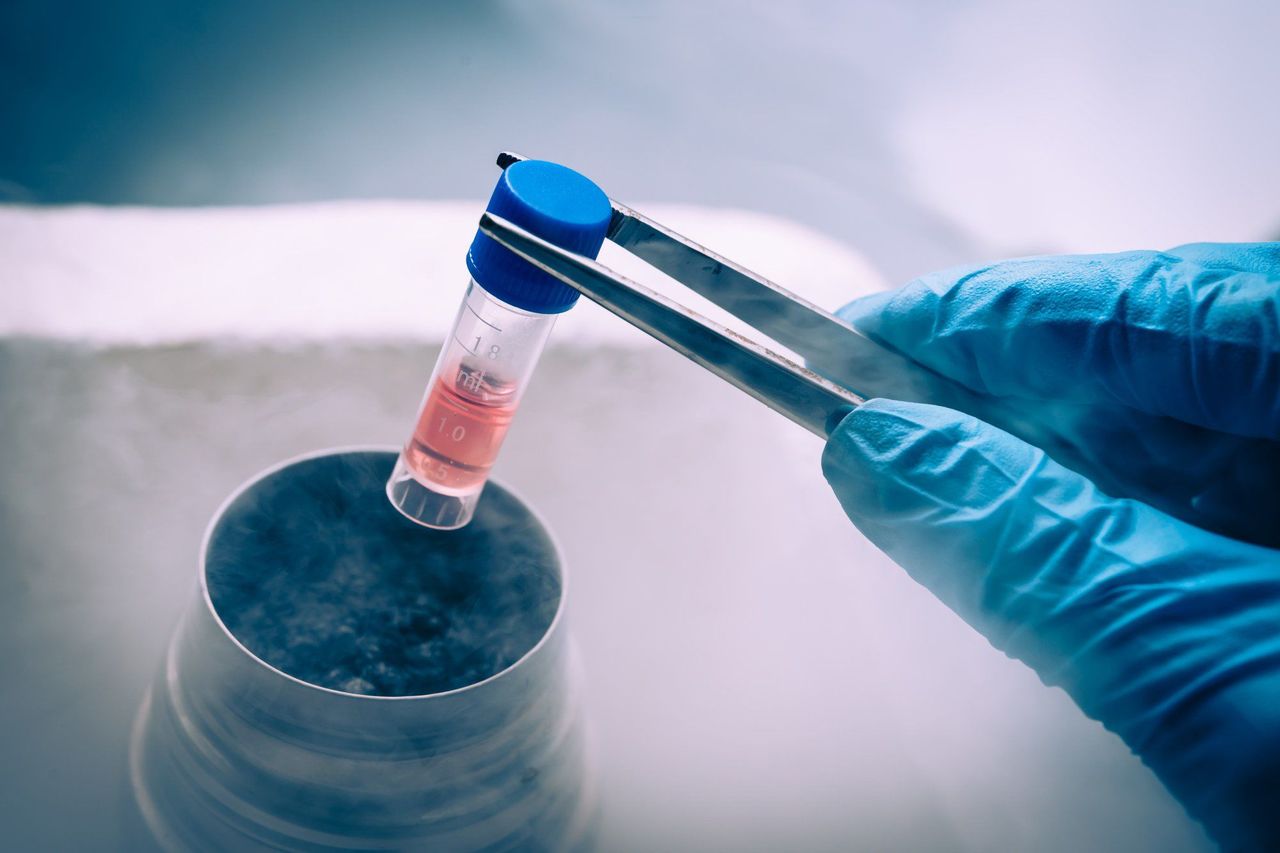
Stem cell therapy is seen as a promising strategy to treat Parkinson’s disease.


Chen and the team did a single-cell sequencing of dopaminergic neurons and found that the off-target cells were generated in areas near the midbrain.

They also found two markers that could facilitate highly enriched dopaminergic neurons after transplantation.

The percentage of neurons could be as high as 80 per cent in the transplant area, according to the paper. That compares to about 10 per cent in two recent preclinical studies.

“The study established a method for obtaining highly purified donor cells that can be transplanted with stable and predictable cell therapy results,” the authors said in a statement on the CAS website.

“It is an important step towards more effective and safer cell therapy for Parkinson’s disease.”

Newsletter

Related Articles

Saudi Press
0:00
0:00
Close
Saudi Arabia to Introduce Sugar-Content Based Tax on Sweetened Drinks from January 2026
Saudi Hotels Prepare for New Hospitality Roles as Alcohol Curbs Ease
Global Airports Forum Highlights Saudi Arabia’s Emergence as a Leading Aviation Powerhouse
Saudi Arabia Weighs Strategic Choice on Iran Amid Regional Turbulence
Not Only F-35s: Saudi Arabia to Gain Access to the World’s Most Sensitive Technology
Saudi Arabia Condemns Sydney Bondi Beach Shooting and Expresses Solidarity with Australia
Washington Watches Beijing–Riyadh Rapprochement as Strategic Balance Shifts
Saudi Arabia Urges Stronger Partnerships and Efficient Aid Delivery at OCHA Donor Support Meeting in Geneva
Saudi Arabia’s Vision 2030 Drives Measurable Lift in Global Reputation and Influence
Alcohol Policies Vary Widely Across Muslim-Majority Countries, With Many Permitting Consumption Under Specific Rules
Saudi Arabia Clarifies No Formal Ban on Photography at Holy Mosques for Hajj 2026
Libya and Saudi Arabia Sign Strategic MoU to Boost Telecommunications Cooperation
Elon Musk’s xAI Announces Landmark 500-Megawatt AI Data Center in Saudi Arabia
Israel Moves to Safeguard Regional Stability as F-35 Sales Debate Intensifies
Cardi B to Make Historic Saudi Arabia Debut at Soundstorm 2025 Festival
U.S. Democratic Lawmakers Raise National Security and Influence Concerns Over Paramount’s Hostile Bid for Warner Bros. Discovery
Hackers Are Hiding Malware in Open-Source Tools and IDE Extensions
Traveling to USA? Homeland Security moving toward requiring foreign travelers to share social media history
Wall Street Analysts Clash With Riyadh Over Saudi Arabia’s Deficit Outlook
Trump and Saudi Crown Prince Cement $1 Trillion-Plus Deals in High-Profile White House Summit
Saudi Arabia Opens Alcohol Sales to Wealthy Non-Muslim Residents Under New Access Rules
U.S.–Saudi Rethink Deepens — Washington Moves Ahead Without Linking Riyadh to Israel Normalisation
Saudi Arabia and Israel Deprioritise Diplomacy: Normalisation No Longer a Middle-East Priority
Saudi Arabia Positions Itself as the Backbone of the Global AI Era
As Trump Deepens Ties with Saudi Arabia, Push for Israel Normalization Takes a Back Seat
Thai Food Village Debuts at Saudi Feast Food Festival 2025 Under Thai Commerce Minister Suphajee’s Lead
Saudi Arabia Sharpens Its Strategic Vision as Economic Transformation Enters New Phase
Saudi Arabia Projects $44 Billion Budget Shortfall in 2026 as Economy Rebalances
OPEC+ Unveils New Capacity-Based System to Anchor Future Oil Output Levels
Will Saudi Arabia End Up Bankrolling Israel’s Post-Ceasefire Order in Lebanon?
Saudi Arabia’s SAMAI Initiative Surpasses One-Million-Citizen Milestone in National AI Upskilling Drive
Saudi Arabia’s Specialty Coffee Market Set to Surge as Demand Soars and New Exhibition Drops in December
Saudi Arabia Moves to Open Two New Alcohol Stores for Foreigners Under Vision 2030 Reform
Saudi Arabia’s AI Ambitions Gain Momentum — but Water, Talent and Infrastructure Pose Major Hurdles
Tensions Surface in Trump-MBS Talks as Saudi Pushes Back on Israel Normalisation
Saudi Arabia Signals Major Maritime Crack-Down on Houthi Routes in Red Sea
Italy and Saudi Arabia Seal Over 20 Strategic Deals at Business Forum in Riyadh
COP30 Ends Without Fossil Fuel Phase-Out as US, Saudi Arabia and Russia Align in Obstruction Role
Saudi-Portuguese Economic Horizons Expand Through Strategic Business Council
DHL Commits $150 Million for Landmark Logistics Hub in Saudi Arabia
Saudi Aramco Weighs Disposals Amid $10 Billion-Plus Asset Sales Discussion
Trump Hosts Saudi Crown Prince for Major Defence and Investment Agreements
Families Accuse OpenAI of Enabling ‘AI-Driven Delusions’ After Multiple Suicides
Riyadh Metro Records Over One Hundred Million Journeys as Saudi Capital Accelerates Transit Era
Trump’s Grand Saudi Welcome Highlights U.S.–Riyadh Pivot as Israel Watches Warily
U.S. Set to Sell F-35 Jets to Saudi Arabia in Major Strategic Shift
Saudi Arabia Doubles Down on U.S. Partnership in Strategic Move
Saudi Arabia Charts Tech and Nuclear Leap Under Crown Prince’s U.S. Visit
Trump Elevates Saudi Arabia to Major Non-NATO Ally Amid Defense Deal
Trump Elevates Saudi Arabia to Major Non-NATO Ally as MBS Visit Yields Deepened Ties
×