Saudi Scientists Revive Critically Endangered Fish Through Groundbreaking Breeding Program
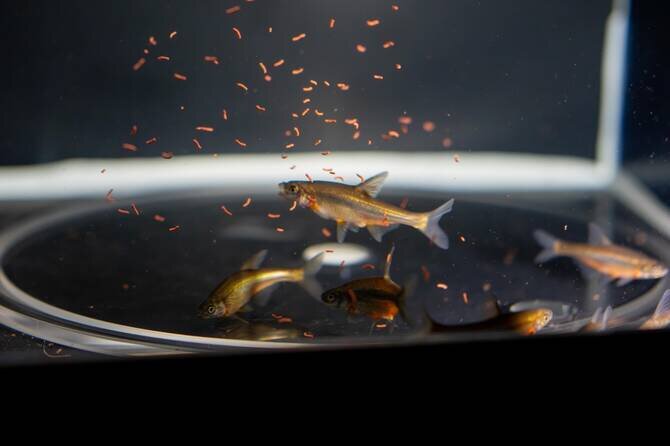
A joint breeding program between the National Center for Wildlife (NCW) and King Abdullah University of Science and Technology (KAUST) has successfully revived the Arabian Bream, a critically endangered fish species that had been absent from Saudi waters for three decades. The conservation effort boasts a remarkable 90 percent survival rate among young fish.
Riyadh: After three decades of absence, the critically endangered Arabian Bream is being brought back from the brink through a joint breeding program between the National Center for Wildlife and King Abdullah University of Science and Technology.
The effort has achieved a 90 percent survival rate among young fish.This breeding program is a cornerstone of Saudi Arabia’s Initiative and Vision 2030 biodiversity targets, according to Asaad Mohamed, Director of the aquaculture program at KAUST, as told to Arab News.
It marks the first initiative in Saudi Arabia to shift from passive habitat protection to active ex-situ (off-site) population assurance for endemic freshwater fish.The program's pivot towards active conservation positions it as a key pillar within the Saudi Green Initiative and Vision 2030, which aim to restore fragile wadi food webs and safeguard the Kingdom’s aquatic heritage.
It directly supports the National Environment Strategy’s goal of reversing extinction risk for 30% of endangered native species by 2030 and establishes a replicable model for other threatened Arabian freshwater species.The initiative began in April 2026 with environmental assessments across targeted wadis, focusing on two critically endangered fish species: the Arabian Bream and the Arabian Himr.
Initially recorded in Saudi Arabia in 1983, the Arabian Bream went unseen until its rediscovery in Khaybar in 2014.
Historically ranging across western Saudi Arabia, including Wadi Khaybar and Wadi Ghras, its habitat has shrunk by an estimated 82-88 percent over the past three decades due to climate-driven episodic drought.Aramco biodiversity models have ranked the species as the Kingdom’s top conservation priority since 2021 due to its limited habitat and critical status.
The breeding program is based on assessments, recommendations, and data highlighting the urgent need to preserve these species.Surveys conducted in 2023-24 revealed fewer than 2,500 mature Arabian bream across five confirmed locations, with remote sensing identifying more than 21 key sites where the species persists.
Researchers collected broodstock from Wadi Khaybar and other suitable habitats for breeding purposes.The program has encountered challenges in developing appropriate feeding protocols for wild-caught broodstock due to limited scientific understanding of the fish's nutritional needs.
However, it is currently working on specialized feed with balanced nutrition for optimal growth.Al-Harthi emphasized that freshwater fish are key indicators of water quality and wetland health in Saudi Arabia, and their reintroduction aims not only at increasing their numbers but also at enhancing ecosystem functions.
The ecological balance and stability of the systems will benefit from this conservation effort.The next step involves reintroducing the Arabian Bream into its former habitats in early 2027, contingent on several key milestones being met.
With a 90 percent survival rate achieved and more than 2,000 juveniles produced, the program has successfully translated research into practical action for restoring endangered freshwater fish populations by 2027.
The effort has achieved a 90 percent survival rate among young fish.This breeding program is a cornerstone of Saudi Arabia’s Initiative and Vision 2030 biodiversity targets, according to Asaad Mohamed, Director of the aquaculture program at KAUST, as told to Arab News.
It marks the first initiative in Saudi Arabia to shift from passive habitat protection to active ex-situ (off-site) population assurance for endemic freshwater fish.The program's pivot towards active conservation positions it as a key pillar within the Saudi Green Initiative and Vision 2030, which aim to restore fragile wadi food webs and safeguard the Kingdom’s aquatic heritage.
It directly supports the National Environment Strategy’s goal of reversing extinction risk for 30% of endangered native species by 2030 and establishes a replicable model for other threatened Arabian freshwater species.The initiative began in April 2026 with environmental assessments across targeted wadis, focusing on two critically endangered fish species: the Arabian Bream and the Arabian Himr.
Initially recorded in Saudi Arabia in 1983, the Arabian Bream went unseen until its rediscovery in Khaybar in 2014.
Historically ranging across western Saudi Arabia, including Wadi Khaybar and Wadi Ghras, its habitat has shrunk by an estimated 82-88 percent over the past three decades due to climate-driven episodic drought.Aramco biodiversity models have ranked the species as the Kingdom’s top conservation priority since 2021 due to its limited habitat and critical status.
The breeding program is based on assessments, recommendations, and data highlighting the urgent need to preserve these species.Surveys conducted in 2023-24 revealed fewer than 2,500 mature Arabian bream across five confirmed locations, with remote sensing identifying more than 21 key sites where the species persists.
Researchers collected broodstock from Wadi Khaybar and other suitable habitats for breeding purposes.The program has encountered challenges in developing appropriate feeding protocols for wild-caught broodstock due to limited scientific understanding of the fish's nutritional needs.
However, it is currently working on specialized feed with balanced nutrition for optimal growth.Al-Harthi emphasized that freshwater fish are key indicators of water quality and wetland health in Saudi Arabia, and their reintroduction aims not only at increasing their numbers but also at enhancing ecosystem functions.
The ecological balance and stability of the systems will benefit from this conservation effort.The next step involves reintroducing the Arabian Bream into its former habitats in early 2027, contingent on several key milestones being met.
With a 90 percent survival rate achieved and more than 2,000 juveniles produced, the program has successfully translated research into practical action for restoring endangered freshwater fish populations by 2027.